
The Allure of the Perfect System
You sit down at your workspace, coffee in hand, ready to tackle a high-stakes project. But before you write the first sentence, draft the first wireframe, or compile the first line of code, you open your project management dashboard. You notice a few tasks are missing their priority tags. You spend five minutes color-coding them. Then, you realize your weekly goals aren’t perfectly aligned with your quarterly objectives, so you adjust the timeline. Forty-five minutes later, your dashboard is a masterpiece of organizational clarity. You feel incredibly productive. You have also accomplished absolutely nothing.
This is the meta-work trap. Meta-work is the administrative scaffolding that surrounds your actual responsibilities. It is work about work. In small, controlled doses, it is the necessary infrastructure that keeps chaotic projects on track. But for many ambitious professionals, meta-work slowly metastasizes, consuming the very execution it was designed to support. We convince ourselves that we are preparing to work, when in reality, we are actively avoiding it.
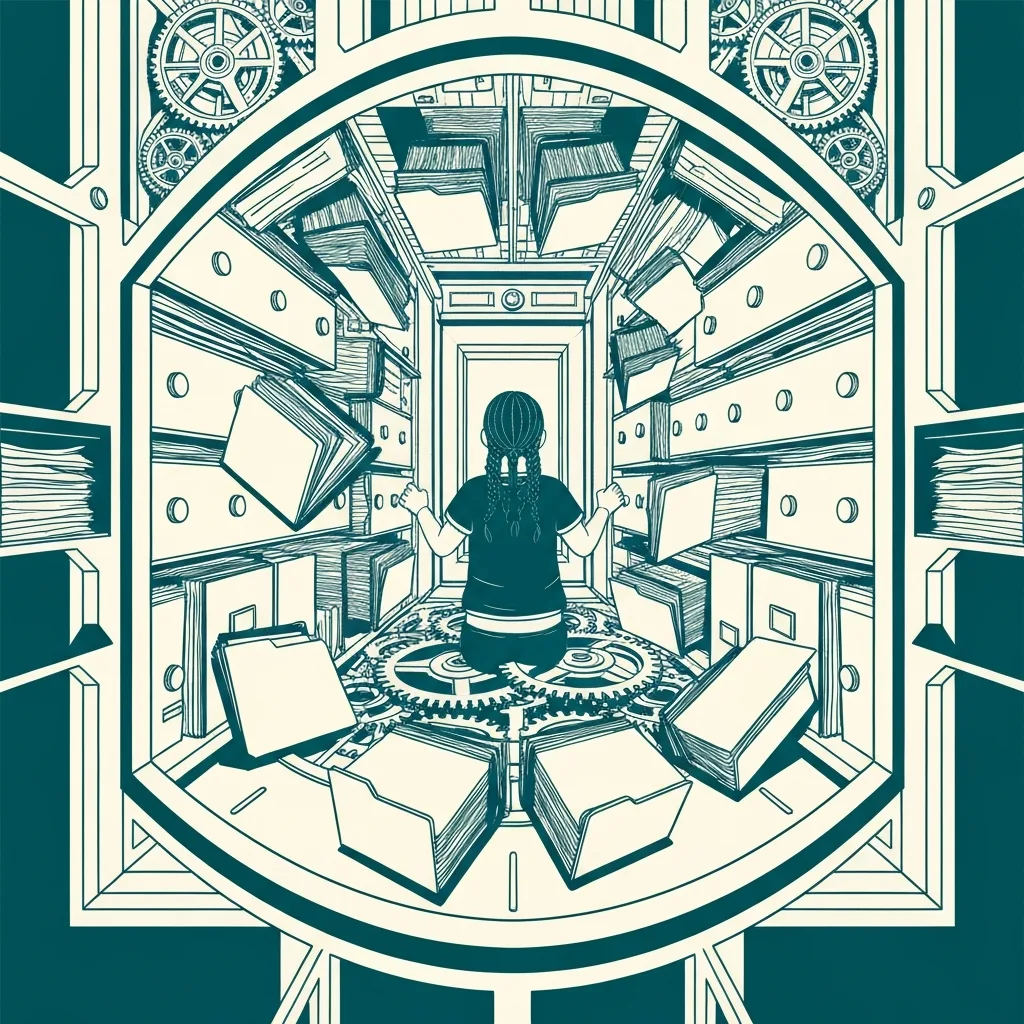
The Psychological Comfort of Organizing
To dismantle the meta-work trap, we first have to understand why it is so seductive. Human brains are wired to seek the path of least cognitive resistance while simultaneously craving the dopamine hit of a completed task. Actual execution—writing, designing, strategizing, coding—is inherently fraught with friction. It requires deep focus, involves ambiguity, and carries the distinct risk of failure or frustration.
Meta-work, by contrast, is a sterile, predictable environment. Sorting a list of fifty tasks by due date requires almost zero cognitive strain, yet it yields a highly visible, immediate result. When you drag a digital card from ‘To-Do’ to ‘Organized,’ your brain registers a victory. You experience the sensation of forward momentum without having to face the terrifying blank page of actual creation.
This localized illusion of control is the core danger. The more chaotic our actual workloads become, the more we retreat into the safety of our systems. We build increasingly complex databases, establish rigid tagging hierarchies, and track our time down to the minute. We treat productivity as an aesthetic to be admired rather than a messy, utilitarian engine for getting things done.
Symptoms of a Meta-Work Infection
The line between necessary organization and toxic meta-work can be difficult to identify from the inside. The descent into administrative bloat is usually gradual. If you suspect your systems are cannibalizing your output, look for these defining symptoms:
- The Ratio Imbalance: You spend more than ten percent of your available work time planning, organizing, or reviewing your tasks. If you work an eight-hour day and spend an hour managing your to-do list, your system is too heavy.
- The Procrastination Pivot: When faced with a difficult, ambiguous task, your immediate instinct is to reorganize your workspace, clean up your inbox, or restructure your project files before starting.
- Data Redundancy: You are entering the same information in multiple places. You write a task in a notebook, transfer it to a digital task manager, and then block it out on a digital calendar.
- System Fragility: Your workflow is so complex that if you miss one day of ‘maintenance’—updating custom fields, archiving old notes, migrating unchecked boxes—the entire system feels overwhelming and unusable.
If these symptoms resonate, you do not need a new app, a new planner, or a new methodology. You need to strip the current system down to its absolute studs.
The 10-to-1 Execution Rule
Escaping the meta-work trap requires a radical shift in how you value your time. The most effective framework for enforcing this shift is the 10-to-1 Execution Rule. The premise is ruthlessly simple: for every one unit of time you spend planning, organizing, or managing your work, you owe ten units of time to pure, unadulterated execution.
If you spend fifteen minutes on a Monday morning mapping out your weekly priorities, you are not allowed to touch your project management system, adjust your calendar, or reorganize your task list for the next two and a half hours. You must execute. If you find yourself wanting to tweak a due date or add a new color-coded tag during that execution block, you are experiencing the withdrawal symptoms of meta-work. Ignore them.
This ratio forces you to confront the reality of your output. It establishes a hard boundary between the architect and the builder. The architect gets a fraction of your time to draw the blueprints; the builder gets the overwhelming majority of your time to lay the bricks. When you enforce this boundary, you quickly realize how little administrative scaffolding you actually need to do great work.
Tactical Steps to Dismantle the Meta-Work Machine
Understanding the psychology and establishing a ratio are foundational, but you also need tactical interventions to break the habit of over-organizing. Here is how to aggressively streamline your workflow and force yourself back into execution mode.
1. Eradicate Frivolous Features
Modern productivity software is designed to sell you on features, not results. Just because a tool allows you to create relational databases, custom priority matrices, and automated dependency triggers does not mean you should use them. Audit your current system and ask yourself: ‘Does this specific feature directly contribute to a task getting finished faster?’ If the answer is no, delete it. Strip your workflow back to plain text, simple checklists, and basic due dates. Reintroduce complexity only when a project absolutely breaks without it.
2. The ‘Capture Only’ Mandate During Deep Work
One of the primary ways meta-work infiltrates execution is through intrusive thoughts. You are writing a report, and you suddenly remember you need to email a client. Instead of stopping your deep work to organize that new task into its proper project folder, assign it a priority, and schedule it, you must use a ‘Capture Only’ approach. Keep a blank notepad or a simple digital scratchpad open. Write down ’email client’ and immediately return to the report. Do not process the task. Processing is meta-work. Capturing keeps you in execution.
3. Impose Artificial Constraints on Admin Time
Meta-work expands to fill the time allotted for it. If you give yourself an open-ended Sunday afternoon to ‘plan your week,’ you will spend three hours building an elaborate, fragile schedule. Instead, give yourself a hard, non-negotiable time limit. Set a timer for twenty minutes. When the timer goes off, your planning phase is over. Whatever state your system is in, that is what you work with for the week. This artificial constraint forces ruthless prioritization; you will only organize the tasks that genuinely matter, leaving the trivial items untouched.
4. Define the Minimum Viable Maintenance
Every system requires some upkeep, but you must define what the absolute minimum looks like. Decide exactly what needs to happen at the end of the day to ensure tomorrow runs smoothly. Usually, this is simply identifying the top three tasks for the next day and closing your open tabs. Write this Minimum Viable Maintenance checklist down. Once you complete it, step away from the computer. Do not linger in your task manager looking for things to optimize.
Embracing the Messy Reality of Real Output
Ultimately, overcoming the meta-work trap requires a fundamental change in perspective. We have been conditioned to believe that a highly productive life looks like a perfectly curated, friction-free dashboard. But look at the actual workspaces and workflows of history’s most prolific creators, builders, and leaders. They are rarely pristine. They are often chaotic, marked by crossed-out lists, messy desks, and bare-bones systems.
Real productivity is not aesthetically pleasing. It is the gritty, uncomfortable process of turning nothing into something. Your task manager is not a trophy case for your organizational skills; it is a temporary holding pen for your obligations. Stop polishing the pen. Step out of the scaffolding, embrace the cognitive friction, and get back to the work that actually matters.




Do you enjoy the content on Agenda Creativa?
Your contributions help me create new articles, share creative ideas, and keep this platform alive! If you like what I do and want to support my work, you can buy us a coffee.
Every cup of coffee means more than just a gesture – it's direct support for my passion to create inspiring and useful content. Thank you for being part of this journey!
☕ Buy me a coffee