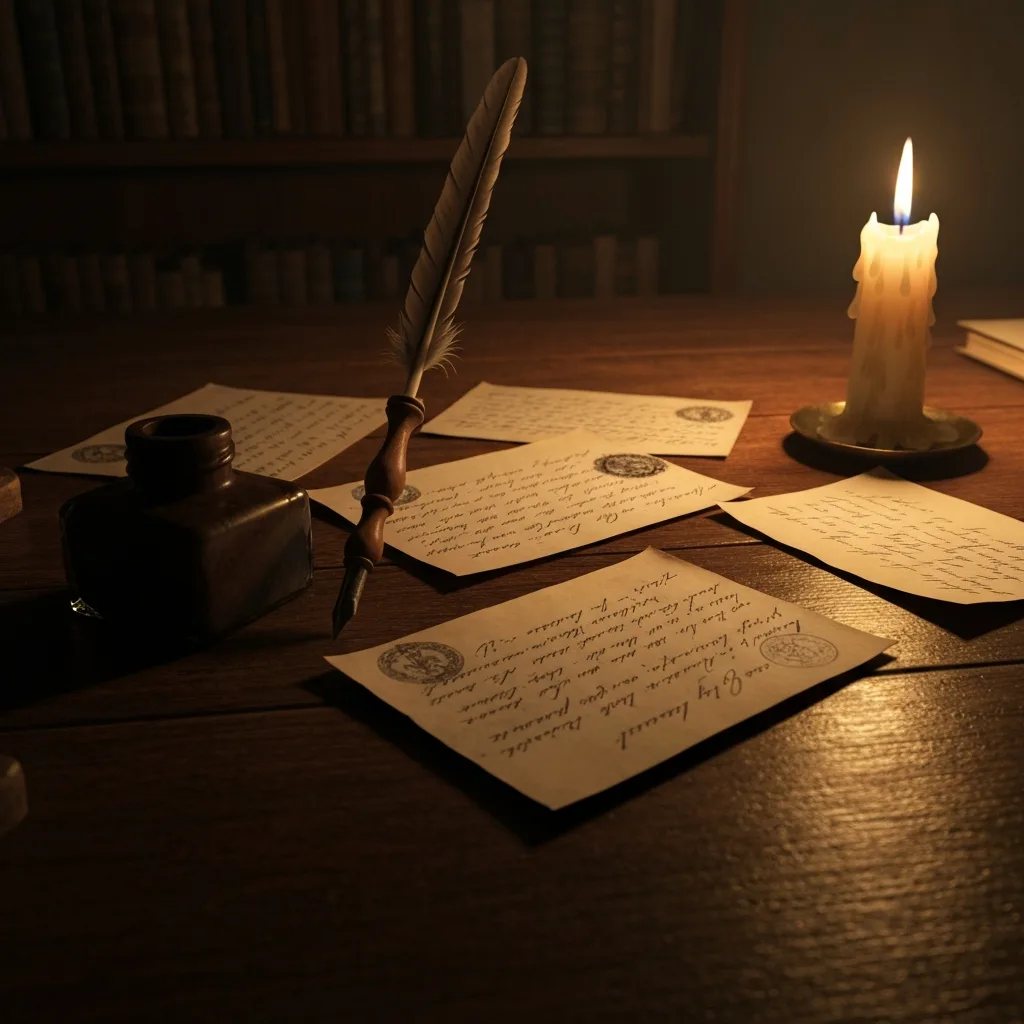
The Allure of the Private Record
There is an undeniable psychological thrill in reading something that was never meant for your eyes. This fundamental human curiosity—the desire to peek behind the curtain of someone else’s private life—is the driving force behind the epistolary novel. Derived from the Latin word “epistola,” meaning letter, this literary device tells a story entirely through a series of documents. While traditionally composed of handwritten letters and diary entries, the format has evolved dramatically to keep pace with human communication. Today, it encompasses emails, text messages, podcast transcripts, and even corporate memos.
Regardless of the medium, the core appeal remains unchanged: epistolary fiction offers a level of narrative intimacy that traditional prose often struggles to achieve. By removing the omniscient narrator, the author strips away the filter between the character and the reader. You are no longer being told a story; you are discovering it firsthand, sifting through the raw, unfiltered evidence of a character’s life.

The Historical Foundations of the Epistolary Form
From Richardson to Shelley: The Early Masters
The epistolary format is not a modern gimmick; it is one of the foundational structures of the early novel. In 1740, Samuel Richardson published Pamela, a novel composed entirely of letters and journal entries written by a young maidservant. The book was a massive success, largely because the format allowed readers unprecedented access to the protagonist’s interior emotional state. It felt authentic, urgent, and deeply personal. This success sparked a wave of epistolary fiction throughout the 18th century, establishing the letter as a powerful vehicle for psychological exploration.
As literature moved into the Romantic era, authors began to use the epistolary form not just for romance, but to ground the fantastical in reality. Mary Shelley’s Frankenstein (1818) is famously framed by the letters of Captain Robert Walton to his sister. By opening this groundbreaking science fiction narrative with a series of grounded, mundane letters from a sea captain, Shelley creates a baseline of reality. When Victor Frankenstein finally arrives on the ice and begins to recount his horrific tale of reanimation, the reader is more willing to suspend their disbelief because the story has been anchored by Walton’s objective documentation.
Dracula and the Power of Assembled Evidence
Perhaps the most masterful early use of the multi-document epistolary format is Bram Stoker’s Dracula (1897). Stoker did not rely on a single perspective. Instead, he constructed his gothic masterpiece through a fragmented collection of journal entries, letters, newspaper clippings, telegrams, and even phonograph cylinder recordings.
This approach does two crucial things. First, it creates a profound sense of dread. The reader is given pieces of a puzzle that the characters themselves cannot yet see. We read Jonathan Harker’s terrified journal entries from Transylvania, followed immediately by Mina’s innocent letters from England, creating a chilling dramatic irony. Second, it treats the supernatural as a matter of objective, documented fact. The novel reads like a dossier compiled by a group of investigators, forcing the reader to act as a detective sifting through the evidence of a monster’s existence.
The Psychological Appeal of Epistolary Storytelling
The Illusion of Authenticity
Why do readers continually gravitate toward stories told through documents? The primary reason is the illusion of authenticity. When a story is presented as a found document, it bypasses the reader’s natural skepticism. We are conditioned to view letters, diaries, and emails as primary sources—artifacts of truth. The epistolary format hacks this psychological conditioning, making the fictional world feel remarkably tangible.
Multiple Perspectives and Dramatic Irony
Furthermore, the multi-document format allows authors to present conflicting perspectives without relying on a jarring shift in narrative voice. Character A might write an email detailing a highly successful business meeting, while Character B’s text messages to a friend reveal that the meeting was an absolute disaster. The truth lies somewhere in the space between the documents, and the reader is tasked with finding it. This active participation makes the reading experience highly engaging. You are not a passive recipient of the story; you are an active participant, an archivist piecing together a complex narrative web.
The Modern Metamorphosis: Emails, Texts, and Multimedia
Adapting to the Digital Age
As human communication has shifted from the writing desk to the smartphone, the epistolary novel has adapted with remarkable agility. Helen Fielding’s Bridget Jones’s Diary brought the format into the late 20th century, utilizing the diary structure to capture the neuroses and humor of modern single life. Similarly, Stephen Chbosky’s The Perks of Being a Wallflower used letters written to an anonymous recipient to perfectly encapsulate the profound isolation and yearning of adolescence.
However, the true modern evolution of the format is the mixed-media novel. In the digital age, our lives are documented across dozens of platforms, and contemporary authors are reflecting this reality on the page. Maria Semple’s bestselling novel Where’d You Go, Bernadette is a prime example. The story of a missing mother is told through a chaotic, hilarious, and ultimately moving compilation of emails, FBI documents, private school invoices, and emergency room bills. The format perfectly mirrors the fragmented, overwhelming nature of modern life.
The Rise of the Mixed-Media Thriller and Sci-Fi
The thriller and science fiction genres have also embraced the modern epistolary form. Amie Kaufman and Jay Kristoff’s Illuminae pushes the boundaries of traditional publishing, presenting a gripping space opera through hacked classified documents, instant messages, medical reports, and artificial intelligence core data dumps. The visual layout of the book is as important as the text itself, creating an immersive, multimedia reading experience.
In the thriller genre, authors frequently use text message transcripts and podcast scripts to build suspense. The inclusion of a true-crime podcast transcript within a novel allows the author to provide exposition and public reaction simultaneously, while police interview transcripts offer a sterile, objective contrast to the messy, emotional realities of the characters involved.
The Crafting Challenge: Avoiding the Exposition Trap
While the epistolary format offers incredible opportunities for intimacy and suspense, it presents unique challenges for the writer. The most common pitfall is the “As you know, Bob” syndrome, where characters write things to each other that they already know, purely for the benefit of the reader. In a traditional narrative, an author can simply explain the background. In an epistolary novel, every piece of information must organically belong in the document.
Authors must also work tirelessly to maintain distinct voices. If an email from a teenage girl sounds identical to a police report written by a seasoned detective, the illusion of authenticity shatters immediately. The best epistolary writers are literary mimics, capable of adopting the distinct cadence, vocabulary, and formatting quirks of wildly different characters and mediums.
The Future of the Format
As technology continues to evolve, so too will the epistolary novel. We are already seeing fiction told through Reddit-style forum threads, Slack channel transcripts, and social media feeds. These modern formats capture the rapid-fire, often performative nature of contemporary communication. They allow authors to explore themes of digital surveillance, the curation of online personas, and the profound loneliness that can exist in a hyper-connected world.
Yet, despite the changing mediums, the heart of the epistolary novel remains exactly what it was when Samuel Richardson published Pamela nearly three centuries ago. It is a celebration of the written word as an act of connection. Whether it is a hastily scribbled note sealed with wax or a late-night text message sent across the globe, these documents are proof of our desperate, beautiful need to reach out and be understood. By allowing us to read these private records, the epistolary novel invites us into the most intimate spaces of the human experience, proving that while the tools of communication may change, the stories we tell remain profoundly the same.


Do you enjoy the content on Agenda Creativa?
Your contributions help me create new articles, share creative ideas, and keep this platform alive! If you like what I do and want to support my work, you can buy us a coffee.
Every cup of coffee means more than just a gesture – it's direct support for my passion to create inspiring and useful content. Thank you for being part of this journey!
☕ Buy me a coffee