
The Implicit Contract Between Reader and Storyteller
When we open a book, we subconsciously enter into a contract with the author. We agree to suspend our disbelief, and in return, we expect the narrator to guide us safely through the labyrinth of the plot. We trust them to describe the world accurately, to report conversations faithfully, and to provide a clear window into the events unfolding on the page. But what happens when the guide holding the lantern is intentionally leading us into the dark?
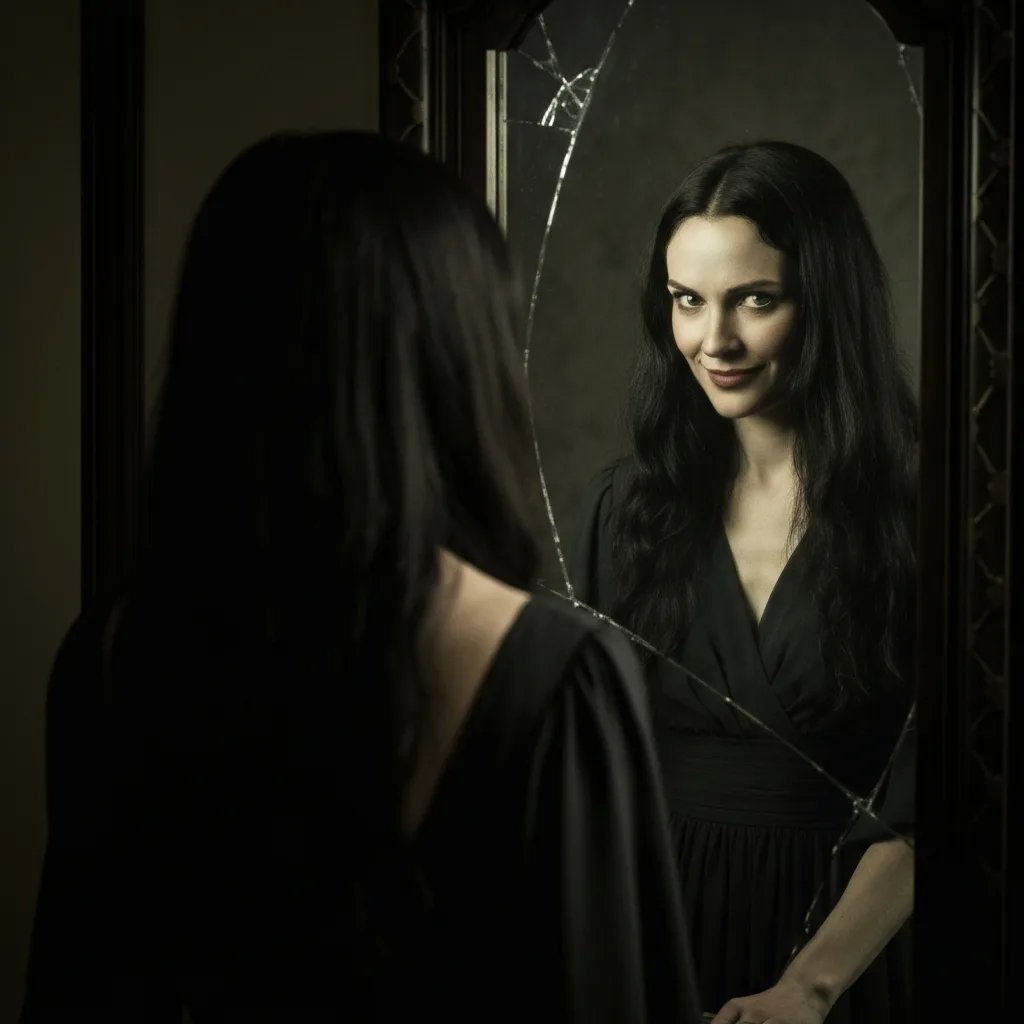
The unreliable narrator is one of the most compelling and disruptive literary devices in the history of fiction. Instead of an omniscient, objective voice, the reader is handed a lens that is cracked, smudged, or deliberately distorted. This narrative technique transforms reading from a passive intake of information into an active, often paranoid, investigation. We are no longer just absorbing a story; we are interrogating it. Over the decades, this device has evolved from the subtle psychological sketches of the nineteenth century to the explosive, twist-driven psychological thrillers that dominate modern bestseller lists.
The Roots of Narrative Deception
While modern audiences might associate the unreliable narrator with contemporary domestic thrillers, the roots of this technique stretch back much further. To understand the modern landscape of psychological fiction, we must first look at the pioneers of literary deception, authors who realized that the human mind is often its own greatest antagonist.
Edgar Allan Poe and the Descent into Madness
Edgar Allan Poe was arguably the first master to fully weaponize the unreliable narrator. In classic short stories like The Tell-Tale Heart and The Cask of Amontillado, Poe places the reader directly inside the minds of characters who are profoundly unstable. The brilliance of Poe’s approach lies in the narrators’ desperate attempts to convince the reader of their sanity. In The Tell-Tale Heart, the narrator famously begins by admitting his extreme nervousness but vehemently denies being mad, offering the calm precision of his murder plot as evidence of his rationality.
As readers, we immediately recognize the dissonance between the narrator’s self-assessment and the horrifying reality of his actions. We are forced to read between the lines, piecing together the objective truth from the fragments of a shattered psyche. Poe demonstrated that a story becomes infinitely more terrifying when the monster is not hiding in the shadows, but is the very voice whispering the tale into your ear.
The Golden Age of Mystery: Shattering the Rules
As literature moved into the twentieth century, the unreliable narrator found a natural home in the mystery genre. However, the traditional whodunit relied heavily on a trusted detective and a straightforward presentation of clues. It took a writer of immense audacity to subvert these rigid genre conventions.
Agatha Christie’s Masterstroke
In 1926, Agatha Christie published The Murder of Roger Ackroyd, a novel that fundamentally altered the landscape of detective fiction. Without revealing spoilers for a nearly century-old book, Christie utilized a first-person narrator whose omissions and selective phrasing hide the truth in plain sight. At the time of publication, the book sparked intense debate. Some critics accused Christie of playing unfairly, arguing that a narrator in a mystery novel has a duty to be completely transparent.
Yet, Christie’s novel endures precisely because it challenges the reader to question their own assumptions. She proved that an unreliable narrator doesn’t necessarily have to be insane or hallucinating; they can simply be a character with a vested interest in hiding the truth, using the reader’s inherent trust as a tool for misdirection.
The Modern Psychological Thriller: A Resurgence
In recent years, the unreliable narrator has experienced a massive resurgence, becoming the defining characteristic of the modern psychological thriller. This era of fiction reflects a contemporary cultural anxiety about identity, intimacy, and the secrets people keep behind closed doors.
Gillian Flynn and the Dual Narrative
No discussion of modern unreliable narrators is complete without examining Gillian Flynn’s 2012 phenomenon, Gone Girl. Flynn masterfully utilizes dual, competing narratives to construct a story where truth is entirely subjective. We are presented with the perspectives of Nick and Amy Dunne, a married couple whose relationship is unraveling in the wake of Amy’s disappearance.
Flynn’s genius lies in making both narrators sympathetic and deeply flawed. As the novel progresses, the reader’s allegiances shift back and forth. Gone Girl doesn’t just use unreliability for a cheap twist; it uses it to explore profound themes of marital performance, media manipulation, and the masks we wear for the people we claim to love the most. The novel forces us to confront the uncomfortable reality that every relationship contains two entirely different versions of the truth.
Trauma and Memory in ‘The Girl on the Train’
Following the massive success of Flynn, Paula Hawkins introduced readers to Rachel Watson in The Girl on the Train. Rachel represents a different breed of unreliable narrator: the unintentional deceiver. Plagued by alcoholism and frequent blackouts, Rachel is a witness to a potential crime, but she cannot trust her own memory.
Hawkins uses Rachel’s substance abuse not just as a character flaw, but as a structural device. The tension in the novel arises from Rachel’s desperate, fragmented attempts to reconstruct the truth of her own experiences. This type of unreliability taps into a deep, universal fear: the terrifying realization that our own minds and memories can betray us. When a narrator desperately wants to tell the truth but is physically or psychologically incapable of accessing it, the resulting narrative is steeped in a unique, agonizing suspense.
Beyond Thrillers: Literary Fiction and the Fractured Mind
While thrillers rely on unreliable narrators for suspense and plot twists, literary fiction frequently employs the device to explore the human condition, mental illness, and societal alienation. In these works, the unreliability is not a puzzle to be solved, but a tragic reality to be experienced.
Ken Kesey and the Subjective Reality
In Ken Kesey’s One Flew Over the Cuckoo’s Nest, the story is told through the perspective of Chief Bromden, a schizophrenic patient in a psychiatric ward. Bromden perceives the world through a thick fog, visualizing the oppressive hospital staff as literal cogs in a massive, mechanical ‘Combine’.
While Bromden’s hallucinations mean his literal descriptions of events are unreliable, his emotional and thematic observations are profoundly accurate. Kesey uses this fractured narration to critique institutionalization and the crushing weight of conformity. Bromden’s distorted reality ultimately conveys a deeper, more resonant truth about the nature of power and freedom than a straightforward, objective narrative ever could.
Sylvia Plath’s Emotional Unreliability
Similarly, in Sylvia Plath’s semi-autobiographical novel The Bell Jar, Esther Greenwood’s descent into severe depression colors every interaction and observation in the book. Esther is not trying to deceive the reader; rather, her perception of reality is being slowly suffocated by the titular bell jar of her mental illness.
Her unreliability manifests in her emotional detachment and her skewed interpretations of the actions of those around her. By trapping the reader inside Esther’s deteriorating worldview, Plath creates an intensely claustrophobic and empathetic reading experience, illustrating how depression fundamentally alters one’s relationship with reality.
The Psychology of the Reader: Why We Love Being Lied To
Given that human beings naturally value honesty and transparency, why do we actively seek out books that deceive us? The appeal of the unreliable narrator lies in the cognitive engagement it demands. When a narrative is straightforward, reading is an act of absorption. When a narrative is compromised, reading becomes an act of collaboration.
We enjoy the intellectual challenge of playing detective, sifting through bias, memory lapses, and outright lies to uncover the hidden truth. Furthermore, unreliable narrators often feel inherently more human. Real life is rarely objective. We all view the world through the filters of our own biases, traumas, and desires. An unreliable narrator, in all their flawed, deceptive glory, mirrors the subjective nature of the human experience.
Conclusion
The unreliable narrator remains one of literature’s most potent tools because it challenges the very foundation of storytelling. From the chilling confessions of Edgar Allan Poe’s madmen to the complex domestic warfare of Gillian Flynn’s protagonists, this device forces us to remain vigilant. It reminds us that truth is rarely simple, memory is inherently fragile, and the most dangerous place to be is often inside the mind of another human being. As long as readers crave the thrill of intellectual pursuit and the shock of a shattered illusion, the unreliable narrator will continue to reign supreme in the world of psychological fiction.




Do you enjoy the content on Agenda Creativa?
Your contributions help me create new articles, share creative ideas, and keep this platform alive! If you like what I do and want to support my work, you can buy us a coffee.
Every cup of coffee means more than just a gesture – it's direct support for my passion to create inspiring and useful content. Thank you for being part of this journey!
☕ Buy me a coffee