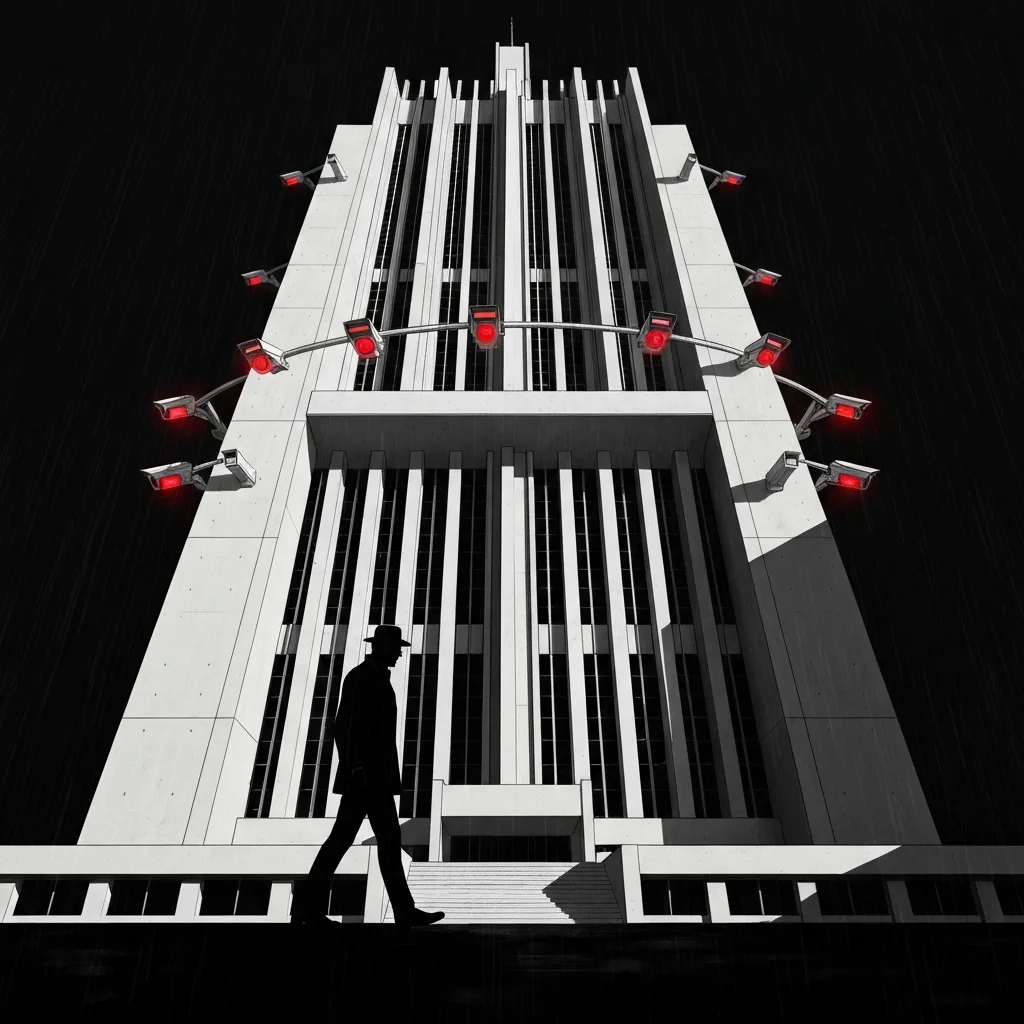
The Anatomy of a Dystopia
While utopian literature dreams of human perfection and harmonious societies, dystopian fiction operates as its cynical shadow. It asks a simple, terrifying question: what happens when our pursuit of a perfect world goes horribly wrong? The genre strips away the veneer of societal progress to expose the fragile boundaries between order and oppression, safety and subjugation. Readers are consistently drawn to these narratives not out of a desire for despair, but for clarity. Dystopian novels function as literary stress tests for civilization, pushing political and social ideologies to their absolute extremes to see where they fracture.
Historically, the dystopian novel emerged as a direct response to the rapid industrialization, political upheavals, and technological advancements of the early twentieth century. As humanity developed the tools to destroy itself on a mass scale, writers began to wonder how those same tools might be used to control the human mind. The resulting works have become essential reading, serving as cultural warning signs that remain strikingly relevant decade after decade.

The Architect of the Modern Nightmare: Yevgeny Zamyatin
To understand the giants of the dystopian genre, one must first look at the foundation built by Russian author Yevgeny Zamyatin. Written in 1920, his novel We is widely considered the grandfather of modern dystopian literature. Set centuries in the future, the story introduces the One State, a society where individuality has been entirely eradicated. Citizens do not have names; they are assigned alphanumeric designations. They live in apartments made of glass, allowing the state’s secret police to monitor their every move, an architectural embodiment of total surveillance.
Zamyatin wrote We as a critique of the extreme rationalism and totalitarianism he witnessed during the Russian Revolution. His vision of a society that sacrifices freedom for mathematical precision heavily influenced the writers who followed him. The novel introduces the fundamental conflict of the dystopian genre: the primal human desire for freedom and irrationality clashing against a cold, mechanized system of absolute control.
The Tyranny of Pleasure: Aldous Huxley’s Brave New World
Published in 1932, Aldous Huxley’s Brave New World offered a radically different, yet equally terrifying, vision of the future. While early dystopian works focused on societies ruled by fear and physical coercion, Huxley anticipated a world controlled by pleasure, distraction, and genetic engineering. In the World State, citizens are grown in hatcheries, conditioned from birth to accept their social castes, and kept docile through a steady diet of mindless entertainment and a government-sanctioned narcotic called soma.
Huxley’s genius lies in his understanding of human psychology. He recognized that authoritarianism does not always require a boot stamping on a human face; it can just as easily be achieved by giving people exactly what they want until they no longer care about their freedom. The horror of Brave New World is that its citizens are perfectly happy in their subjugation. They have traded art, religion, deep relationships, and intellectual curiosity for superficial comfort. In an era dominated by endless digital scrolling, algorithmic entertainment, and instant gratification, Huxley’s warning feels uncomfortably prescient.
The Architecture of Oppression: George Orwell’s 1984
If Huxley warned of a society destroyed by what it loves, George Orwell warned of a society destroyed by what it fears. Published in 1949, 1984 remains the definitive text on totalitarianism, surveillance, and the manipulation of truth. Orwell introduced concepts that have permanently entered the modern lexicon: Big Brother, doublethink, thoughtcrime, and the Thought Police.
Set in Airstrip One, a province of the superstate Oceania, the novel follows Winston Smith, a low-ranking party member who secretly despises the regime. Orwell meticulously details the mechanics of absolute power. The Party does not simply want obedience; it wants to control reality itself. Through the constant revision of history and the creation of Newspeak—a language designed to eliminate the very words needed to express rebellious thoughts—Orwell illustrates how language shapes human consciousness. When a government can convince its citizens that two plus two equals five, it has achieved ultimate authority. 1984 stands as a masterclass in political fiction, dissecting the ways in which truth can be weaponized to maintain systemic oppression.
The Death of Intellect: Ray Bradbury’s Fahrenheit 451
Written during the height of the McCarthy era in 1953, Ray Bradbury’s Fahrenheit 451 tackles the dangers of censorship and anti-intellectualism. The novel imagines a future American society where books are outlawed, and firemen are tasked with burning any that are found. The protagonist, Guy Montag, is a fireman who begins to question his destructive profession after a chance encounter with a free-thinking young woman.
Bradbury’s critique extends beyond government censorship. He points a finger directly at the public. In the world of Fahrenheit 451, the government did not initially confiscate the books; the people simply stopped reading them. They chose the mindless, fast-paced stimulation of wall-sized televisions and constant audio broadcasts over the slow, demanding process of reading and critical thought. Bradbury warns that a society obsessed with speed, superficial entertainment, and the avoidance of uncomfortable ideas will inevitably vote for its own intellectual demise.
Speculative Reality: Margaret Atwood’s The Handmaid’s Tale
In 1985, Margaret Atwood shifted the focus of the dystopian genre toward gender, bodily autonomy, and religious extremism with The Handmaid’s Tale. Set in the Republic of Gilead, a theocratic regime that has overthrown the United States government, the novel follows Offred, a woman forced into reproductive servitude to bear children for the ruling class.
Atwood refers to her work not as science fiction, but as speculative fiction. When writing the novel, she established a strict rule for herself: she would not include any atrocity, technology, or method of control that had not already occurred somewhere in human history. This grounding in historical reality gives The Handmaid’s Tale its unique psychological weight. It demonstrates how quickly democratic institutions can collapse and how easily human rights can be stripped away under the guise of national security and moral purity. The novel remains a vital exploration of systemic misogyny and the fragility of women’s rights.
The Modern Shift: Survival and the Post-Apocalyptic Crossover
In recent decades, the dystopian genre has fractured and evolved, often overlapping with post-apocalyptic fiction. Works like Cormac McCarthy’s The Road strip away the complex political structures of Orwell and Huxley, focusing instead on the raw, brutal reality of human survival in a dead world. Here, the dystopia is not a hyper-organized government, but the complete absence of one.
Simultaneously, the early 2000s saw a massive surge in young adult dystopian literature, spearheaded by Suzanne Collins’s The Hunger Games. These modern iterations often shift the narrative focus from the crushing defeat of the individual to the possibility of rebellion and systemic overthrow. They use extreme societal structures—like forcing teenagers to fight to the death for televised entertainment—to critique modern wealth inequality, reality television culture, and the exploitation of the working class by out-of-touch elites.
The Enduring Resonance of Dystopian Fiction
Why do we continue to read books that paint such grim pictures of human destiny? The answer lies in the genre’s inherent demand for vigilance. Dystopian literature does not predict the future; it diagnoses the present. By exaggerating the flaws of contemporary society, these authors force readers to confront uncomfortable truths about power, compliance, and the erosion of individual liberties.
When we read Zamyatin, we are reminded to protect our individuality. When we read Huxley, we are challenged to question our addiction to comfort and entertainment. Orwell demands that we fiercely guard the truth and the integrity of language, while Bradbury urges us to protect the slow, quiet spaces required for deep thought. Finally, Atwood insists that we never take our hard-won civil rights for granted.
Ultimately, dystopian literature is an act of profound optimism. An author only issues a warning if they believe there is still time for the reader to change course. These novels endure because they serve as a crucial mechanism for societal self-correction, reminding us that the future is not something that simply happens to us; it is something we are actively building right now.

Do you enjoy the content on Agenda Creativa?
Your contributions help me create new articles, share creative ideas, and keep this platform alive! If you like what I do and want to support my work, you can buy us a coffee.
Every cup of coffee means more than just a gesture – it's direct support for my passion to create inspiring and useful content. Thank you for being part of this journey!
☕ Buy me a coffee