The Anatomy of a Psychological Trigger
We all recognize the immediate aftermath of a psychological trigger. An offhand comment from a colleague, an unexpected change in plans, or a passive-aggressive text message sends a sudden jolt through your nervous system. Your heart rate accelerates. Your jaw tightens. In an instant, you are no longer responding to the present moment; you are entirely consumed by a surge of anger, anxiety, or defensiveness.
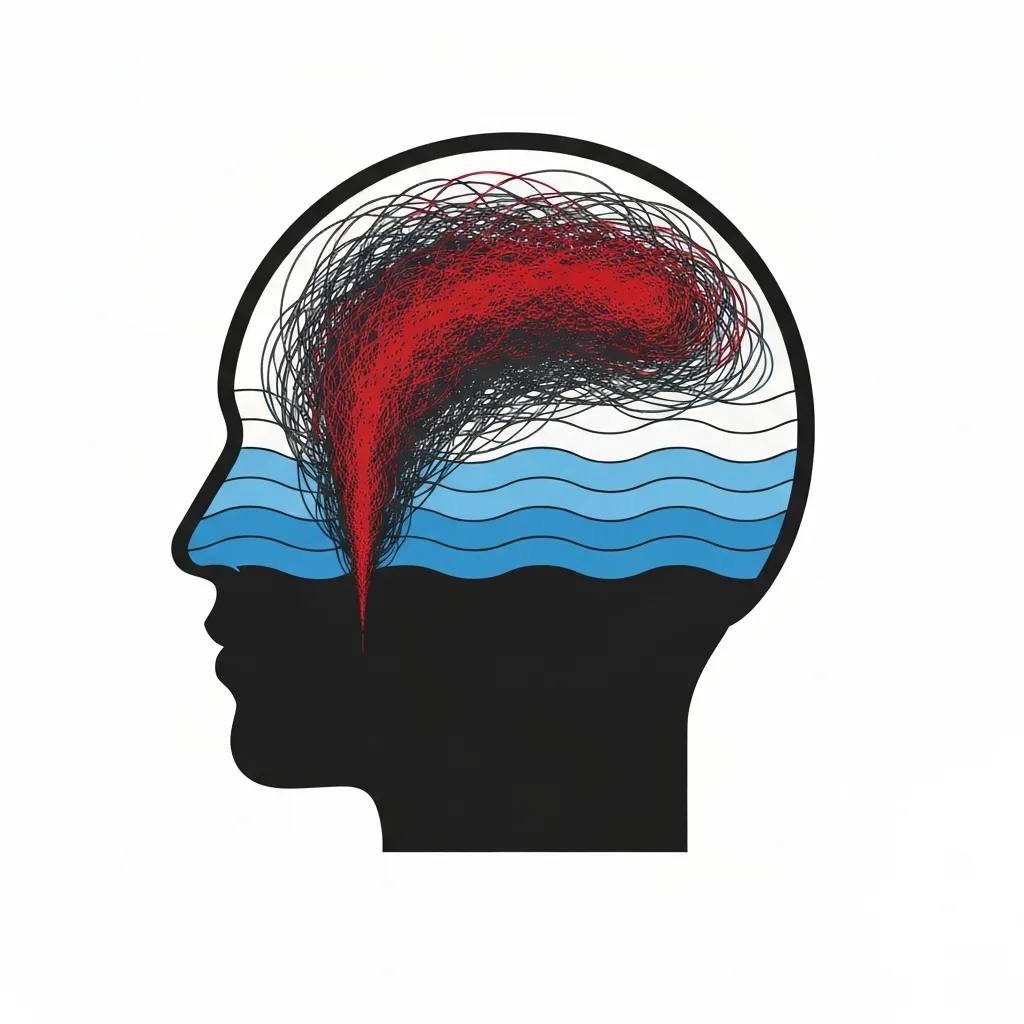
Many people assume that achieving emotional balance means reaching a state where these triggers no longer affect them. This is a biological impossibility. The true measure of emotional resilience is not whether you get triggered, but rather how long you remain trapped in that heightened state. In the study of psychology and human emotion, this critical window of time is known as the emotional refractory period.

Understanding the Emotional Refractory Period
Pioneering psychologist Paul Ekman defined the emotional refractory period as the specific span of time during which our emotions filter our perception of the world. During this window, you are physiologically incapable of processing information that contradicts the emotion you are currently experiencing.
If you are locked in a refractory period of anger, your brain will only retrieve memories that justify your frustration. You will interpret neutral facial expressions as hostile, and you will view ambiguous text messages as direct attacks. You are, essentially, held hostage by your own neurobiology.
When a threat is perceived, the amygdala sounds the alarm, bypassing the prefrontal cortex—the region of the brain responsible for logic, reason, and consequence evaluation. Cortisol and adrenaline flood your bloodstream. This evolutionary mechanism was designed to keep humans alive in the face of acute physical danger. If a predator is actively chasing you, you do not need to pause and consider multiple perspectives; you need to fight or flee.
However, in modern life, the perceived threat is rarely a predator. It is usually a stressful email, a financial setback, or a difficult conversation. The physiological response is identical, but the modern context requires nuance, patience, and emotional intelligence—faculties that are completely inaccessible while you are stuck in the refractory period.
From Emotion to Mood: The Danger of Prolonged Recovery
Some individuals experience a refractory period that lasts only a few seconds or minutes. For others, it lasts hours, days, or even weeks. Understanding the distinction between an emotion, a mood, and a trait is essential for grasping why shortening this period is so important.
Neuroanatomist Jill Bolte Taylor discovered that the pure chemical process of an emotion—from the moment the trigger hits to the moment the chemicals are naturally flushed from the bloodstream—takes exactly 90 seconds. This is the baseline biological refractory period.
If an emotion lasts longer than 90 seconds, it is because you have chosen to reignite it through your cognitive habits. When a 90-second emotion is sustained for hours through overthinking, it becomes a mood. When that mood is sustained for months, it becomes a temperament. When a temperament goes unaddressed for years, it becomes a personality trait. Shortening your refractory period is the primary way to prevent a fleeting moment of anger from turning into a bitter personality.
Why We Self-Sabotage Our Emotional Recovery
If the biological lifespan of an emotion is so short, why do we stay upset for days? The length of your refractory period is largely determined by cognitive habits that inadvertently keep the nervous system alarmed.
Rumination is the primary culprit. When we replay a triggering event in our minds, we are actively re-dosing our bodies with stress hormones. The brain does not easily distinguish between a vividly imagined threat and a physical one occurring in real-time. Every time you rehearse an argument in the shower, you extend your refractory period.
Another factor is confirmation bias. Because the emotional state dictates our perception during the refractory period, the ego actively seeks out evidence to prove the emotion is justified. We complain to friends who we know will validate our outrage, or we doomscroll to validate our anxiety. This creates a self-sustaining feedback loop of emotional dysregulation.
Practical Strategies to Shorten Your Refractory Period
You cannot reason your way out of a physiological response, but you can use specific, targeted techniques to bring your prefrontal cortex back online faster. Here is how to actively shorten your recovery time.
Establish a Physiological Early Warning System
The first step to shortening the refractory period is recognizing that you have entered one. Because logic is temporarily offline, you cannot rely on your thoughts to tell you that you are triggered. You must rely on your body.
Map your unique physical markers of distress. Does your chest feel compressed? Do your ears get hot? Does your breathing become shallow and rapid? By memorizing these physical cues, you create an early warning system. The moment you notice the heat rising in your neck, you can silently state, “I am entering a refractory period.” This simple act of conscious recognition begins to re-engage the rational brain.
Utilize Biological Pattern Interrupts
Once you realize you are in the refractory period, your immediate goal is to break the cognitive loop. A pattern interrupt is a sudden action that forces the brain to change tracks, denying the emotional state the rumination it needs to survive.
Physical interventions are the most effective. Splashing ice-cold water on your face activates the mammalian dive reflex, which instantly lowers your heart rate and forces the parasympathetic nervous system to engage. Alternatively, changing your physical environment—walking out of the room or stepping outside into the fresh air—forces the brain to process new spatial and visual data, interrupting the internal narrative.
Separate the Affect from the Narrative
When triggered, our instinct is to focus on the story of why we are upset: “I cannot believe they said that to me after everything I have done.” This narrative fuels the emotional fire.
Instead, practice affect labeling. State the emotion objectively, without the accompanying story. Say to yourself, “I am experiencing a high level of anger right now,” or “There is a tight, anxious sensation in my chest.” Research demonstrates that putting raw feelings into objective words produces a diminished response in the brain’s emotional centers. You shift your perspective from being consumed by the emotion to simply observing it.
Employ the 90-Second Flush
Understanding the 90-second chemical lifespan of an emotion is incredibly empowering. When you get triggered, look at your watch. Commit to doing nothing but breathing and observing the physical sensations in your body for exactly one minute and a half.
Do not suppress the feeling, but do not feed it with thoughts either. Treat it like a wave passing through you. Often, by the time the 90 seconds have elapsed, the peak physiological intensity has broken. You will have regained enough cognitive control to choose a measured response rather than a destructive reaction.
The True Purpose of Mindfulness in Emotional Recovery
Mindfulness is frequently misunderstood as a state of permanent, unshakable calm. In reality, mindfulness is the active practice of decreasing the gap between a trigger and your awareness of that trigger.
Psychiatrist Viktor Frankl famously noted, “Between stimulus and response there is a space. In that space is our power to choose our response. In our response lies our growth and our freedom.” The refractory period is what happens when that space collapses entirely.
Achieving emotional balance does not mean you will never feel angry, anxious, or hurt again. It means that when those emotions inevitably arise, they will not dictate your behavior or hijack your day. By understanding the biology of the emotional refractory period and actively practicing techniques to shorten it, you reclaim your psychological agency. You transition from being a passive victim of your triggers to an active architect of your emotional recovery.




Do you enjoy the content on Agenda Creativa?
Your contributions help me create new articles, share creative ideas, and keep this platform alive! If you like what I do and want to support my work, you can buy us a coffee.
Every cup of coffee means more than just a gesture – it's direct support for my passion to create inspiring and useful content. Thank you for being part of this journey!
☕ Buy me a coffee