The Role of Sleep Hygiene in Productivity and Mental Well-being

The Foundation of High Performance

For decades, hustle culture sold us a toxic lie: sleep is a luxury, and exhaustion is a status symbol. We traded hours of rest for extra hours at the desk, believing that sheer willpower could override our biological limits. But modern neuroscience and performance psychology have completely debunked this myth. If you want to operate at peak capacity, manage your time effectively, and maintain your mental health, sacrificing rest is the worst strategy you can deploy.

The secret to sustainable productivity is not a new app, a complex time-blocking method, or another cup of coffee. It is sleep hygiene. Quality sleep is the foundational habit upon which all other organizational and productivity systems rest. Without it, your cognitive abilities degrade, your emotional regulation falters, and your output plummets.

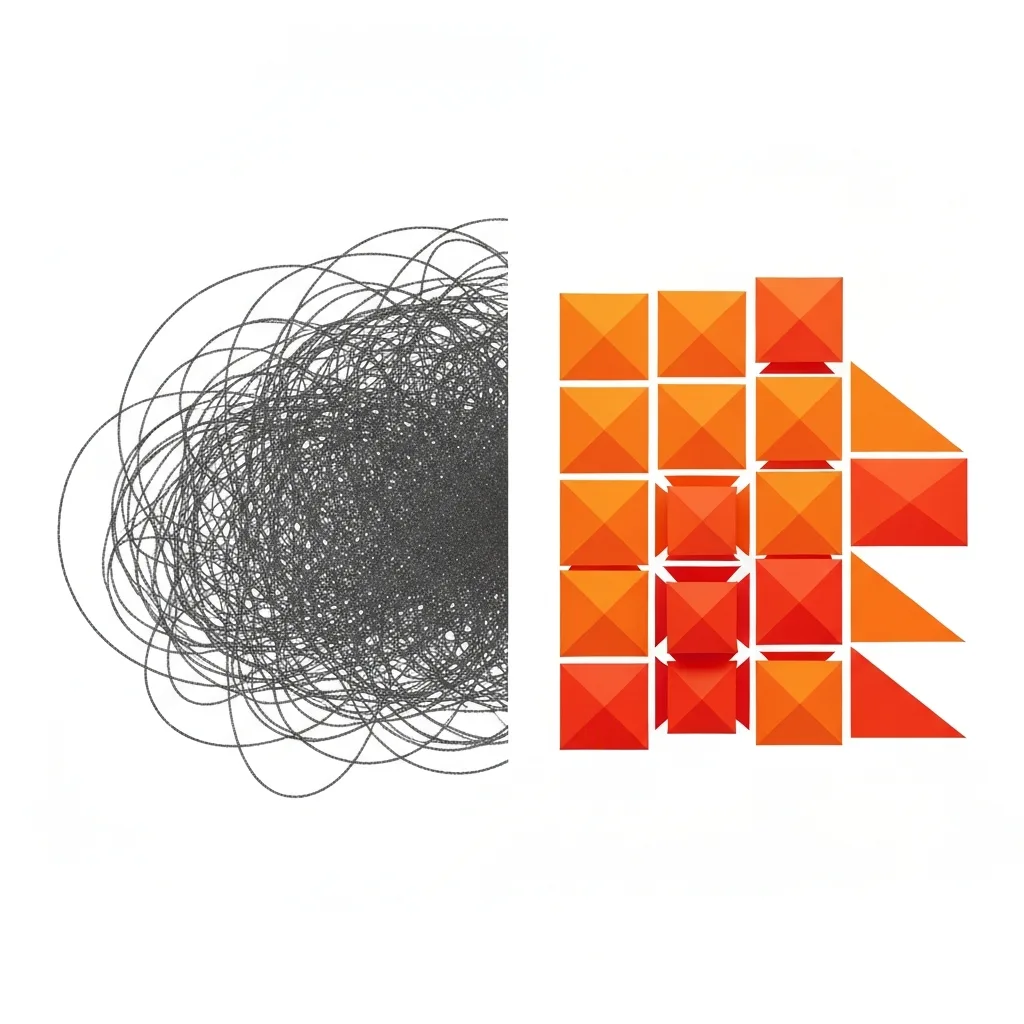
A split-screen illustration. On the left, a disorganized, cluttered brain filled with tangled wires. On the right, a clean, organized brain with glowing neural pathways, representing the cognitive benefits of a good night's sleep.

The Biology of Sleep and Productivity

To understand why sleep is the ultimate productivity multiplier, we have to look at what happens in the brain when the lights go out. Sleep is not a passive state of unconsciousness; it is an active, highly organized process of biological maintenance.

During the deeper stages of sleep, your brain performs critical cognitive housekeeping. It consolidates memories, moving information from short-term storage to long-term retention. This means the skills you learned and the information you processed during the day are hardwired into your brain while you rest. If you cut your sleep short, you interrupt this consolidation phase, leading to forgetfulness and a steep decline in learning capacity.

Furthermore, sleep is when the brain literally cleans itself. The glymphatic system, the brain’s waste clearance pathway, becomes highly active during deep sleep. It flushes out toxic byproducts that accumulate during waking hours, including amyloid-beta proteins. When you wake up after a poor night of sleep and feel that familiar “brain fog,” you are experiencing the effects of a brain that has not properly cleared its metabolic waste. You cannot organize your day or execute complex tasks efficiently when your neurological hardware is bogged down by toxins.

Sleep’s Direct Impact on Mental Well-being

Productivity does not exist in a vacuum. Your ability to focus and get things done is inextricably linked to your mental health. Chronic sleep deprivation is a massive disruptor of emotional stability.

When you are sleep-deprived, the amygdala—the brain’s emotional control center—becomes hyperactive. Studies show that a lack of sleep can increase amygdala reactivity by up to 60%. This is why minor inconveniences, like a delayed email or a spilled cup of coffee, can feel like catastrophic events when you are exhausted. At the same time, the connection between the amygdala and the prefrontal cortex (the area responsible for logical reasoning and impulse control) is severely weakened.

This neurological disconnect mimics the symptoms of anxiety and depression. You become more reactive, less resilient to stress, and highly susceptible to burnout. It becomes nearly impossible to maintain a positive, organized mindset when your brain is trapped in a biological state of fight-or-flight. Prioritizing sleep hygiene is one of the most effective, immediate ways to stabilize your mood and protect your mental well-being.

What Exactly is Sleep Hygiene?

People often confuse “getting enough sleep” with “sleep hygiene,” but they are not the same thing. You can spend eight hours in bed and still wake up exhausted if the quality of your rest is poor. Sleep hygiene refers to the environment and the daily habits that promote consistent, uninterrupted, restorative sleep.

Think of sleep hygiene as the organizational system for your physical recovery. Just as you would not expect to do your best work at a messy, noisy desk, you cannot expect your brain to transition into deep sleep in a chaotic, unoptimized environment.

Actionable Sleep Hygiene Habits for High Output

Improving your sleep hygiene requires intentionality. Here are practical, science-backed strategies to optimize your sleep architecture, boost your daily productivity, and protect your mental health.

1. Implement the 3-2-1 Shutdown Rule

What you do in the hours leading up to bedtime dictates the quality of your sleep. The 3-2-1 rule is a simple framework to help your body transition from active wakefulness to rest.

  • 3 hours before bed: Stop eating large meals and drinking alcohol. Digestion requires energy, and processing food can raise your core body temperature, which disrupts sleep architecture. Alcohol might help you fall asleep faster, but it destroys REM sleep, leaving you groggy the next day.
  • 2 hours before bed: Stop working. Close the laptop and stop checking emails. You need to signal to your brain that the demands of the day are over, allowing your cortisol levels to drop.
  • 1 hour before bed: Stop looking at screens. The blue light emitted by phones and televisions suppresses the production of melatonin, the hormone responsible for regulating your sleep-wake cycle.

2. Optimize Your Sleep Environment

Your bedroom should be optimized for one primary function: rest. To achieve this, you need to control three variables: light, temperature, and noise.

First, make your room as dark as possible. Even small amounts of ambient light from streetlamps or electronic devices can penetrate your eyelids and disrupt melatonin production. Invest in high-quality blackout curtains or use a sleep mask.

Second, drop the temperature. Your core body temperature needs to decrease by about two to three degrees Fahrenheit to initiate and maintain sleep. The optimal bedroom temperature for most people is surprisingly cool—around 65 degrees Fahrenheit (18 degrees Celsius).

Finally, manage noise. If you live in a noisy environment, use a white noise machine or earplugs to mask disruptive sounds that could pull you out of deep sleep cycles.

3. The Consistency Principle

Your brain relies on circadian rhythms—a 24-hour internal clock—to regulate sleepiness and wakefulness. This clock thrives on routine. Going to bed and waking up at wildly different times confuses your circadian rhythm, leading to a state of perpetual “social jetlag.”

To fix this, anchor your wake-up time. Set an alarm for the exact same time every single day, including weekends. While you might occasionally go to bed later than planned, keeping your wake-up time consistent will eventually force your body to feel tired at the appropriate time in the evening. Consistency is the single most powerful tool for training your biological clock.

4. Cognitive Offloading Before Bed

One of the most common barriers to falling asleep is a racing mind. When you lie in the dark, your brain finally has the quiet space to process the day’s events and worry about tomorrow’s tasks. This can cause a spike in anxiety right when you need to relax.

To combat this, practice cognitive offloading. Keep a notebook on your nightstand. About an hour before bed, write down everything that is on your mind. List the tasks you need to accomplish tomorrow, the problems you are trying to solve, and any lingering anxieties. By transferring these thoughts from your brain to a piece of paper, you give your mind permission to let them go for the night. This simple organizational habit drastically reduces sleep onset latency (the time it takes to fall asleep).

5. Manage Morning Light Exposure

Sleep hygiene does not just happen at night; it starts the moment you wake up. Morning sunlight is the primary signal that resets your circadian rhythm for the day. When bright light hits your eyes, it triggers a healthy spike in cortisol, shakes off sleep inertia, and starts a biological timer that will make you naturally sleepy 14 to 16 hours later.

Aim to get outside and expose your eyes to natural sunlight for 10 to 15 minutes within the first hour of waking. If you wake up before the sun rises, turn on bright overhead lights until you can get outside.

The Non-Negotiable Foundation

Organizing your task list, optimizing your calendar, and setting ambitious goals are all important aspects of productivity. But none of these tactics matter if the person executing them is running on an empty battery. Poor sleep destroys focus, shatters emotional resilience, and completely derails your mental well-being.

By treating sleep hygiene with the same respect and discipline that you apply to your work, you transform rest from a passive necessity into an active advantage. Protect your sleep, and your productivity and mental health will naturally follow.


The Anti-Vision: Why Defining Your Worst Possible Future is the Ultimate Catalyst for Action

The Flaw in Traditional Positive Visualization

Most mainstream advice on motivation starts with a vision board. You are instructed to cut out pictures of luxury cars, serene beaches, and perfect relationships, pin them to a corkboard, and manifest your way to success. But if you are reading this, you already know that positive visualization often falls short. It feels good in the moment, providing a cheap psychological reward, but it rarely sustains the grueling, day-to-day effort required to actually change your trajectory.

The problem with relying solely on positive visualization is that it tricks the brain. When you vividly imagine a successful future, your brain releases dopamine, the neurotransmitter associated with reward and pleasure. You experience the satisfaction of achievement without having done any of the actual work. This creates a state of complacency. You feel relaxed and optimistic, which are terrible emotional states for executing difficult, friction-heavy tasks. If you want to build a business, get into peak physical shape, or master a complex skill, you do not need relaxation. You need urgency.

A close-up shot of a person's hands holding a piece of paper titled 'The Anti-Vision' with crossed-out negative habits. The background is a blur of a modern coffee shop. Warm, natural lighting, shot on a 35mm lens, highly detailed.

The Biology of Loss Aversion

Human beings are biologically wired to prioritize threats over rewards. This evolutionary survival mechanism is known in behavioral economics as loss aversion. Studies consistently show that the psychological pain of losing fifty dollars is roughly twice as intense as the joy of finding fifty dollars. We will fight significantly harder to protect what we have—or to avoid a painful outcome—than we will to acquire something new.

Yet, traditional motivational frameworks completely ignore this powerful driver. They ask you to focus entirely on the gain, ignoring the profound motivational leverage of avoiding the loss. This is where the concept of the Anti-Vision comes into play. Instead of asking yourself what your ideal life looks like in five years, you ask yourself a much darker, more uncomfortable question: If I succumb to my worst habits, give in to my fears, and let apathy win, what exactly does my life look like in five years?

Defining your worst possible future is one of the most potent, visceral catalysts for action you can engineer. It strips away the illusion that staying in your comfort zone is safe. It shows you the exact cost of your inaction.

Push vs. Pull Motivation

Psychologists categorize motivation into two distinct directional forces: moving toward a desired outcome (pull motivation) and moving away from an undesired outcome (push motivation). Pull motivation is excellent for long-term direction. It acts as a compass. But push motivation is the engine. When you are lying in bed at six in the morning, debating whether to go to the gym or hit snooze, the vague image of a six-pack (pull motivation) is rarely enough to get you moving. However, the acute disgust of becoming lethargic, weak, and chronically fatigued (push motivation) will force your feet onto the floor.

The Anti-Vision leverages push motivation. It creates an artificial predator in your psychological environment. You are no longer just running toward a goal; you are running away from a nightmare of your own making.

How to Construct Your Personal Anti-Vision

Creating an Anti-Vision requires brutal honesty. It is not an exercise in self-pity, but rather a calculated assessment of cause and effect. You must look at your current negative behaviors and project them into the future, compounding their effects over time. Here is how to build yours.

Step 1: The Habit Audit

Start by identifying the behaviors you currently engage in that you know are detrimental. These do not have to be massive, destructive vices. Often, the most dangerous habits are the quiet, insidious ones. Spending two hours a night scrolling through short-form video content. Hitting the snooze button twice every morning. Avoiding difficult conversations with your spouse or business partner. Opting for fast food because you are too tired to cook.

Write these down. Be objective and clinical. You are gathering data on the current trajectory of your life. If a plane is off course by just one degree, it might not seem like a big deal after a mile, but after a thousand miles, it will end up in the wrong country. Your habits are the degrees of your trajectory.

Step 2: Define the Unacceptable Reality

Next, take those habits and fast-forward three to five years. If you change absolutely nothing, where do these behaviors lead? Be specific. Vague fears produce vague motivation. Do not just write, ‘I will be unhealthy.’ Write, ‘I will weigh two hundred and thirty pounds, my joints will ache when I walk up the stairs, and I will be pre-diabetic.’

If you are avoiding difficult conversations at work, your Anti-Vision might look like this: ‘I am still in the exact same middle-management role, earning a salary that barely covers inflation. I am deeply resentful of my younger colleagues who have been promoted past me, and I dread waking up on Monday mornings.’

The goal is to make the image so vivid and so repulsive that the mere thought of it triggers a physical response. You want to feel a knot in your stomach. That discomfort is the fuel you are going to use to change.

Step 3: Drafting the Nightmare Document

Consolidate these projections into a single, cohesive narrative. Write a one-page document describing a day in the life of your Anti-Vision. Describe waking up tired. Describe the clutter in your home. Describe the anxiety of checking your bank account. Describe the strained, superficial relationships you have with your friends and family because you never invested time in them.

Read this document once a week, or whenever you feel your discipline slipping. It serves as a stark reminder that inaction is not a neutral state. Inaction is an active choice to move toward this nightmare.

Translating the Anti-Vision into Anti-Goals

Once you have a clear picture of what you are avoiding, you can create Anti-Goals. Traditional goals focus on acquisition: ‘I want to earn one hundred thousand dollars this year.’ Anti-Goals focus on prevention: ‘I never want to have my credit card declined at the grocery store again.’

Anti-Goals are highly actionable because they establish hard boundaries. If your Anti-Goal is ‘Never let my physical health prevent me from playing with my children,’ the corresponding action is clear: you must exercise and maintain a baseline of mobility and cardiovascular fitness. There is no ambiguity. The boundary is set, and crossing it means stepping directly into your Anti-Vision.

This method of inversion thinking—solving a problem by looking at it backward—was famously championed by mathematician Carl Jacobi and later by investor Charlie Munger. Munger often said, ‘All I want to know is where I am going to die, so I will never go there.’ By defining failure, you inherently outline the path to success.

The Balance: Fear as a Spark, Purpose as the Fuel

It is crucial to understand that the Anti-Vision is a starting mechanism, not a permanent state of residence. Operating entirely out of fear and avoidance for years on end will lead to chronic stress and burnout. The Anti-Vision is the spark plug; it ignites the engine and gets the car moving out of the mud. But once you are on the paved road, you need a different type of fuel.

This is where your positive vision finally comes into play. Once the immediate threat of your Anti-Vision has forced you to establish good habits, build discipline, and gain momentum, you shift your focus to the horizon. You start aiming for the life you actually want to build.

Motivation is a dynamic system. On the days you feel inspired, energetic, and optimistic, let your goals pull you forward. Focus on the impact you want to make, the wealth you want to build, and the freedom you want to achieve. But on the days when the alarm goes off early, the weather is terrible, and your mind is flooded with excuses, do not try to force positivity. Instead, look over your shoulder. Remember the nightmare you are running from. Let the fear of regret push you out the door.

Success is rarely the result of constant, unwavering inspiration. More often, it is the result of a stubborn refusal to accept mediocrity. By clearly defining the life you refuse to live, you make the actions required to build a great life non-negotiable.

Urge Surfing: The Psychological Technique for Riding Out Intense Emotional Impulses

You know the feeling. A sudden flash of anger prompts you to snap at your partner. A wave of anxiety drives you to compulsively check your work email at 11 PM. A deep sense of boredom, frustration, or sadness pushes you toward mindless scrolling, an unplanned online purchase, or opening the refrigerator for the third time in an hour. These are emotional urges—rapid, intense psychological impulses that demand immediate action.

Most of us operate under the flawed assumption that when an intense emotion strikes, we have only two choices: act on it immediately or aggressively fight it off. We either let the feeling dictate our behavior, or we try to suppress it through sheer willpower. Neither approach fosters long-term emotional balance. But there is a third option, rooted deeply in clinical mindfulness: urge surfing.

Originally developed by the late psychologist Dr. G. Alan Marlatt as a relapse prevention technique for addiction, urge surfing has since been adapted as an incredibly effective tool for managing everyday emotional reactivity. It teaches us how to experience the full, uncomfortable force of an emotional impulse without being swept away by it, allowing us to break destructive habits and respond to life with intention rather than pure reflex.

What Exactly is Urge Surfing?

Urge surfing rests on a fundamental psychological truth: emotions and their accompanying urges are inherently temporary. No matter how intense a feeling is, it cannot sustain its peak indefinitely. The problem is that when we are caught in the middle of a powerful emotional swell, our brains trick us into believing the intensity will last forever unless we do something to relieve the pressure.

The Ocean Metaphor of Human Emotion

To understand the practice, it helps to visualize your emotions as ocean waves. An urge starts small, gradually builds in momentum, reaches a peak of high intensity, and eventually crashes and dissipates on the shore. When we act on an urge—like yelling when we are angry or seeking constant reassurance when we are anxious—we are essentially feeding the wave, giving it the energy it needs to keep churning.

Urge surfing is the practice of noticing the emotional wave, stepping back, and simply riding it out without giving in to the conditioned response. Instead of fighting the wave (which exhausts you) or letting it pull you under (which leads to regrettable actions), you use mindful awareness as a surfboard. You stay on top of the sensation, observing it with curiosity, until it naturally subsides.

A conceptual macro photograph showing a human brain glowing with soft neural light, with a distinct glowing pause symbol (two vertical lines) overlaid on the prefrontal cortex. The background is dark and moody, representing the internal psychological space, with subtle glowing particles representing neurotransmitters. High resolution, cinematic lighting, scientific yet artistic visualization.

The Neuroscience of the Pause

To understand why this mindfulness technique is so effective, we have to look at what happens in the brain during an emotional spike. When you are triggered by a stressful event, the amygdala—the brain’s primitive threat-detection center—sounds an alarm. This initiates a cascade of stress hormones, including cortisol and adrenaline, preparing your body for a fight-or-flight response.

Bypassing the Amygdala Hijack

During this “amygdala hijack,” the prefrontal cortex—the area of the brain responsible for logic, impulse control, and long-term planning—temporarily goes offline. Your brain prioritizes immediate survival over rational thought. This is why trying to logic your way out of a strong emotional urge rarely works; your rational brain is effectively locked out of the control room.

Urge surfing acts as a neurological reset button. By choosing to observe the urge rather than immediately acting on it, you introduce a critical pause. This pause deprives the amygdala of the immediate behavioral feedback it expects. When you don’t fight or flee, the brain slowly realizes there is no actual emergency. Over a period of about 20 to 30 minutes, the parasympathetic nervous system begins to engage, lowering your heart rate and bringing the prefrontal cortex back online. You aren’t suppressing the emotion; you are simply outlasting the brain’s chemical alarm bell.

How to Practice Urge Surfing: A Step-by-Step Guide

Mastering this technique requires consistent practice. You cannot wait for a massive emotional crisis to try it for the first time. Start with smaller waves—the urge to check your phone while someone is talking to you, or the impulse to complain about a minor daily annoyance. When you feel an urge arising, follow these four steps.

Step 1: Acknowledge the Swell (Mindful Recognition)

The moment you feel the impulse to react, label it internally. Say to yourself, “I am having the urge to yell,” or “I am feeling a strong impulse to shut down and avoid this conversation.” Naming the urge creates immediate psychological distance. In acceptance and commitment therapy, this is known as cognitive defusion. You realize that you are not the urge; you are the consciousness observing the urge.

Step 2: Anchor Your Attention (The Breath as a Surfboard)

You need a surfboard to stay above the water, and your breath is the most reliable anchor you have. Shift your focus to the physical sensation of breathing. Notice the air moving in through your nose, the expansion of your ribs, and the rise and fall of your chest. You do not need to alter your breathing or force it to slow down artificially. Just watch it. This grounds your attention in the present moment, preventing your mind from spinning stories about why you are upset.

Step 3: Map the Physical Sensations

Urges do not just live in the mind; they manifest intensely in the body. Where do you feel this emotional impulse? Is it a tightness in your chest? A buzzing in your hands? A hot knot in your stomach? Direct your attention to these physical sensations with pure, objective curiosity. Do not judge them as good or bad. Simply investigate them as physical data. How much space does the tightness take up? Is the sensation static, or does it move? By focusing on the physical sensation rather than the narrative of the emotion, you strip the urge of its psychological power.

Step 4: Watch the Wave Crest and Fall

As you observe the physical sensations, you will notice them shifting and changing. The urge will likely get stronger before it gets weaker. This is the crest of the wave. Expect it, and do not panic. Remind yourself: “This is just a feeling, and feelings are temporary.” Keep your attention on your breath and the physical sensations until you feel the intensity begin to drop. You are simply watching the wave roll into the shore.

The Danger of Resistance: Why Fighting Urges Fails

A common misconception about emotional regulation is that we need to actively fight our negative feelings. But psychological resistance acts like a dam in a river. When you suppress an urge—telling yourself, “I shouldn’t feel this way,” or “I need to stop being angry right now”—you create immense internal pressure. The water has nowhere to go, so it builds up until the dam inevitably breaks, usually resulting in a much larger emotional explosion or a binge behavior.

Urge surfing entirely removes the dam. By giving the emotion unconditional permission to exist, you remove the secondary layer of distress: the guilt, shame, or panic about having the feeling in the first place. You accept the presence of the wave without feeling obligated to let it dictate your direction. This radical acceptance significantly shortens the lifespan of the emotion.

Common Pitfalls for Beginners

When you first begin practicing urge surfing, it is easy to fall into a few common traps. The most frequent mistake is using urge surfing as a covert way to try and make the feeling go away. If your hidden agenda is to destroy the emotion, you are still practicing resistance. The goal of urge surfing is not to eliminate the urge; it is to prove to yourself that you can tolerate the urge without acting on it. The dissipation of the feeling is a byproduct, not the goal.

Another pitfall is getting caught up in the thoughts surrounding the urge. Your mind will try to justify the impulse. It will tell you, “You have a right to be angry, you should send that text.” When you notice this happening, gently detach from the narrative and return your focus strictly to the physical sensations in your body and the rhythm of your breath.

Applying Urge Surfing to Daily Emotional Challenges

While originally designed for addiction, the applications for urge surfing in daily emotional life are virtually limitless. Here are a few ways to apply the practice to maintain emotional balance.

Anger and Interpersonal Conflict

During a heated argument, the urge to have the last word, to hurl an insult, or to strike back defensively can feel overpowering. Surfing this urge allows you to tolerate the intense heat of anger without doing irreversible damage to your relationship. It buys you the time to stay silent just long enough to formulate a response that is aligned with your core values, rather than reacting out of spite or wounded pride.

Anxiety and the Compulsion for Reassurance

Anxiety almost always comes with an intense behavioral urge to seek immediate reassurance—whether that means texting someone repeatedly to ensure they aren’t mad at you, or endlessly researching physical symptoms online. Surfing the urge to seek reassurance builds your tolerance for uncertainty. It teaches your nervous system that you can survive feeling anxious without needing an immediate external fix.

Numbing and Avoidance Behaviors

When we feel bored, lonely, or overwhelmed, we often experience urges to numb out. This might look like pouring a drink, online shopping, or doomscrolling on social media. By urge surfing these impulses, we force ourselves to sit with the underlying discomfort. Over time, this breaks the automatic cycle of emotional avoidance, allowing us to address the root causes of our distress.

The Freedom of the Pause

Ultimately, urge surfing is about reclaiming your autonomy. It is the profound realization that while you cannot control the emotional waves that life throws at you, you do not have to be at their mercy. Between an emotional trigger and your behavioral response, there is a space. By learning to surf your urges, you actively expand that space.

Every time you successfully ride out an emotional impulse without acting on it, you rewire your brain. You build emotional resilience and prove to yourself that feelings are not facts, and urges are not commands. Through consistent practice, you transform yourself from someone who reacts blindly to internal impulses into someone who responds to life with intention, clarity, and unshakeable emotional balance.

Somatic Mindfulness: How to Process Difficult Emotions Through Your Body, Not Your Mind

The Trap of Cognitive Overdrive

Have you ever tried to logic your way out of anxiety? You sit there, mapping out exactly why you shouldn’t be stressed, listing the rational facts, and analyzing the root cause of your fear. Yet, your chest remains tight, your breathing is shallow, and your heart races. This frustrating experience highlights a fundamental flaw in how we handle distress: we treat emotions as intellectual problems to be solved, rather than physical experiences to be felt.

Enter somatic mindfulness. While traditional cognitive approaches focus on changing your thoughts to change your feelings, somatic practices take a bottom-up approach. They bypass the endless loops of the analytical mind and go straight to the physical vessel where the emotion actually lives: your body. By shifting your focus from the narrative of your distress to the physical sensation of it, you can process heavy emotions, regulate your nervous system, and achieve a profound state of emotional balance.

Most of us are conditioned to be top-down processors. When an uncomfortable emotion arises—be it grief, anger, or chronic stress—our immediate instinct is to send it up to the brain for analysis. We ask ourselves questions: Why am I feeling this way? Whose fault is this? How do I fix it? We believe that if we can just understand the emotion, we can control it.

However, the analytical mind is not equipped to digest physical emotional energy. When you over-intellectualize your feelings, you often end up feeding them. The brain creates stories and catastrophic projections to justify the physical discomfort you are experiencing, which in turn triggers the body to release more stress hormones. It is a self-perpetuating loop of cognitive overdrive.

True emotional balance requires recognizing that emotions are, first and foremost, physiological events. The word emotion itself implies motion—energy moving through the body. When we stay trapped in our heads, we interrupt this natural movement. The energy stagnates, manifesting as chronic muscle tension, digestive issues, fatigue, and persistent low-grade anxiety.

Abstract representation of the mind-body connection. A glowing, warm amber light moving slowly from a stylized human brain down through the nervous system into the torso, symbolizing the flow of somatic awareness and emotional processing. Soft organic shapes, calming color palette of deep blues and warm ambers, modern digital art style.

What is Somatic Mindfulness?

Somatic mindfulness is the practice of directing your conscious awareness to your internal physical landscape. The word somatic comes from the Greek word ‘soma,’ meaning the living body in its wholeness. Rather than analyzing the content of your thoughts, somatic mindfulness asks you to observe the physical sensations occurring beneath the neck.

This practice relies heavily on a sense called interoception. Interoception is your brain’s ability to perceive sensations inside your body, such as your heartbeat, respiration rate, temperature, and muscular tension. People who struggle with emotional regulation often have poor interoceptive awareness; they are entirely disconnected from their physical selves until the pain or panic becomes too loud to ignore.

By cultivating interoception through somatic mindfulness, you learn the unique physical vocabulary of your emotions. You begin to notice the subtle tightening in your jaw before anger fully erupts, or the cold hollowness in your stomach that precedes a wave of sadness. Recognizing these cues allows you to intervene and regulate your nervous system before the emotion completely overwhelms you.

The Nervous System Connection

To understand why somatic mindfulness works, we have to look at the autonomic nervous system. When you experience a stressful event, your sympathetic nervous system activates the fight-or-flight response. Your body gets flooded with adrenaline and cortisol, preparing you to take physical action.

In the wild, an animal completes this stress cycle by physically running or fighting, and then literally shaking off the excess energy once the threat has passed. Humans, however, rarely do this. We sit at our desks, clench our jaws, and pretend everything is fine. The biological stress cycle remains incomplete, and the survival energy gets trapped in the nervous system.

Somatic mindfulness provides a safe container for the nervous system to finally complete these stalled cycles. By paying attention to the physical sensations of an emotion without trying to suppress them, you signal to your brain that the threat has passed, allowing your parasympathetic nervous system (the rest-and-digest state) to come back online.

Core Principles of Somatic Emotional Processing

If you are accustomed to living entirely in your head, shifting into your body can feel foreign or even intimidating. Somatic therapy and mindfulness rely on three core principles to make this process safe and effective.

1. Tracking Sensations

Tracking is the foundational skill of somatic mindfulness. It involves scanning your body and noticing sensations objectively, without judgment. The key is to strip away the emotional labels. Instead of saying, ‘I feel anxious,’ you track the physical reality: ‘I feel a rapid fluttering in my chest, my breathing is shallow, and there is a hot, tight sensation in my throat.’ This subtle shift in language breaks the identification with the emotion and creates a space of pure observation.

2. Pendulation

Emotions move in waves. Pendulation is the practice of consciously moving your attention between an area of discomfort and an area of safety or neutrality in your body. If the tightness in your chest feels overwhelming, you don’t force yourself to stay there. You might shift your focus to your feet resting on the floor, or the neutral feeling of your hands resting in your lap. By swinging your attention back and forth, you teach your nervous system that it is not entirely consumed by distress—that safety and discomfort can coexist.

3. Titration

Titration is a concept borrowed from chemistry, where one substance is slowly added to another drop by drop to prevent an explosive reaction. In somatic mindfulness, titration means processing difficult emotions in small, manageable pieces. You do not need to dive into the deepest well of your grief all at once. You can touch the edge of the sensation for just a few seconds, breathe, and step back. This prevents re-traumatization and safely builds your window of tolerance over time.

A Step-by-Step Somatic Practice for Emotional Balance

When you feel an intense emotion rising, or if you simply feel dysregulated and disconnected, use this step-by-step somatic sequence to process the physical energy.

Step 1: Ground the Physical Vessel

Before you engage with a difficult emotion, you must establish a baseline of physical support. Sit or lie down in a comfortable position. Bring your awareness to the points of contact between your body and the surface beneath you. Feel the gravity pulling you downward. Notice the texture of the fabric against your skin. Take three slow, deep breaths, making your exhales longer than your inhales to gently stimulate the vagus nerve.

Step 2: Locate the Sensation

Ask yourself: ‘Where is this emotion living in my body right now?’ Scan your body from the crown of your head down to your toes. You might find it in a clenched jaw, a heavy weight on your shoulders, a fluttering in your belly, or a tight band around your ribs. Do not analyze why it is there; simply locate its physical address.

Step 3: Describe the Physicality

Once you have located the sensation, zoom in on it like a scientist observing a biological phenomenon. What are its physical characteristics? Does it have a temperature? Is it hot, cold, or lukewarm? Does it have a texture? Is it sharp, dull, prickly, or smooth? Does it feel stationary, or is it moving? Is it heavy or light? By describing the sensation in purely physical terms, you deactivate the story-generating part of your brain and anchor yourself firmly in the present moment.

Step 4: Allow the Completion

As you hold your awareness on the sensation, you may notice it beginning to shift. It might intensify for a moment, change temperature, or move to a different part of your body. Your body might also have a spontaneous physical impulse. You might feel the urge to take a deep, shuddering sigh, to yawn, to stretch, to cry, or to shake your hands. Allow these movements to happen organically. This is your nervous system actively discharging the trapped energy and completing the biological stress cycle.

Overcoming Common Roadblocks

The most common roadblock in somatic mindfulness is encountering numbness. When you scan your body, you might find a blank space, a sense of dissociation, or an inability to feel anything below the neck. This is entirely normal. Numbness is simply the nervous system’s ultimate defense mechanism against overwhelm. If you encounter numbness, do not force a feeling. Instead, track the numbness itself. Acknowledge it gently: ‘I notice a feeling of blankness in my chest.’ Over time, as your body realizes it is safe, the numbness will begin to thaw.

Another roadblock is the fear that if you actually feel the physical sensation of your pain, it will destroy you. This is where the practice of pendulation is vital. Remember that you are in control of your attention. You can always pan back out, open your eyes, look around the room, and ground yourself in your immediate environment if the internal landscape becomes too intense.

Conclusion

Emotional balance is not the absence of difficult feelings; it is the capacity to experience them without being consumed by them. By integrating somatic mindfulness into your daily life, you stop fighting a war in your mind and start partnering with your body. You learn that emotions are not permanent states of being, but temporary waves of physical energy moving through a resilient vessel. When you finally allow yourself to feel them physically, you grant them the freedom to pass, leaving you grounded, regulated, and deeply at peace.

The Power of the Observer Self: How Detaching from Your Thoughts Creates Deep Emotional Stability

The Invisible Trap of Your Own Mind

Have you ever noticed how a single, fleeting thought can entirely derail your morning? You receive an ambiguous email from your manager, or a friend takes slightly too long to reply to a text message. Within seconds, your mind constructs a catastrophic narrative. Your heart rate accelerates, your chest tightens, and before you know it, you are experiencing genuine physiological distress over a scenario that exists entirely inside your head.

This phenomenon is incredibly common, yet it forms the root of an immense amount of unnecessary human suffering. We spend our lives assuming that because we think something, it must be true, urgent, and worthy of an immediate emotional reaction. In psychological terms, this complete entanglement with our internal monologue is known as cognitive fusion. When we are fused with our thoughts, there is no separation between the thinker and the thought. A thought like “I am going to fail” is not experienced as a passing mental event, but as an absolute, terrifying reality.

Achieving true emotional balance does not require you to stop thinking negative thoughts. The human brain is an ancient survival machine, wired to constantly scan for threats, predict worst-case scenarios, and generate anxious chatter. Trying to force your mind to stop thinking is like trying to force your lungs to stop breathing. Instead, the secret to emotional stability lies in changing your relationship to your thoughts through a practice known as cultivating the Observer Self.

A conceptual, high-quality photograph showing a person's reflection in a calm pool of water. The actual person is standing grounded and solid on the edge, while the reflection ripples slightly. The image symbolizes the separation between the core self and passing emotional states, using natural, earthy tones.

Understanding Cognitive Fusion and the Negativity Bias

To understand why the Observer Self is so powerful, we first need to look at why our minds are so chaotic in the first place. Evolutionary biology tells us that our ancestors survived by paying strict attention to danger. The early human who assumed a rustling bush was a deadly predator survived to pass on their genes; the one who assumed it was just the wind did not. Consequently, modern humans inherited a brain with a profound negativity bias.

Your brain is constantly generating warnings, judgments, and criticisms. When we operate in a state of cognitive fusion, we take this evolutionary background noise incredibly seriously. If your brain generates the thought, “I am an imposter and everyone is about to find out,” cognitive fusion dictates that you immediately feel the shame and panic associated with being an imposter. You react to the thought as if it were a factual report about your identity.

This fusion leads to emotional volatility. Your emotional state becomes entirely dependent on the whims of a brain that is literally designed to worry. You are strapped into a psychological roller coaster, reacting to every mental dip and turn with intense emotional spikes. Breaking this cycle requires a fundamental shift in perspective.

Enter the Observer Self

The Observer Self—sometimes referred to in Acceptance and Commitment Therapy (ACT) as the “observing ego” or pure awareness—is the part of you that is capable of noticing your thoughts without getting tangled up in them. It is the psychological distance between the person experiencing the thought and the thought itself.

The Sky and the Weather Metaphor

One of the most effective ways to conceptualize the Observer Self is through the metaphor of the sky and the weather. Imagine that your core self—your pure awareness—is the sky. The sky is vast, infinite, and inherently calm. Your thoughts, emotions, and physical sensations are the weather. Sometimes the weather is beautiful, sunny, and clear. Other times, it brings violent thunderstorms, dark clouds, and hail.

When we are caught in cognitive fusion, we believe we are the thunderstorm. We feel the rain, we hear the thunder, and we assume the storm will destroy us. But when we step back into the Observer Self, we realize we are actually the sky. The sky is not damaged by the thunderstorm. It simply holds the storm, observes the dark clouds passing through, and remains perfectly intact. Eventually, the weather always changes, but the sky remains exactly the same.

Cultivating this perspective is the essence of cognitive defusion. It is the practice of stepping back and watching your thoughts pass by like clouds, rather than letting them dictate your emotional reality.

Practical Steps to Cultivate Cognitive Defusion

Stepping into the Observer Self is a skill that requires practice. It involves retraining your brain to pause between a thought and a reaction. Here are several highly effective, evidence-based techniques to help you create that vital psychological distance in your daily life.

1. The “I Am Having the Thought” Technique

This is a foundational exercise in cognitive defusion. When you notice a distressing thought causing an emotional reaction, mentally catch the thought and reframe it. For example, if you are thinking, “I am completely overwhelmed and I can’t handle this,” notice the panic it causes. Then, add a simple phrase to the beginning of the sentence: “I am having the thought that I am completely overwhelmed and can’t handle this.”

To take it a step further, you can say, “I notice I am having the thought that I am completely overwhelmed.” This simple linguistic shift creates an immediate boundary between you and the thought. It reminds your brain that the thought is an event happening to you, not an objective truth defining you. The thought loses its absolute authority, and the emotional intensity attached to it begins to drop.

2. Name the Storyteller

Our minds are repetitive. They tend to tell the same negative stories over and over again. Perhaps your mind frequently tells the “I am not good enough” story, or the “Everyone is going to abandon me” story, or the “Financial ruin is imminent” story. Once you identify these recurring narratives, you can start naming them.

When the familiar anxiety flares up, you can mentally note, “Ah, my brain is playing the ‘Imposter Syndrome’ story again.” By categorizing the thought as a familiar, repetitive story, you strip it of its urgency. You are acknowledging the presence of the thought without buying into the narrative. You become the audience watching a movie, rather than the character trapped inside it.

3. The Physical Anchor

Because thoughts exist entirely in the mind, they can easily pull us out of the present reality. When you feel yourself fusing with a spiral of anxious thinking, use your physical body as an anchor to pull your awareness back to the present moment. This is not about suppressing the thought, but about expanding your awareness so the thought is no longer the only thing you are experiencing.

Notice the physical sensation of your feet pressing against the floor. Feel the texture of the fabric on your clothing. Listen to the hum of the refrigerator or the traffic outside. By intentionally directing your attention to physical, sensory inputs, you activate the parasympathetic nervous system and ground yourself in the physical world. The distressing thought is still there, but it is now just one small piece of a much larger sensory experience.

The Profound Impact on Emotional Regulation

Consistently practicing cognitive defusion and returning to the Observer Self radically transforms how you process emotions. When you stop taking every thought literally, your emotional reactivity plummets. You no longer experience a surge of adrenaline every time a negative thought crosses your mind.

This creates a profound sense of emotional stability. You develop the capacity to tolerate uncomfortable emotions without feeling the need to immediately fix them, fight them, or run away from them. If anger arises, you can observe the physical sensation of anger in your chest without lashing out. If sadness appears, you can allow it to be present without spiraling into despair. You become a container for your emotions, rather than a victim of them.

Furthermore, this psychological distance creates the space necessary for intentional action. When you are fused with a thought, your reactions are automatic and impulsive. When you observe a thought, you give yourself the opportunity to choose your response. You can ask yourself, “Is this thought helpful? Does acting on this thought align with my values?” If the answer is no, you can simply let the thought pass and choose a different course of action.

Living with Detached Compassion

Cultivating the Observer Self is not about becoming cold, detached, or apathetic. It is entirely the opposite. When you are no longer exhausted by the constant battle against your own mind, you free up an immense amount of emotional energy. You can engage with the world more fully, love more deeply, and experience joy more completely, because you are no longer terrified of the inevitable negative thoughts that will occasionally arise.

You begin to treat your own mind with a sense of gentle, detached compassion. You recognize that your brain is simply doing its job—generating thoughts, predicting threats, and trying to keep you safe. You don’t have to be angry at your mind for being anxious, just as you wouldn’t be angry at your heart for beating. You simply learn to say, “Thank you for the warning, but I am okay right now.” In that small, quiet space between the thought and your reaction, you will find true, enduring emotional balance.

Mindful Eating Practices for Stress Reduction

In our hyper-connected, fast-paced world, eating has largely become a secondary activity. We consume our meals while scrolling through emails, watching television, or steering a car through heavy traffic. This profound disconnect from the act of nourishment does not just rob us of the simple pleasure of a good meal; it actively contributes to chronic stress, emotional imbalance, and digestive distress. When we treat food as a mere pit stop in a racing day, our bodies and minds pay the heavy price.

However, there is a powerful, highly accessible remedy available to us at least three times a day: mindful eating. By learning how to cultivate a more mindful approach to eating, you can radically reduce daily stress, improve your digestion, and transform your relationship with food. This practice is not about restriction or dieting; it is about bringing full, non-judgmental awareness to the present moment and the food on your plate.

What Exactly is Mindful Eating?

Mindful eating is rooted in the broader Buddhist philosophy of mindfulness—the practice of being fully present and engaged in the current moment, aware of your thoughts and feelings without getting caught up in them. Applied to our meals, mindful eating involves paying close attention to the sensory experience of consuming food, as well as the emotional and physical cues that arise before, during, and after eating.

It is important to understand that mindful eating has absolutely no rules regarding calories, macronutrients, or “good” versus “bad” foods. Instead, it shifts the focus entirely from what you are eating to how you are eating. It is about acknowledging the journey the food took to reach your plate, noticing the intricate flavors and textures, and listening to your body’s subtle signals of hunger and satiety.

A top-down view of a beautifully arranged, colorful salad on a textured stoneware plate. Next to the plate is a simple linen napkin and wooden cutlery. There are no phones or screens visible. Soft morning light streams across the wooden table, highlighting the vibrant textures of the fresh vegetables, evoking a sense of calm and sensory awareness.

The Gut-Brain Connection: How Mindful Eating Reduces Stress

To truly grasp why mindful eating is such an effective stress reduction tool, we must look at human physiology, specifically the autonomic nervous system. Our nervous system operates in two primary modes: the sympathetic state and the parasympathetic state.

When we are stressed, rushed, or distracted by distressing news on our smartphones, our sympathetic nervous system activates. This is the famous “fight or flight” response. In this state, the body perceives a threat and reacts accordingly. Heart rate increases, breathing becomes shallow, and crucially, blood flow is diverted away from the digestive tract and sent to the extremities. If you eat while in a sympathetic state, your body is biologically unprepared to process the food. This leads to bloating, indigestion, acid reflux, and poor nutrient absorption—which in turn creates more physical stress on the body.

Conversely, mindful eating deliberately activates the parasympathetic nervous system, often referred to as the “rest and digest” state. By slowing down, taking a deep breath, and focusing on the present moment, you signal to your brain that you are safe. Heart rate slows, cortisol levels drop, and blood flows abundantly to the digestive organs. In this relaxed state, your body secretes the proper enzymes and stomach acids needed to break down food efficiently. By using mealtime as a designated period of calm, you create built-in stress-relief buffers throughout your day.

Practical Techniques to Cultivate Mindful Eating

Transitioning from distracted eating to mindful eating does not happen overnight. It is a practice that requires gentle persistence. Here are several practical techniques you can implement today to begin connecting with your food and lowering your stress levels.

1. The Pre-Meal Pause

Before you take your first bite, pause. Sit comfortably in your chair, place your hands on your lap, and take three deep, slow breaths. Inhale through your nose, allowing your belly to expand, and exhale fully through your mouth. This simple act takes less than thirty seconds but is profoundly effective at shifting your nervous system from fight-or-flight into rest-and-digest. Use this pause to express a moment of gratitude—whether for the farmers who grew the food, the hands that prepared it, or simply the fact that you have a meal to sustain you.

2. Eliminate Digital Distractions

You cannot be fully present with your meal if your attention is hijacked by a screen. Make a commitment to eat at least one meal a day without your phone, computer, or television. The blue light from screens, combined with the often-stressful content of news and social media, keeps the brain in a state of high alert. Create a peaceful eating environment. If silence feels too intimidating at first, play some soft, instrumental background music.

3. Engage All Five Senses

Eating is a multisensory experience, yet we usually only pay attention to taste—and even then, only briefly. Challenge yourself to engage all five senses during your meal. Look closely at the vibrant colors and shapes on your plate. Notice the aroma wafting from the food; smell is deeply connected to memory and helps prime the salivary glands for digestion. Feel the texture of the food, both with your hands (if appropriate) and in your mouth. Listen to the sound of the crunch as you chew. By anchoring your attention in your senses, you leave no room in your mind for stressful, ruminating thoughts.

4. Put Your Fork Down Between Bites

One of the most common habits of distracted eaters is preparing the next forkful of food while still chewing the current one. This creates a rushed, mechanical loop of shoveling food. Break this cycle by physically placing your utensils down on the table after every bite. Do not pick them back up until you have completely chewed and swallowed your food. This naturally paces your meal, giving your brain the twenty minutes it needs to register that your stomach is full.

5. Chew Thoroughly

Digestion does not begin in the stomach; it begins in the mouth. Saliva contains amylase, an enzyme that starts breaking down carbohydrates immediately. When you chew your food thoroughly—aiming for 20 to 30 chews per bite—you turn the food into a liquid paste, dramatically reducing the workload on your stomach and intestines. This practice alone can resolve many common digestive complaints while simultaneously forcing you to slow down and stay present.

The Surprising Benefits of Connecting with Your Food

When you commit to mindful eating practices, the benefits extend far beyond the dining table. The ripple effects touch nearly every aspect of your physical and emotional well-being.

Improved Digestion and Nutrient Absorption

As mentioned earlier, eating in a relaxed, parasympathetic state ensures that your digestive system functions optimally. You will likely notice a significant reduction in post-meal lethargy, gas, and discomfort. Because the food is broken down more effectively, your body is also able to extract and absorb more vitamins and minerals from your meals, boosting your overall energy levels.

Better Relationship with Food and Emotional Regulation

Mindful eating helps sever the tie between emotional stress and food consumption. When you eat with awareness, you begin to notice the difference between physical hunger and emotional hunger. You learn to recognize when you are reaching for a snack because you are anxious, bored, or lonely, rather than genuinely hungry. This awareness allows you to pause and choose a more appropriate coping mechanism for your emotions, fostering a healthier, more peaceful relationship with food.

Enhanced Satiety and Portion Control

Because mindful eating requires you to slow down and listen to your body, you become highly attuned to the subtle signals of satiety. You learn to stop eating when you are comfortably satisfied, rather than uncomfortably stuffed. This intuitive approach to portion control happens naturally, without the stress and restriction of calorie counting, making it a sustainable practice for long-term health.

Overcoming Common Roadblocks

The most common objection to mindful eating is a perceived lack of time. “I only have fifteen minutes for lunch,” you might say. The beauty of mindfulness is that it does not require hours of your time; it requires the quality of your attention. If you only have fifteen minutes, eat mindfully for those fifteen minutes. Do not spend them scrolling through your phone.

If eating an entire meal mindfully feels overwhelming, start small. Commit to eating just the first three bites of every meal with complete focus and awareness. Notice the temperature, the flavor profile, and the texture. Once those three bites are done, you can return to your normal habits. Over time, you will likely find that you naturally want to extend that period of mindfulness because it feels so grounding and restorative.

Conclusion

Mindful eating is a profound act of self-care. In a world that constantly demands our attention and drives us into states of chronic stress, sitting down to a meal with presence and gratitude is an act of quiet rebellion. It is a daily opportunity to press pause, tune into your body, and nourish yourself on a deeper level. By practicing the pre-meal pause, engaging your senses, and slowing your pace, you can transform your meals from rushed obligations into restorative rituals. Cultivate this mindful approach to eating, and watch as your digestion improves, your stress melts away, and your connection to yourself grows stronger with every bite.

Shadows of Tomorrow: The Evolution of Dystopian Literature from Orwell to Atwood

The Anatomy of a Dystopia

While utopian literature dreams of human perfection and harmonious societies, dystopian fiction operates as its cynical shadow. It asks a simple, terrifying question: what happens when our pursuit of a perfect world goes horribly wrong? The genre strips away the veneer of societal progress to expose the fragile boundaries between order and oppression, safety and subjugation. Readers are consistently drawn to these narratives not out of a desire for despair, but for clarity. Dystopian novels function as literary stress tests for civilization, pushing political and social ideologies to their absolute extremes to see where they fracture.

Historically, the dystopian novel emerged as a direct response to the rapid industrialization, political upheavals, and technological advancements of the early twentieth century. As humanity developed the tools to destroy itself on a mass scale, writers began to wonder how those same tools might be used to control the human mind. The resulting works have become essential reading, serving as cultural warning signs that remain strikingly relevant decade after decade.

A surreal, vintage-style painting of a sterile, futuristic laboratory where identical workers in uniform are processing glowing vials, representing a controlled, emotionless society, retro-futurism aesthetic.

The Architect of the Modern Nightmare: Yevgeny Zamyatin

To understand the giants of the dystopian genre, one must first look at the foundation built by Russian author Yevgeny Zamyatin. Written in 1920, his novel We is widely considered the grandfather of modern dystopian literature. Set centuries in the future, the story introduces the One State, a society where individuality has been entirely eradicated. Citizens do not have names; they are assigned alphanumeric designations. They live in apartments made of glass, allowing the state’s secret police to monitor their every move, an architectural embodiment of total surveillance.

Zamyatin wrote We as a critique of the extreme rationalism and totalitarianism he witnessed during the Russian Revolution. His vision of a society that sacrifices freedom for mathematical precision heavily influenced the writers who followed him. The novel introduces the fundamental conflict of the dystopian genre: the primal human desire for freedom and irrationality clashing against a cold, mechanized system of absolute control.

The Tyranny of Pleasure: Aldous Huxley’s Brave New World

Published in 1932, Aldous Huxley’s Brave New World offered a radically different, yet equally terrifying, vision of the future. While early dystopian works focused on societies ruled by fear and physical coercion, Huxley anticipated a world controlled by pleasure, distraction, and genetic engineering. In the World State, citizens are grown in hatcheries, conditioned from birth to accept their social castes, and kept docile through a steady diet of mindless entertainment and a government-sanctioned narcotic called soma.

Huxley’s genius lies in his understanding of human psychology. He recognized that authoritarianism does not always require a boot stamping on a human face; it can just as easily be achieved by giving people exactly what they want until they no longer care about their freedom. The horror of Brave New World is that its citizens are perfectly happy in their subjugation. They have traded art, religion, deep relationships, and intellectual curiosity for superficial comfort. In an era dominated by endless digital scrolling, algorithmic entertainment, and instant gratification, Huxley’s warning feels uncomfortably prescient.

The Architecture of Oppression: George Orwell’s 1984

If Huxley warned of a society destroyed by what it loves, George Orwell warned of a society destroyed by what it fears. Published in 1949, 1984 remains the definitive text on totalitarianism, surveillance, and the manipulation of truth. Orwell introduced concepts that have permanently entered the modern lexicon: Big Brother, doublethink, thoughtcrime, and the Thought Police.

Set in Airstrip One, a province of the superstate Oceania, the novel follows Winston Smith, a low-ranking party member who secretly despises the regime. Orwell meticulously details the mechanics of absolute power. The Party does not simply want obedience; it wants to control reality itself. Through the constant revision of history and the creation of Newspeak—a language designed to eliminate the very words needed to express rebellious thoughts—Orwell illustrates how language shapes human consciousness. When a government can convince its citizens that two plus two equals five, it has achieved ultimate authority. 1984 stands as a masterclass in political fiction, dissecting the ways in which truth can be weaponized to maintain systemic oppression.

The Death of Intellect: Ray Bradbury’s Fahrenheit 451

Written during the height of the McCarthy era in 1953, Ray Bradbury’s Fahrenheit 451 tackles the dangers of censorship and anti-intellectualism. The novel imagines a future American society where books are outlawed, and firemen are tasked with burning any that are found. The protagonist, Guy Montag, is a fireman who begins to question his destructive profession after a chance encounter with a free-thinking young woman.

Bradbury’s critique extends beyond government censorship. He points a finger directly at the public. In the world of Fahrenheit 451, the government did not initially confiscate the books; the people simply stopped reading them. They chose the mindless, fast-paced stimulation of wall-sized televisions and constant audio broadcasts over the slow, demanding process of reading and critical thought. Bradbury warns that a society obsessed with speed, superficial entertainment, and the avoidance of uncomfortable ideas will inevitably vote for its own intellectual demise.

Speculative Reality: Margaret Atwood’s The Handmaid’s Tale

In 1985, Margaret Atwood shifted the focus of the dystopian genre toward gender, bodily autonomy, and religious extremism with The Handmaid’s Tale. Set in the Republic of Gilead, a theocratic regime that has overthrown the United States government, the novel follows Offred, a woman forced into reproductive servitude to bear children for the ruling class.

Atwood refers to her work not as science fiction, but as speculative fiction. When writing the novel, she established a strict rule for herself: she would not include any atrocity, technology, or method of control that had not already occurred somewhere in human history. This grounding in historical reality gives The Handmaid’s Tale its unique psychological weight. It demonstrates how quickly democratic institutions can collapse and how easily human rights can be stripped away under the guise of national security and moral purity. The novel remains a vital exploration of systemic misogyny and the fragility of women’s rights.

The Modern Shift: Survival and the Post-Apocalyptic Crossover

In recent decades, the dystopian genre has fractured and evolved, often overlapping with post-apocalyptic fiction. Works like Cormac McCarthy’s The Road strip away the complex political structures of Orwell and Huxley, focusing instead on the raw, brutal reality of human survival in a dead world. Here, the dystopia is not a hyper-organized government, but the complete absence of one.

Simultaneously, the early 2000s saw a massive surge in young adult dystopian literature, spearheaded by Suzanne Collins’s The Hunger Games. These modern iterations often shift the narrative focus from the crushing defeat of the individual to the possibility of rebellion and systemic overthrow. They use extreme societal structures—like forcing teenagers to fight to the death for televised entertainment—to critique modern wealth inequality, reality television culture, and the exploitation of the working class by out-of-touch elites.

The Enduring Resonance of Dystopian Fiction

Why do we continue to read books that paint such grim pictures of human destiny? The answer lies in the genre’s inherent demand for vigilance. Dystopian literature does not predict the future; it diagnoses the present. By exaggerating the flaws of contemporary society, these authors force readers to confront uncomfortable truths about power, compliance, and the erosion of individual liberties.

When we read Zamyatin, we are reminded to protect our individuality. When we read Huxley, we are challenged to question our addiction to comfort and entertainment. Orwell demands that we fiercely guard the truth and the integrity of language, while Bradbury urges us to protect the slow, quiet spaces required for deep thought. Finally, Atwood insists that we never take our hard-won civil rights for granted.

Ultimately, dystopian literature is an act of profound optimism. An author only issues a warning if they believe there is still time for the reader to change course. These novels endure because they serve as a crucial mechanism for societal self-correction, reminding us that the future is not something that simply happens to us; it is something we are actively building right now.

Cognitive Offloading: Why Relying on Your Memory is Ruining Your Productivity

The High Cost of Mental Hoarding

You are deep into a complex project, finally hitting a rhythm, when a stray thought interrupts: I need to renew my car registration. You tell yourself you will handle it later. You do not write it down because, logically, it is too important to forget. Fast forward three days, and you are paying a late fee.

An over-the-shoulder shot of a professional at a clean, minimalist wooden desk, looking at a computer screen. Next to the keyboard is a simple physical inbox tray containing three neat index cards. The lighting is bright and natural, casting soft shadows, emphasizing a calm, stress-free, and organized workspace.

This is not a failure of your memory. It is a failure of your systems. Most professionals operate under the dangerous assumption that their brain is an excellent filing cabinet. It is not. Your brain is a highly advanced processor, designed for synthesizing information, solving problems, and generating ideas. When you force it to act as a hard drive, you throttle its processing power.

The solution is a psychological strategy known as cognitive offloading. It is the physical action of moving information out of your head and into a trusted external system. By establishing a rigorous habit of capturing your thoughts, you can eliminate background anxiety, drastically reduce decision fatigue, and reclaim your mental bandwidth.

The Science of Unfinished Business

To understand why cognitive offloading is necessary, we have to look at how the brain handles incomplete tasks. In the 1920s, a psychologist named Bluma Zeigarnik noticed a peculiar phenomenon while sitting in a busy Vienna restaurant. The waiters could remember complex, unpaid orders flawlessly without writing anything down. But the moment the bill was settled, the waiters forgot the exact same details entirely.

This observation led to the discovery of the Zeigarnik Effect: our brains are hardwired to remember interrupted or incomplete tasks better than completed ones. From an evolutionary standpoint, this makes sense. If you are tracking a predator or foraging for food, your brain needs to keep that vital objective top-of-mind until the mission is accomplished.

In the modern workplace, however, this evolutionary trait works against us. Every unanswered email, pending household chore, and vague project idea acts as an open loop. These open loops constantly run in the background of your mind, consuming precious working memory. You might not actively feel the strain, but it manifests as a low-grade, persistent anxiety. It is the nagging sensation that you are forgetting something crucial.

Cognitive offloading closes these loops. When you write a task down in a system you inherently trust, your brain registers the item as “handled.” The psychological relief is immediate. You are no longer spending energy trying to remember the task; you can now spend that energy actually executing it.

A conceptual, minimalist flat-lay image showing a messy, tangled ball of wire on the left side transitioning into neatly organized, parallel, straight wires on the right side. Placed on a clean, matte slate-gray background, representing the psychological shift from mental chaos to organized cognitive offloading.

How to Build a Frictionless Capture Habit

Transitioning from relying on your memory to relying on an external system requires building a frictionless capture habit. A capture system is only as good as its accessibility. If you have to unlock your phone, find a specific app, open a designated folder, and create a new document just to write down “buy milk,” you will not do it. The friction is too high. Your brain will convince you that remembering it is easier.

1. Choose Your Tools Wisely

You need a tool that allows you to capture a thought in under three seconds. For many, the best tool is entirely analog. A pocket-sized notebook and a pen require zero boot time, have no battery life, and do not distract you with notifications. You jot the thought down and immediately return to your primary task.

If you prefer digital tools, you must optimize them for speed. Use voice-to-text applications, configure a quick-capture widget on your phone’s home screen, or use a dedicated capture app designed to open directly to a blank note. The goal is not to organize the thought at this stage. The goal is strictly to trap the idea before it escapes.

2. The Rule of Ubiquitous Capture

Once you have your tool, you must adopt a policy of ubiquitous capture. This means absolutely everything goes into the system. Do not filter. Do not judge whether an idea is “important enough” to write down. If it crosses your mind and requires action, or if it is a piece of information you might need later, it gets captured.

This includes professional obligations, personal errands, book recommendations from friends, random strokes of brilliance, and mundane reminders. By capturing everything, you train your brain to stop hoarding data. Over time, your mind will realize it no longer needs to hold onto these details, resulting in a profound sense of mental clarity.

The Anatomy of a Trusted System

Capturing is only the first half of the equation. A notebook full of scribbled thoughts is not an organizational system; it is just a portable junk drawer. To make cognitive offloading work long-term, your external brain needs a basic, reliable structure.

The Inbox (The Funnel)

Your inbox is where all raw, unprocessed thoughts land first. This is your pocket notebook or your quick-capture app. The rule of the inbox is simple: nothing stays here permanently. It is a temporary holding zone.

The Action List (The Engine)

This is your task manager or your daily planner. Items only move from the inbox to the action list when they have been clearly defined. “Car registration” is a vague thought that lives in the inbox. “Log into the DMV website and pay the renewal fee” is a defined task that lives on the action list.

The Archive (The Library)

Not everything you capture requires action. Much of what occupies our mental bandwidth is simply reference material—a great quote, a recipe, or notes from a meeting. These items bypass the action list entirely and go straight into your archive, whether that is a physical filing cabinet or a digital note-taking application.

The Crucial Step: The Emptying Ritual

The system outlined above falls apart without regular maintenance. To make cognitive offloading work, you must process your captured items consistently. This requires establishing a daily or weekly emptying ritual.

Set aside fifteen minutes at the end of your workday, or an hour on Sunday afternoon, to review everything in your inbox. During this review, you will take each raw thought and translate it into a clear outcome. If a captured item takes less than two minutes to complete, do it immediately. If it takes longer, schedule it on your calendar or add it to your action list. If it is reference material, file it in the archive. If upon second glance the idea is no longer relevant, delete it without guilt.

This processing phase is where trust is built. If you capture ideas but never review them, your brain will quickly realize that the external system is a black hole. Once that trust is broken, the Zeigarnik Effect will return, and your brain will resume its stressful job of holding onto everything. Consistent processing proves to your subconscious that the system works.

Common Pitfalls to Avoid

As you implement cognitive offloading, be wary of over-complicating your tech stack. It is tempting to download five different productivity apps, each with a highly specialized function. This creates unnecessary friction. Keep your system as simple as possible. You should have one primary inbox for physical items, one for digital items, and one for quick thoughts. The more places you have to check during your emptying ritual, the less likely you are to do it.

Another common pitfall is confusing capturing with doing. Writing down a task does not move the project forward; it merely organizes the work. Ensure that your offloading habit serves as a runway for execution, rather than an elaborate form of procrastination.

Reclaiming Your Focus

Moving from a memory-based workflow to a capture-based workflow requires a period of adjustment. You will likely catch yourself trying to remember things out of sheer habit. When this happens, gently correct the behavior. Stop what you are doing, write the thought down, and move on.

The long-term benefits of this practice extend far beyond simply remembering to buy groceries. When you clear the clutter from your working memory, you create the necessary space for deep, uninterrupted work. You will find that you are more present in meetings, more engaged in conversations with your family, and more capable of sustained, complex thought.

Productivity is rarely about doing things faster. It is about managing your resources effectively so you can apply your full attention to the task at hand. Your mental bandwidth is your most valuable, finite resource. Stop squandering it on data storage. Build a reliable capture system, write everything down, and give your brain the freedom to do what it does best: think.

The Power of Constructive Discontent: How to Channel Frustration into Unstoppable Drive

The Misunderstood Role of Frustration

Most of us are taught from a young age to suppress our frustration. We are instructed to look on the bright side, practice endless gratitude, and accept things exactly as they are. While gratitude undeniably has its place in a healthy mindset, this relentless cultural push toward absolute positivity often strips us of one of the most powerful psychological tools at our disposal: discontent. When leveraged correctly, the nagging feeling that things could be better is not a character flaw. It is a biological and psychological catalyst.

A wide, inspiring shot of a solitary figure standing at the base of a steep, rocky mountain path at dawn. The path is rugged and challenging, but the peak is bathed in warm, golden sunlight breaking through morning mist. The scene captures the essence of choosing the difficult, rewarding path over comfortable stagnation.

Frustration is a highly calibrated signal. Just as physical pain tells you to pull your hand away from a hot stove, mental frustration tells you that your current environment, habits, or trajectory are no longer serving your best interests. The problem is never the frustration itself; the problem is how we typically respond to it. We either complain about it to anyone who will listen, effectively venting the energy needed to fix the issue, or we numb it through digital distraction. But there is a third, vastly superior option. You can harness it. This is the foundation of constructive discontent, a mental framework that turns everyday irritation into an unstoppable drive for meaningful change.

What Exactly is Constructive Discontent?

Constructive discontent is a concept originally popularized by designers, engineers, and inventors. It is the deliberate, active practice of looking at a product, a system, or a personal habit and asking a simple but dangerous question: How can this be better? It requires a highly specific emotional balance. You must be dissatisfied enough with the status quo to take aggressive action, but optimistic enough to believe that improvement is actually possible.

If you lack the dissatisfaction, you stagnate in comfort. If you lack the optimism, you fall into cynicism, victimhood, and despair. Constructive discontent lives right in the middle of these extremes. It is a state of active, hopeful agitation. To truly understand this, we must separate it from chronic complaining. A chronic complainer finds flaws and uses them as evidence that the world is inherently unfair. They use their frustration as a shield against effort. Conversely, a person practicing constructive discontent finds flaws and uses them as a strict blueprint for their next project. They view friction not as a personal attack from the universe, but as a mechanical puzzle waiting to be solved. This shift in perspective is subtle but radically alters how you interact with your own ambition.

A visually striking conceptual image showing a rough, dark piece of coal transitioning into a brilliant, glowing diamond under immense pressure. The background is a moody, dark gradient, emphasizing the bright, sharp facets of the diamond, representing the concept of friction and frustration creating immense value and growth.

The Psychology Behind the Frustration Response

Why is frustration such a potent fuel for human achievement? The answer comes down to how our brains process discrepancies between our current reality and our desired reality, and how our nervous system allocates energy to bridge that gap.

The Dopamine Deficit

Neurologically, human motivation is heavily regulated by dopamine. We often incorrectly think of dopamine solely as the reward chemical, but it is much more accurately described as the pursuit chemical. It spikes when we anticipate a reward and drops significantly when we experience a setback or recognize a gap in our expectations. That sudden drop creates a powerful psychological itch. When you look at your life and realize you are falling short of your potential, you experience a dopamine deficit. Constructive discontent teaches you to use that highly uncomfortable deficit as raw motivation to close the gap, rather than seeking a cheap dopamine hit through social media or junk food to artificially mask the empty feeling.

The Fight or Flight Misdirection

When we encounter an obstacle, our sympathetic nervous system triggers a mild stress response. In the modern world, this biological reaction often manifests as ambient anxiety or irritability. Because we cannot physically fight a bad habit or run away from a stagnant career, the biological energy gets trapped in our bodies. Constructive discontent gives this trapped energy a productive outlet. It translates the biological arousal of frustration into focused, aggressive action directed entirely at the problem itself.

Why Comfort is the True Enemy of Progress

We spend our entire lives striving for comfort. We want the comfortable job, the comfortable home, and the comfortable daily routine. But neurological and psychological studies consistently demonstrate that humans are incredibly bad at predicting what will actually bring them fulfillment. Once we achieve a baseline of comfort, we adapt to it rapidly. This phenomenon is known as the hedonic treadmill. If you are not incredibly careful, comfort quickly transforms into a velvet prison.

From an evolutionary biology perspective, humans evolved to survive, not to thrive. Once we have food, shelter, and basic security, our primitive brains instruct us to conserve energy. This evolutionary hangover makes us naturally lazy. Fighting this biological default requires intentional discontent. The absence of friction almost always leads to the absence of growth. When everything is easy, your cognitive and emotional muscles atrophy. You stop innovating. You stop asking hard questions. Embracing constructive discontent means you intentionally step outside of that comfort zone. You actively look for the friction points in your life because you fundamentally understand that friction is the only thing that creates traction.

A Framework for Channeling Your Discontent

Understanding the concept of constructive discontent is one thing; applying it when you are feeling overwhelmed, tired, and irritated is another entirely. Here is a highly practical framework for turning your daily frustrations into actionable, forward momentum.

Step 1: Pinpoint the Core Agitation

When frustration hits, it usually feels like a vague, heavy cloud. You might think, I hate my career, or I am completely out of shape. These statements are far too broad to be useful. You must drill down to the specific mechanism causing the friction. Instead of stating you hate your job, the core agitation might be that you spend three hours a day in repetitive meetings that do not require your input. Specificity strips the raw emotion away and leaves you with a cold, mechanical problem to solve.

Step 2: Separate the Circumstance from Your Capability

Once you have identified the specific problem, you must ruthlessly evaluate your locus of control. What exact part of this frustration can you actually influence? You cannot control the macroeconomic factors causing inflation, but you can control your monthly subscription expenses or your dedication to upskilling for a promotion. Constructive discontent demands that you brutally separate the immovable facts of your situation from the variables you have the power to manipulate. You then focus one hundred percent of your aggressive energy on those specific variables.

Step 3: Design a Micro-Intervention

The single biggest mistake people make when they finally get fed up is trying to overhaul their entire life in one weekend. Frustration is a brilliant spark, but it is a terrible long-term fuel. It burns too hot and too fast. To sustain the momentum, you must translate the initial burst of frustration into a micro-intervention. If you are frustrated by your lack of physical stamina, do not commit to a punishing two-hour daily gym routine. Commit to doing twenty push-ups every single time you feel the urge to complain about your energy levels. Tie the physical action directly to the psychological feeling of discontent.

The Ripple Effect of Focused Frustration

When you begin to apply this framework consistently, something fascinating happens to your worldview. The exact things that used to derail your day become your greatest sources of inspiration. Every time you encounter a poorly designed system, a communication breakdown, or a personal failure, your brain stops asking, Why is this happening to me? and immediately starts asking, How can I engineer a permanent way around this?

This aggressive problem-solving mindset is exactly how sweeping changes are made in organizations, communities, and personal lives. It always starts with one individual who simply refuses to accept that this is just the way things are done. By voicing constructive discontent and immediately pairing it with a proposed solution, you naturally elevate the standards of everyone around you. You transition from being a passive consumer of your circumstances to an active architect of your environment. Your personal agitation becomes a highly effective tool for collective elevation.

Managing the Edge: Keeping Discontent Healthy

There is a necessary caveat to this philosophy. If left completely unchecked, discontent can easily curdle into bitterness and resentment. The goal is not to walk around angry all the time. The goal is to use the frustration as a temporary trigger, not a permanent state of residence.

To keep your discontent strictly constructive, you must pair it with a rigorous practice of objective self-reflection. You have to celebrate the micro-wins. When you successfully fix a small point of friction in your life, you must pause and acknowledge the victory. This closes the dopamine loop and reinforces the positive behavior. Furthermore, you must ensure your discontent is aimed exclusively at your own standards and systems, not at other people. Using frustration to improve your habits is incredibly powerful; using it to tear down others is destructive and ultimately pointless. Keep the focus entirely inward.

Embracing the Friction for Long-Term Growth

The next time you feel that familiar, tight knot of frustration forming in your chest, do not ignore it. Do not numb it with a screen, do not run away from it, and absolutely do not waste it by complaining to someone else. Recognize it for exactly what it is: a biological and psychological signal that you are finally ready for the next level. Constructive discontent is the raw material of personal evolution. It is the outright refusal to settle for mediocrity when excellence is within your reach. By pinpointing your agitation, focusing relentlessly on what you can control, and designing immediate, small interventions, you can turn your heaviest frustrations into your most unstoppable drive. Embrace the friction, use the heat it generates, and build the reality you actually want.

Emotional Granularity: Why Expanding Your Feelings Vocabulary Transforms Your Mental Health

The Trap of the Vague Emotion

When someone asks how you are doing, chances are you rely on a familiar rotation of responses: “good,” “bad,” “fine,” or “stressed.” Even in our private internal monologues, we tend to paint our emotional experiences with incredibly broad brushstrokes. We feel a heavy sensation in our chest and label it “anxiety.” We snap at a partner and chalk it up to being “irritated.”

A close-up shot of a person's hands writing in a high-quality leather journal at a rustic wooden cafe table. A warm cup of tea sits nearby. The mood is calm and introspective. Cinematic lighting, highly detailed, realistic photography.

While these summary labels are socially convenient, they are disastrous for our internal emotional balance. When we use vague terminology to describe our inner lives, we deprive our brains of the specific data needed to solve the problem at hand. If every negative emotion is categorized simply as “bad” or “stressed,” your nervous system treats every situation with the same blunt-force fight-or-flight response.

This is where the concept of emotional granularity comes into play. Coined by psychologist and neuroscientist Dr. Lisa Feldman Barrett, emotional granularity is the ability to recognize and label emotions with a high degree of specificity. It is the difference between saying “I feel bad” and recognizing “I feel a mix of disappointment and mild resentment because my efforts were overlooked.” Developing this skill is one of the most effective, evidence-based ways to cultivate lasting emotional balance.

What Exactly is Emotional Granularity?

Imagine going to a doctor and saying, “I feel sick.” The doctor cannot prescribe a treatment based on that statement alone. They need to know if you are nauseous, achy, dizzy, or fatigued. Your emotional health works the exact same way.

Emotional granularity is the practice of expanding your emotional vocabulary so you can diagnose your internal state accurately. A person with low emotional granularity experiences emotions in broad, undifferentiated clusters. They might group anger, sadness, and fear into a single bucket labeled “upset.”

A person with high emotional granularity, however, experiences their inner world in high definition. They can distinguish between feeling envious and feeling jealous. They know the subtle difference between being fatigued, lethargic, and burnt out. This precision is not just an exercise in semantics; it is a fundamental shift in how the brain processes emotional data.

A conceptual split-screen image. On the left side, a chaotic, tangled scribble of dark gray lines representing generalized stress. On the right side, neatly organized, vibrant geometric shapes representing emotional granularity. Minimalist aesthetic, clean background, modern conceptual art style.

The Neuroscience of Naming Your Feelings

To understand why specific words matter, we have to look at what happens in the brain when we label an emotion. In a landmark study conducted by neuroscientist Matthew Lieberman at UCLA, participants were placed in an fMRI machine and shown images of faces expressing strong emotions. Predictably, viewing these faces triggered activity in the amygdala, the brain’s alarm center.

However, when participants were asked to choose a word that described the emotion they were seeing—a process known as “affect labeling”—the activity in the amygdala significantly decreased. Simultaneously, activity in the right ventrolateral prefrontal cortex increased. This is the area of the brain associated with thinking in words about emotional experiences and regulating behavior.

By simply naming the emotion, the participants effectively hit the brakes on their brain’s emotional reactivity. When you use precise words to describe how you feel, you force emotional data out of the reactive, primitive parts of your brain and into the analytical, conscious parts of your brain. You transition from being consumed by a feeling to observing it.

Why “Stressed” is a Useless Word

Perhaps the most overused and least helpful word in our modern emotional vocabulary is “stressed.” We use it as a catch-all for everything from a looming deadline to existential dread. The problem with “stressed” is that it offers no actionable solution.

If you tell yourself you are stressed, your brain prepares for a generalized threat. But what if you pause and realize that you aren’t actually stressed—you are feeling unequipped for a specific task? The solution to feeling unequipped is to ask for help or gather more information. What if, instead of “stressed,” you are actually feeling unappreciated by your boss? The solution there involves setting a meeting to discuss your contributions. By finding the granular emotion hidden beneath the umbrella of “stress,” you immediately uncover the roadmap to resolving it.

The Tangible Benefits of High Emotional Granularity

People who develop a rich emotional vocabulary experience a wide array of measurable benefits that impact both their psychological and physical well-being.

Faster Recovery from Setbacks: Because granular thinkers can pinpoint exactly what is wrong, they spend less time wallowing in generalized distress. They process the specific emotion, address the root cause, and return to their baseline much faster.

Lower Instances of Destructive Coping Mechanisms: When you feel a massive, vague wave of “bad,” the instinct is to numb it. This leads to doomscrolling, binge eating, or substance use. When you can identify that you are feeling “lonely” or “nostalgic,” you are more likely to choose a coping mechanism that actually addresses the feeling, such as calling a friend or looking through old photos.

Improved Physical Health: Research indicates that individuals with high emotional granularity visit the doctor less frequently, use less medication, and spend fewer days hospitalized. Because their nervous systems aren’t constantly firing off generalized stress responses, they experience lower levels of chronic inflammation and cortisol.

How to Build Your Emotional Vocabulary

Expanding your emotional granularity is a skill, which means it can be practiced and improved at any age. Here are several practical ways to start building a more precise emotional vocabulary.

1. Utilize an Emotion Wheel

An emotion wheel (such as the Junto Emotion Wheel or Plutchik’s Wheel of Emotions) is a visual tool that organizes feelings into concentric circles. The center contains basic emotions like Sad, Mad, Glad, and Afraid. As you move outward, the emotions become more specific. For example, “Mad” branches out into “Frustrated,” “Bitter,” and “Resentful.” Keep an emotion wheel on your phone or desk. When you feel a shift in your mood, look at the wheel and force yourself to find the exact word that matches your internal state.

2. Connect Words to Somatic Sensations

Emotions do not just happen in the mind; they happen in the body. Start tracking how specific feelings manifest physically. Does “dread” feel like a cold weight in your stomach, whereas “nervousness” feels like a fluttering in your chest? By linking physical sensations to specific words, you train your brain to recognize these granular emotions much faster in the future.

3. Separate Identity from Emotion

Pay attention to the phrasing you use when identifying a feeling. Instead of saying, “I am anxious” or “I am angry,” shift your language to “I am experiencing anxiety” or “I am feeling anger right now.” The phrase “I am” ties the emotion to your identity, making it feel permanent. Acknowledging that you are simply experiencing a feeling creates psychological distance, making it easier to analyze the emotion objectively.

4. Track Micro-Emotions Throughout the Day

Do not wait for a massive emotional blowout to practice granularity. Practice on the small, quiet emotions of daily life. Notice the brief flash of “satisfaction” when you finish a difficult email. Acknowledge the “wistfulness” you feel when a certain song plays on the radio. Recognizing these micro-emotions builds the neural pathways you will need when dealing with much larger, more difficult feelings.

5. Read More Fiction

It might sound surprising, but reading literary fiction is one of the most effective ways to build emotional granularity. Fiction forces you to inhabit the minds of characters experiencing complex, layered emotional states. As authors describe these nuanced feelings, you naturally absorb new emotional concepts and vocabulary that you can apply to your own life.

Overcoming the Discomfort of Specificity

It is important to acknowledge that increasing your emotional granularity can be uncomfortable at first. Vague labels offer a certain level of protection. It is much easier to tell yourself you are “annoyed” with a friend than to admit you are feeling “envious” of their recent success. It is easier to say you are “tired” than to admit you are feeling “apathetic” about your career.

Specific words force us to confront uncomfortable truths about our desires, our insecurities, and our relationships. This process requires a great deal of self-compassion. You must be willing to look at your shadow emotions without judging yourself for having them. Remember that an emotion is just a piece of data. Feeling envious does not make you a bad person; it simply gives you data about what you currently value and desire.

The Quiet Power of Being Specific

Emotional balance is not about achieving a permanent state of calm or eradicating negative feelings. True emotional balance is the ability to navigate the full spectrum of human experience without losing your footing. By expanding your emotional vocabulary, you give yourself the tools to do exactly that.

When you stop settling for vague labels, you stop living in a vague emotional landscape. You become the cartographer of your own mind, mapping out every nuance of your joy, your grief, your frustration, and your peace. In doing so, you transform your emotions from overwhelming forces into understandable, manageable experiences.