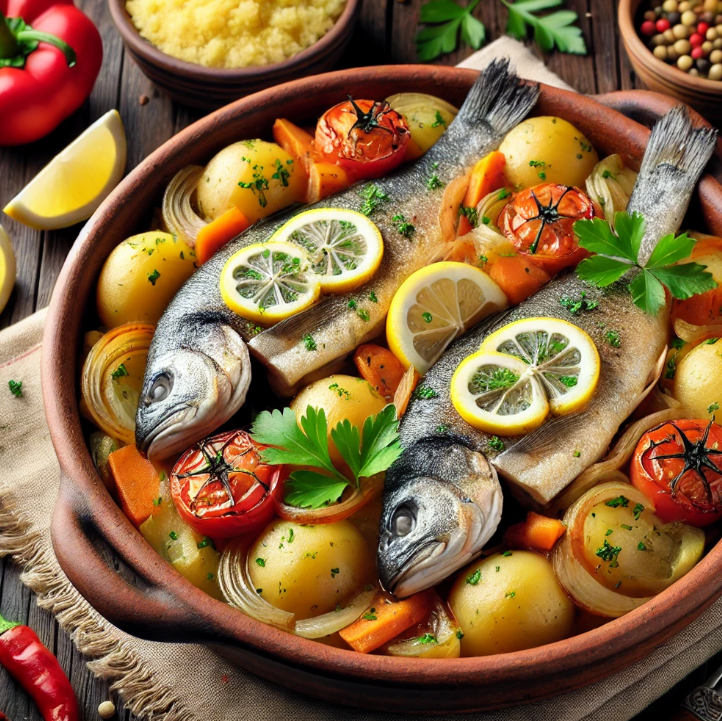
Fish Roast in Ceramic Pots

This traditional and aromatic recipe is ideal for cooking fish in a unique way, using ceramic pots that preserve the flavors and succulence of the ingredients.

Ingredients:

Pentru pește:

For the fish:

  • 1 kg fresh fish (pike-perch, carp, trout, or sea bream), cleaned and portioned
  • 3 tablespoons olive oil or sunflower oil
  • 1 teaspoon salt
  • ½ teaspoon pepper
  • 1 teaspoon sweet or hot paprika (optional)
  • 1 lemon (for marinating and serving)

For the vegetables:

  • 3–4 potatoes, thinly sliced into rounds
  • 1 large onion, thinly sliced
  • 2 carrots, thinly sliced
  • 1 bell pepper, cut into strips
  • 2 tomatoes, sliced into rounds
  • 3–4 garlic cloves, crushed
  • 1 teaspoon dried thyme
  • 1 tablespoon fresh parsley, chopped

For the braising liquid:

  • 200 ml dry white wine
  • 100 ml water or vegetable broth
  • 1 tablespoon lemon juice

Preparation Method:

  1. Preparing the Fish:
    Wash the fish portions well, pat dry with a clean towel, and drizzle with lemon juice.
    Sprinkle with salt, pepper, and paprika, then let marinate for 20–30 minutes.
  2. Preparing the Pots:
    Lightly oil each ceramic pot.
    Place a layer of potato rounds on the bottom, then add a layer of onion, carrot, bell pepper, and tomato.
    Sprinkle the crushed garlic and thyme over the vegetables.
  3. Adding the Fish:
    Lay the fish pieces on top of the vegetable layer.
    Pour in the white wine and water (or broth) into each pot.
    Cover the pots with a lid or aluminum foil.
  4. Cooking:
    Preheat the oven to 180 °C.
    Place the pots in the oven and cook for 40–50 minutes.
    After that time, remove the lid and allow the fish to brown lightly for an additional 10–15 minutes.
  5. Serving:
    Serve the fish roast directly from the pots for an authentic presentation.
    Sprinkle with fresh parsley and add lemon slices for garnish.

Recommended Side Dishes:

  • Warm polenta
  • Herbed rice
  • Sauerkraut salad or assorted pickles

Tips:

  • If you don’t have ceramic pots, use a large ceramic dish or a covered baking tray.
  • For a more intense flavor, add sprigs of rosemary or bay leaves to the pots.

Why is it important to use ceramic pots for this recipe?
Ceramic pots allow fish and vegetables to cook in a sealed environment, preserving their natural juices and flavors. They also ensure even heat distribution, giving the dish a succulent texture and a truly rustic taste.

What type of fish is best suited for this recipe?
Firm-fleshed fish such as pike-perch, carp, trout, or sea bream are ideal. They maintain their shape while cooking and absorb the flavors of the spices and vegetables beautifully.

How can we intensify the dish’s flavor?
To enhance the flavors, add sprigs of rosemary, bay leaves, or lemon slices into the pots. Marinating the fish longer (up to 1 hour) also allows the seasonings to penetrate more deeply.

What is the role of white wine in this recipe?
White wine adds a subtle acidity that balances the natural richness of the fish and vegetables. It also creates a flavorful sauce during cooking, adding depth to the dish.

How can we adapt the recipe if we don’t have ceramic pots?
Use a large ceramic dish, cast-iron pot, or a baking tray covered with foil. These alternatives maintain moisture and flavors similarly.

What side dishes pair best with this recipe?
Traditional sides like warm polenta or herbed rice are perfect. Sauerkraut salad or assorted pickles provide a refreshing contrast to the rich flavors of fish and vegetables.

How can we reduce preparation time?
Cut the vegetables into smaller pieces so they cook faster. Use thinner fish fillets, which require less time in the oven.

What alternatives to potatoes can we use?
For a potato-free version, substitute with zucchini, parsnip slices, or turnips. These vegetables add interesting textures and broaden the dish’s flavor profile.

How can we prevent the fish from sticking to the pot?
To avoid sticking, thoroughly oil the inside of the pot before adding vegetables and fish. A generous layer of vegetables also acts as a barrier, protecting the fish.

What beverages pair well with this fish roast?
A dry white wine such as Sauvignon Blanc or Chardonnay complements the delicate flavors of the fish and sauce. For a non-alcoholic option, mint lemonade or a chilled herbal tea are excellent choices, adding freshness to the meal.
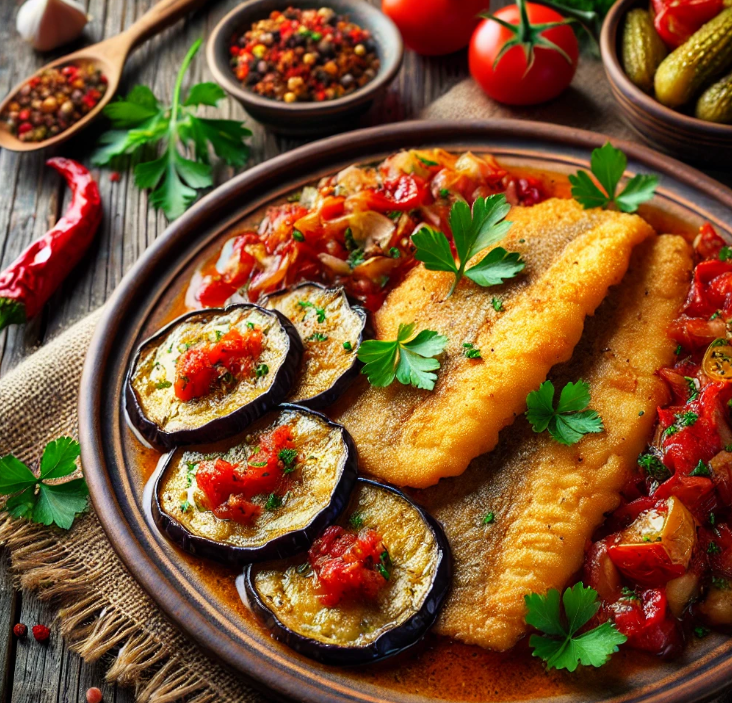
Fried Fish with Eggplants

This recipe combines crispy, flavorful fried fish with eggplants cooked until tender and bursting with taste, for a delicious, balanced meal.


Ingredients:

For the fish:

  • 4 fillets of white fish (e.g., pike-perch, sea bream, cod, or perch)
  • 2 tablespoons flour (for frying)
  • Salt and pepper, to taste
  • 1 teaspoon sweet paprika (optional)
  • 2 tablespoons sunflower or olive oil (for frying)

For the eggplants:

  • 2 large eggplants, sliced into rounds or thin strips
  • 3 garlic cloves, finely chopped
  • 2 tablespoons olive oil
  • 2 ripe tomatoes, finely chopped
  • 1 teaspoon oregano or thyme
  • Salt and pepper, to taste
  • 1 bunch fresh parsley, chopped

Method of Preparation:

  1. Preparing the Eggplants:
    Sprinkle salt over the eggplant slices and let rest for 20 minutes to remove bitterness. Rinse well and pat dry with a towel.
    Heat a pan with olive oil and brown the eggplants on both sides until soft and lightly golden.
    Add garlic, tomatoes, and oregano. Cook over low heat for 10 minutes, stirring occasionally. Season with salt and pepper.
  2. Preparing the Fish:
    Wash and dry the fish fillets, then season with salt, pepper, and optional paprika.
    Dredge the fillets in flour, shaking off any excess.
    In a pan, heat the oil and fry the fish for 3–4 minutes per side, until golden and crunchy.
  3. Assembling the Dish:
    On a large platter, spread a layer of the cooked eggplants.
    Place the fried fish fillets on top and garnish with chopped parsley.

Serving Suggestions:
Serve with rice, polenta, or boiled potatoes. Add a fresh roasted-pepper salad or pickles for a contrast of flavors.

Tips:

  • For a lighter version, bake the eggplants in the oven with a drizzle of olive oil instead of frying.
  • Squeeze a little lemon juice over the fish before serving for extra freshness.

Why is it important to salt the eggplants before cooking?
Salting helps draw out their characteristic bitterness and excess moisture, making them less spongy and easier to cook. After 20 minutes, rinse and pat dry to remove the salt and released liquid.

What type of fish works best for this recipe?
White fish such as pike-perch, sea bream, cod, or perch is ideal due to its delicate texture and neutral flavor, which perfectly complements the intense aromas of eggplant and garlic. These fillets fry up crisp without falling apart.

How can this recipe be made healthier?
Bake the eggplants at 180 °C until soft and golden, drizzled with a little olive oil. Fry the fish in a nonstick pan with minimal oil or bake it instead.

How can I adjust the dish’s flavor level?
Add smoked paprika, basil, or thyme to amplify the flavors. For heat, stir chili flakes into the eggplant sauce.

Which side dishes pair best with this recipe?
Classic sides like plain rice, polenta, or boiled potatoes are excellent. Fresh salads—such as roasted-pepper salad or pickles—provide a refreshing contrast to the rich flavors of eggplant and fish.

How can I ensure a crispy crust on the fish?
Dry the fillets thoroughly before coating with flour. Ensure the pan and oil are fully heated before adding the fish to prevent sticking and achieve a crispy crust.

What role does garlic play in this recipe?
Garlic brings an intense aromatic note to the eggplant sauce and complements the fish’s delicate flavor. Cooking it gently prevents bitterness and enhances its natural sweetness.

How can I prevent eggplants from absorbing too much oil?
After salting and rinsing, pat the slices completely dry. Use a moderate amount of oil when frying and turn the slices quickly, avoiding prolonged contact with the pan.

How can I turn this recipe into a festive meal?
Serve the fish and eggplants on a decorative platter with lemon slices and fresh parsley. Pair with elegant sides—like quinoa salad with pomegranate or herbed roast potatoes—and accompany with a dry white wine.

What beverages complement this dish?
A dry white wine such as Sauvignon Blanc or Pinot Grigio is an excellent match for the fish’s delicate flavors and the eggplant’s depth. For a non-alcoholic choice, mint lemonade or chilled jasmine tea add a refreshing touch.

Pike-Perch in Spicy Sauce with Grated Horseradish

This variation adds a spicy, aromatic kick thanks to fresh horseradish, perfectly complementing the delicate taste of pike-perch and the zesty sauce.


Ingredients:

For the fish:

  • 4 pike-perch fillets (approx. 600–800 g)
  • 1 teaspoon salt
  • ½ teaspoon pepper
  • 1 tablespoon lemon juice
  • 2 tablespoons flour (for frying)
  • 2 tablespoons sunflower or olive oil (for frying)

For the sauce:

  • 2 tablespoons olive oil
  • 1 small onion, finely chopped
  • 2–3 garlic cloves, crushed
  • 1 red chili pepper, finely chopped (adjust to taste)
  • 1 can of tomatoes (≈ 400 g) or 4 fresh tomatoes, chopped
  • 1 tablespoon grated horseradish
  • 1 teaspoon hot paprika (optional)
  • ½ teaspoon sugar (to balance acidity)
  • Salt and pepper, to taste
  • 1 bunch fresh parsley, chopped

Method of Preparation:

  1. Preparing the Pike-Perch:
    Rinse and pat dry the fillets. Season with salt, pepper, and drizzle with lemon juice. Marinate for 10–15 minutes.
    Dredge the fillets in flour, shaking off any excess.
    In a hot pan with oil, fry the fillets for 3–4 minutes per side until they develop a golden crust. Set aside.
  2. Making the Spicy Horseradish Sauce:
    In a large skillet or pot, heat the olive oil.
    Sauté onion until golden, then add garlic and chili; cook for 1 minute.
    Stir in tomatoes (or tomato can), paprika, sugar, salt, and pepper. Simmer on low for 10 minutes.
    In the last 2–3 minutes, stir in the fresh horseradish to distribute its flavor.
  3. Finishing the Dish:
    Return the pike-perch fillets to the sauce.
    Simmer together on low for 5 minutes to meld flavors.
    Transfer to a platter, spooning sauce over the fish.
    Garnish with chopped parsley and lemon slices.

Serving Suggestions:

  • Sides: Basmati rice, warm polenta, or boiled potatoes
  • Extras: A green salad or pickles for a fresh contrast

Tips:

  • Adjust horseradish quantity to control the heat level.
  • For a creamier sauce, stir in a tablespoon of sour cream before adding horseradish.

What makes horseradish a special ingredient in this recipe?
Horseradish adds an intensely pungent and spicy note to the sauce, perfectly balancing the pike-perch’s delicacy. It’s a traditional Romanian ingredient, known for enhancing flavors and offering health benefits like boosting immunity and aiding digestion.

How is the pike-perch prepared for frying?
Fillets must be washed and dried well to prevent sticking. They’re marinated in salt, pepper, and lemon juice for 10–15 minutes to intensify flavor, then dredged in flour to achieve a crispy, golden crust.

How can the sauce’s spiciness be adjusted?
Control heat by reducing the chili pepper or omitting the hot paprika. For a milder version, rely solely on horseradish’s subtle kick.

Why is sugar used in the sauce?
Sugar balances the acidity of the tomatoes and rounds out the sauce’s flavors. Use it sparingly to preserve the dish’s spicy character.

What are the advantages of fresh versus canned tomatoes?
Fresh tomatoes offer a natural taste and slightly different texture but require more cooking time. If using fresh, blanch and peel them before adding to the sauce.

Which side dishes pair best with this preparation?
Basmati rice, polenta, or boiled potatoes absorb the rich sauce and temper the intense flavors of horseradish and chili. Fresh salads or pickles add a refreshing note.

How can I achieve a creamier sauce?
Stir in a tablespoon of sour cream or Greek yogurt just before adding the horseradish for a silky texture and toned-down heat.

Can this recipe be adapted for other fish?
Yes—trout, perch, or sea bream work well. Adjust cooking time to the fillet thickness and fish type.

How should leftovers be stored?
Keep in an airtight container in the fridge for 1–2 days. Reheat gently over low heat or in the microwave to preserve the fish’s delicate texture.

What beverages complement this dish?
Dry white wines like Sauvignon Blanc or Pinot Grigio highlight the horseradish and sauce flavors. A light beer or mint lemonade also balances the dish’s spiciness.

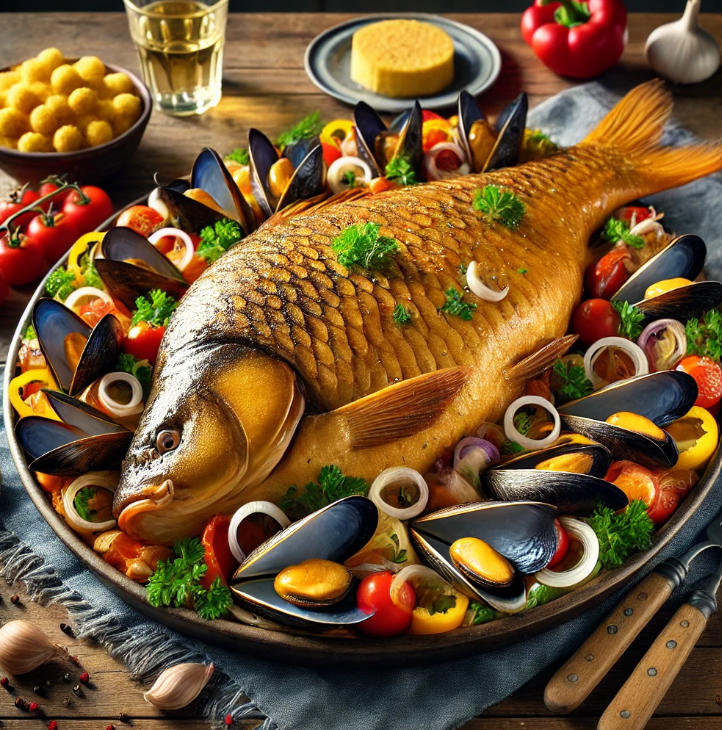
Carp “Fisherman’s Style” with Mussels

This is a delicious, unique twist on the traditional carp recipe, where we add mussels for a richer marine flavor and extra texture. Perfect for lovers of fish and seafood.


Ingredients

For the carp:

  • 1 fresh carp (1.5–2 kg), cleaned and gutted
  • 2 tablespoons olive oil or sunflower oil
  • 1 lemon (for marinating)
  • Salt and pepper, to taste
  • 1 teaspoon dried thyme
  • 1 teaspoon sweet paprika (optional)

For the sauce:

  • 500 g fresh or frozen mussels (cleaned)
  • 2 large onions, thinly sliced
  • 3 ripe tomatoes or 200 g tomato purée
  • 2 bell peppers, sliced
  • 3–4 garlic cloves, crushed
  • 200 ml dry white wine
  • 1 bay leaf
  • 1 bunch fresh parsley, chopped
  • 1 teaspoon sweet paprika
  • Salt and pepper, to taste

Method of Preparation:

  1. Preparing the Carp:
    Rinse the carp well, pat dry, and lightly score both sides.
    Rub with salt, pepper, thyme, and paprika, then drizzle with lemon juice. Marinate for 20–30 minutes.
  2. Cooking the Mussels:
    If using fresh mussels, wash and remove any impurities; discard those that do not close. If frozen, thaw per package instructions.
    In a deep pan, heat 1 tablespoon oil and sauté one crushed garlic clove. Add the mussels and 100 ml of white wine.
    Cover and cook for 5–7 minutes until all mussels open (discard any remaining closed ones). Remove mussels, reserving the cooking liquid.
  3. Preparing the Vegetables:
    In a large pot, heat the remaining oil and sauté onions until golden.
    Add bell peppers, tomatoes, and garlic, cooking 5–7 minutes, stirring occasionally.
    Pour in the remaining wine and reserved mussel liquid, add the bay leaf and sweet paprika.
  4. Baking the Carp:
    Place the carp in a large baking dish or deep pot. Arrange the vegetables around and on top of the fish.
    Spoon the sauce over and nestle the mussels among the fish.
    Cover with foil and bake in a preheated oven at 180 °C for 30–35 minutes.
    Near the end, remove the foil and bake another 10–15 minutes to lightly brown the carp.
  5. Serving:
    Transfer the carp and mussels to a large platter with the vegetables and sauce.
    Sprinkle with fresh parsley and garnish with lemon slices.

Serving Suggestions:

  • Side: Warm polenta or crusty bread
  • Salad: Simple green salad or pickles
  • Wine: A glass of dry or demi-sec white wine to complement the flavors

Tips:

  • For more intense flavor, add 1–2 sprigs of rosemary to the baking dish.
  • You can also include other seafood, such as shrimp, alongside the mussels.

Why use white wine in this recipe?
White wine balances the sweetness of the vegetables with the natural brininess of the mussels, adding depth and refinement. It also helps tenderize the fish and intensify the sauce’s flavor.

How should the carp be prepared for this recipe?
Clean, gut, and rinse the carp thoroughly. Pat dry, then score the flesh to allow the marinade of lemon juice, salt, pepper, and thyme to penetrate for 20–30 minutes, enhancing both texture and taste.

How do you ensure mussels are safe to eat?
Fresh mussels must be washed under cold water, discarding any with broken or non-closing shells. Frozen mussels should be thawed properly. During cooking, any mussel that remains closed must be discarded.

Why include mussel cooking liquid in the sauce?
The mussel liquid is packed with marine flavor, enriching the sauce and adding a subtle natural saltiness that accentuates the seafood character.

What sets this dish apart from other fish preparations?
Adding mussels creates a unique combination of the carp’s firm texture with the mussels’ succulence and ocean aroma. The white wine and vegetables cook into a rich sauce that balances sweet, salty, and tangy notes.

How is a well-balanced sauce achieved?
A thoughtful blend of caramelized onions, garlic, white wine, tomatoes, and mussel liquid, enhanced by bay leaf and paprika, ensures a complex, harmonious sauce.

Which side dishes best complement this recipe?
Warm polenta is traditional and perfect for soaking up the sauce. Alternatively, boiled potatoes, crusty bread, or plain rice work equally well.

How can the flavors be intensified?
Add rosemary sprigs or a pinch of chili flakes to the baking dish. Using ripe, well-roasted tomatoes also brings extra sweetness to the sauce.

What fish can substitute carp?
If carp is unavailable, use pike-perch, perch, sea bream, or trout, which have similar texture and absorb sauces just as well.

How should leftovers be stored?
Store in an airtight container in the refrigerator for 1–2 days. Reheat gently over low heat with a splash of water or wine to keep the fish and sauce moist and flavorful.

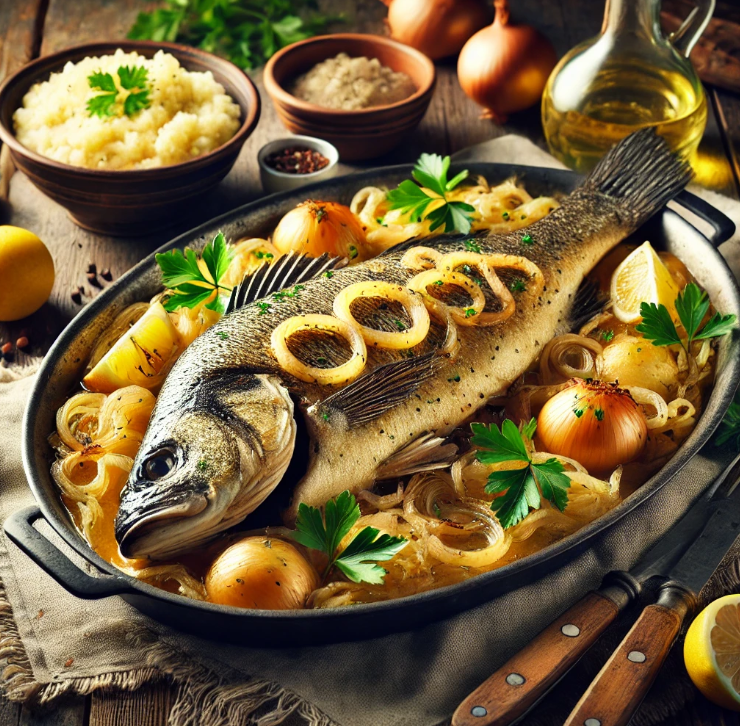
Fish Stewed with Onions in Wine

This recipe combines the delicate flavors of fish with the sweetness of onions and the fine aroma of white wine. It’s an excellent choice for a healthy and refined meal.


Ingredients:

  • 1 fresh fish (preferably pike-perch, carp, perch, or sea bream), about 1–1.5 kg, cleaned
  • 3–4 large onions, thinly sliced
  • 200 ml dry white wine
  • 2–3 tablespoons olive or sunflower oil
  • 1 teaspoon sweet paprika (optional)
  • Salt and pepper, to taste
  • 1 teaspoon dried thyme or 2 sprigs fresh thyme
  • 2–3 bay leaves
  • 2–3 garlic cloves, finely chopped
  • Juice of 1 lemon
  • 1 bunch fresh parsley, for garnish

Method of Preparation:

  1. Preparing the Fish:
    Rinse the fish well and pat dry with a towel.
    Drizzle with lemon juice and season with salt, pepper, and paprika (if using). Marinate for 15–20 minutes.
  2. Cooking the Onions:
    In a large skillet or deep pot, heat the oil.
    Add the sliced onions and garlic, then sauté over low heat until soft and lightly golden, taking care not to brown them too quickly.
    Stir in thyme and bay leaves.
  3. Stewing the Fish:
    Lay the fish on the onion bed in the pan.
    Pour the white wine over the fish and onions.
    Cover and simmer on low heat for 20–30 minutes, depending on the fish’s size.
    Occasionally spoon the sauce over the fish to keep it succulent.
  4. Finishing the Dish:
    When cooked, transfer the fish carefully to a platter.
    Spoon the onion–wine sauce over the fish.

Serving:
Sprinkle with chopped fresh parsley.
Serve alongside warm polenta, rice, or boiled potatoes.
Add lemon slices for extra brightness.

Tips:

  • For a creamier sauce, stir in a tablespoon of low-fat sour cream or yogurt before serving.
  • For deeper flavor, allow the onions to caramelize lightly before adding the fish.

This recipe is simple yet sophisticated—ideal for impressing guests or enjoying a special meal.


Why is white wine used in this recipe?
White wine adds depth and aroma to the sauce, balancing the sweetness of the onions and enhancing the delicate taste of the fish. It also helps tenderize the fish during cooking, resulting in a tender, juicy texture.

What type of fish works best here?
Firm-fleshed fish like pike-perch, carp, perch, or sea bream absorb the onion–wine sauce beautifully without falling apart, making them ideal for this dish.

How should the fish be prepared before cooking?
The fish must be cleaned, gutted, rinsed, and dried. Marinating in lemon juice, salt, pepper, and optional paprika for 15–20 minutes enhances both flavor and texture.

What role do the onions play?
Slowly sautéed onions become sweet and tender, forming the aromatic base of the dish. They create a rich, delicate sauce that pairs perfectly with polenta or boiled potatoes.

Why cook the fish over low heat?
Gentle simmering allows the fish to absorb the onion–wine flavors evenly without drying out, preserving its moist, tender quality.

How can the sauce’s flavors be intensified?
Let the onions caramelize slightly for a deeper sweetness, and rely on thyme and bay leaves for added complexity. A spoonful of sour cream at the end introduces a velvety finish.

Which sides complete this dish?
Traditional warm polenta is perfect, but plain rice, boiled potatoes, or steamed vegetables also work. Fresh salads or pickles add a refreshing contrast to the rich sauce.

How can the recipe be elevated for an elegant touch?
Add fresh mushrooms or olives to the sauce, or stir in a splash of cognac before cooking for an elegant twist.

How do you know the fish is done?
The fish is ready when the flesh is opaque and flakes easily. Gently test the thickest part with a fork to ensure it’s fully cooked.

How should leftovers be stored and reheated?
Store in an airtight container in the fridge for 1–2 days. Reheat gently in a pan over low heat with a little water or wine to keep the sauce and fish moist.

Pike-Perch with Mujdei

This is a simple and delicious recipe that highlights the delicate taste of pike-perch, combined with the intense aroma of mujdei. It’s perfect for a traditional or festive meal.


Ingredients:

For the pike-perch:

  • 1 pike-perch (approx. 1 kg), cleaned and gutted
  • 2 tablespoons olive or sunflower oil
  • Juice of 1 lemon
  • 2–3 garlic cloves (for the fish)
  • Salt and pepper, to taste
  • 1 teaspoon sweet paprika (optional)
  • 1 bunch fresh parsley, chopped
  • 100 ml dry white wine (optional)

For the mujdei:

  • 4–5 garlic cloves
  • 1 teaspoon salt
  • 2 tablespoons oil
  • 100 ml warm water
  • 1 teaspoon lemon juice (optional, for a milder note)

Method of Preparation:

  1. Preparing the Pike-Perch:
    Cleaning & Marinating:
    Clean the pike-perch thoroughly, rinse and pat dry. Lightly score both sides.
    Drizzle with lemon juice and rub with salt, pepper, and paprika. Marinate for 15–20 minutes. Cooking the Fish:
    • Oven: Place the pike-perch in an oiled baking dish, add a few whole garlic cloves and white wine if desired. Bake in a preheated oven at 180 °C for 25–30 minutes until golden.
    • Pan: Heat oil in a large skillet and fry the pike-perch on both sides until golden (about 4–5 minutes per side).
  2. Preparing the Mujdei:
    Crush garlic cloves with salt in a mortar or press them.
    Gradually whisk in the oil until a creamy consistency forms.
    Dilute with warm water and, if desired, add lemon juice for a gentler flavor.
  3. Plating & Serving:
    Transfer the pike-perch to a platter and drizzle with a little mujdei, or serve the mujdei on the side.
    Garnish with fresh parsley and lemon slices.

Serving Suggestions:
Serve the pike-perch with warm polenta or boiled potatoes.
Add a green salad or pickles for extra freshness.


Why is pike-perch ideal for this recipe?
Pike-perch is a white-fleshed fish with a fine texture and delicate flavor, making it perfect for simple recipes that highlight its natural aroma. Paired with aromatic mujdei, the dish is balanced and savory—suitable for everyday meals and special occasions alike.

How to clean pike-perch correctly?
Remove scales with a knife or scaler, gut completely, rinse under cold water, and pat dry. Eliminating impurities ensures a clean, fresh taste.

Benefits of marinating the pike-perch before cooking:
Marinating with lemon juice, salt, pepper, and paprika enhances the fish’s flavors and tenderizes the flesh. The acidity penetrates the fibers, giving the fish a juicier, slightly citrus note that pairs perfectly with mujdei.

Difference between baking and pan-frying:

  • Baking yields a light golden crust and keeps the fish tender thanks to steam from wine or juices.
  • Pan-frying delivers a crisp crust in less time. Choose based on your preference and available time.

How to make a creamy, balanced mujdei?
Crush garlic with salt, whisk in oil until smooth, then dilute with warm water. A few drops of lemon juice add a delicate touch ideal for pike-perch.

Role of white wine when baking:
Dry white wine adds freshness and depth, helps retain moisture, and melds subtly with garlic and spices.

Best accompaniments for pike-perch with mujdei:
Warm polenta provides a soft texture that balances mujdei’s intensity. Other options include boiled potatoes, plain rice, or steamed vegetables. Fresh salads or pickles add a refreshing contrast.

How to personalize this recipe:
Add thyme or dill to the marinade, or include cherry tomatoes or zucchini in the baking dish. For extra richness, enrich the mujdei with yogurt or sour cream.

Techniques for even baking:
Score the fish before marinating for uniform heat penetration. Cover the dish with foil initially to ensure gentle cooking, then remove foil at the end for light browning.

Storing leftovers:
Keep cooked pike-perch in an airtight container in the fridge for 1–2 days. Reheat gently in the oven or covered skillet to maintain moisture. Store leftover mujdei separately in a small jar for other uses.

Carp “à la Dniester”


Carp “à la Dniester” is a delicious traditional recipe, known for its authentic, rustic flavor, perfect for those who love fish cooked in a hearty style. Here’s how to prepare this dish:

Ingredients:

  • 1 fresh carp (1.5–2 kg), cleaned and rinsed
  • 2–3 large onions
  • 3–4 ripe tomatoes (or 200 g tomato purée)
  • 4 champignon mushrooms
  • ⅓ zucchini
  • 2–3 garlic cloves
  • 2 bell peppers (red or yellow)
  • 200 ml dry white wine
  • 100 ml sunflower or olive oil
  • 1 bunch fresh parsley
  • 1 teaspoon sweet paprika
  • Salt and pepper, to taste
  • 1 lemon (for garnish and drizzling)
  • 1–2 bay leaves (optional)

Method of Preparation:

  1. Preparing the Carp:
    Rinse the carp well and pat dry.
    Lightly score the fish on each side, every 2–3 cm.
    Drizzle with lemon juice and season with salt, pepper, and paprika. Marinate for 15–20 minutes.
  2. Preparing the Vegetables:
    Slice onions, tomatoes, and peppers thinly.
    Finely chop the garlic.
  3. Layering in the Pan:
    Grease a large baking dish with oil.
    Arrange a layer of onions, then peppers and tomatoes.
    Place the carp on top, sprinkle with garlic, then add mushrooms and zucchini slices.
  4. Adding the Liquids:
    Pour the white wine over the fish and vegetables.
    If needed, add about 100 ml water to ensure enough liquid in the dish.
  5. Baking:
    Cover the dish with foil or a lid.
    Bake in a preheated oven at 180 °C for 30 minutes.
    Remove the foil, baste the carp with the pan sauce, and roast for another 15–20 minutes to achieve a lightly crisped top.
  6. Serving:
    Transfer the carp to a platter with the roasted vegetables.
    Garnish with chopped parsley and lemon slices.

Serving Suggestions:
Serve the carp with warm polenta and garlic sauce (mujdei).
A glass of dry white wine completes the culinary experience.


What makes “Carp à la Dniester” so special?
This recipe is special for its simple, natural flavors that highlight fresh fish. Traditional ingredients like roasted vegetables, white wine, sweet paprika, and garlic create a balanced, savory taste. The rustic cooking style of the Dniester region adds authenticity.

How to choose the right carp?
Select a fresh carp with clear eyes, pinkish gills, and shiny skin, without any off-putting odors. A 1.5–2 kg carp ensures juicy, tender meat. Wild carp has a stronger flavor, but high-quality farmed carp also works.

What is the role of white wine?
White wine brings acidity and complexity to the sauce, balancing the sweetness of the vegetables and the fish’s natural richness. It also helps tenderize the carp during baking, resulting in succulent, tender meat.

Why score the carp before cooking?
Scoring allows seasonings to penetrate the flesh more effectively and ensures even cooking, preventing the fish from curling.

What role do the vegetables play?
Vegetables like onions, tomatoes, peppers, and zucchini contribute moisture and flavor, forming a flavorful bed that protects the fish and creates a rich pan sauce. Mushrooms add a pleasant earthy note.

How to intensify the flavors?
Add crushed garlic cloves directly to the wine, bay leaves, or a pinch of chili flakes for extra heat. Using a full-bodied white wine or a demi-sec variant brings more sweetness.

Best accompaniments for “Carp à la Dniester”?
Polenta and mujdei are classic companions. Other options include boiled potatoes, fresh cabbage salad, or grilled vegetables for a refreshing contrast.

Why cover the dish at first?
Covering with foil retains steam, ensuring even cooking and juicy fish. Removing the foil at the end allows the carp to develop a lightly browned, crisp finish.

How to check for doneness?
The fish is done when the flesh turns opaque and flakes easily with a fork. An internal temperature of 60–63 °C confirms perfect cooking without dryness.

How to make it festive?
For a festive presentation, decorate with thin lemon slices, fresh parsley, and bright bell pepper strips. Serve on a large platter with polenta molded into rounds and a pot of mujdei alongside. A glass of dry white wine completes the elegant spread.

Pan-Fried Pork Neck

Pan-fried pork neck is a classic recipe, celebrated for its simplicity and rich flavor. Well-seasoned slices of pork neck are fried until they develop a golden, juicy crust, enhanced by subtle notes of garlic, thyme, and rosemary. Cooking in a skillet gives the meat a tender interior and a crispy exterior, while a final drizzle of lemon juice adds a fresh, balanced taste. This dish is ideal for a quick, satisfying meal, perfectly paired with simple sides like mashed potatoes or sautéed vegetables.

Ingredients:

  • 4 pork neck slices
  • 2 tablespoons olive oil or sunflower oil
  • 3 garlic cloves, chopped
  • 1 teaspoon dried thyme
  • 1 teaspoon dried rosemary
  • Salt and pepper, to taste
  • 1 tablespoon butter (optional, for extra richness)
  • Juice of half a lemon (optional, for a brighter flavor)

Method of Preparation:

  1. Seasoning the Meat:
    Season the pork neck slices with salt, pepper, thyme, and rosemary on both sides. Let rest for a few minutes to absorb the flavors.
  2. Heating the Skillet:
    In a large skillet, heat the oil over medium heat. For a richer taste, add butter once the oil is hot.
  3. Cooking the Pork:
    Add the pork neck slices to the skillet and cook for 4–5 minutes per side, until a beautiful golden crust forms and the meat is cooked through. Cooking time may vary with slice thickness.
  4. Adding Garlic:
    In the last minute of cooking, add the chopped garlic to the skillet, ensuring it aromatically infuses the meat without burning.
  5. Finishing Touch:
    At the end, drizzle the pork with lemon juice for an added burst of freshness.
  6. Serving:
    Serve the pan-fried pork neck with sides such as mashed potatoes, sautéed vegetables, or a fresh salad.

Suggestion:
For deeper flavor, marinate the pork neck for 1–2 hours in a mixture of oil, garlic, thyme, and lemon juice before cooking.

Bon appétit!


Why are thyme and rosemary ideal for pan-fried pork neck?
Thyme and rosemary provide an aromatic, earthy flavor that complements the pork’s richness. Fresh garlic enhances the meat’s savory profile, while salt and pepper highlight its natural flavors. A final squeeze of lemon juice adds a revitalizing contrast.

How do you achieve a golden, juicy crust?
Ensure the skillet is well-heated before adding the meat. The oil helps form the crust—avoid moving the slices during cooking and flip only once to allow even caramelization.

Why let the meat rest after seasoning?
Resting allows the seasonings to penetrate the meat fibers, resulting in a more robust flavor with every bite.

How to adapt the recipe for more intense flavor?
Marinate the pork neck for 1–2 hours in oil, garlic, thyme, rosemary, and lemon juice. This process deepens the aroma and tenderizes the meat, making it even juicier.

What skillet is best for cooking pork neck?
A cast-iron skillet or high-quality nonstick pan is ideal. Cast iron retains heat uniformly, producing a perfect crust, while nonstick prevents sticking.

How to ensure the pork is cooked yet tender?
Adjust cooking time to slice thickness—4–5 minutes per side for thin cuts. For thicker slices, cover the skillet in the last minutes to cook evenly without drying out.

Which sides complement pan-fried pork neck best?
Creamy mashed potatoes balance the meat’s texture and flavor. Other options include sautéed broccoli, carrots, green beans, fresh cabbage salad, or crispy roasted potatoes.

What are the benefits of adding garlic at the end?
Adding garlic late releases its aromatic oils without burning, avoiding bitterness and offering a subtle, balanced flavor that complements the herbs.

How to make a lighter version?
Use minimal oil in a grill pan or air fryer. Replace heavy sides like mashed potatoes with steamed vegetables or a fresh salad.

How to keep pork neck tender when reheating?
Reheat gently over low heat in a covered skillet, adding a splash of water or broth to maintain moisture. Alternatively, warm in a low oven covered with foil. Avoid microwaving to preserve the crispy crust.

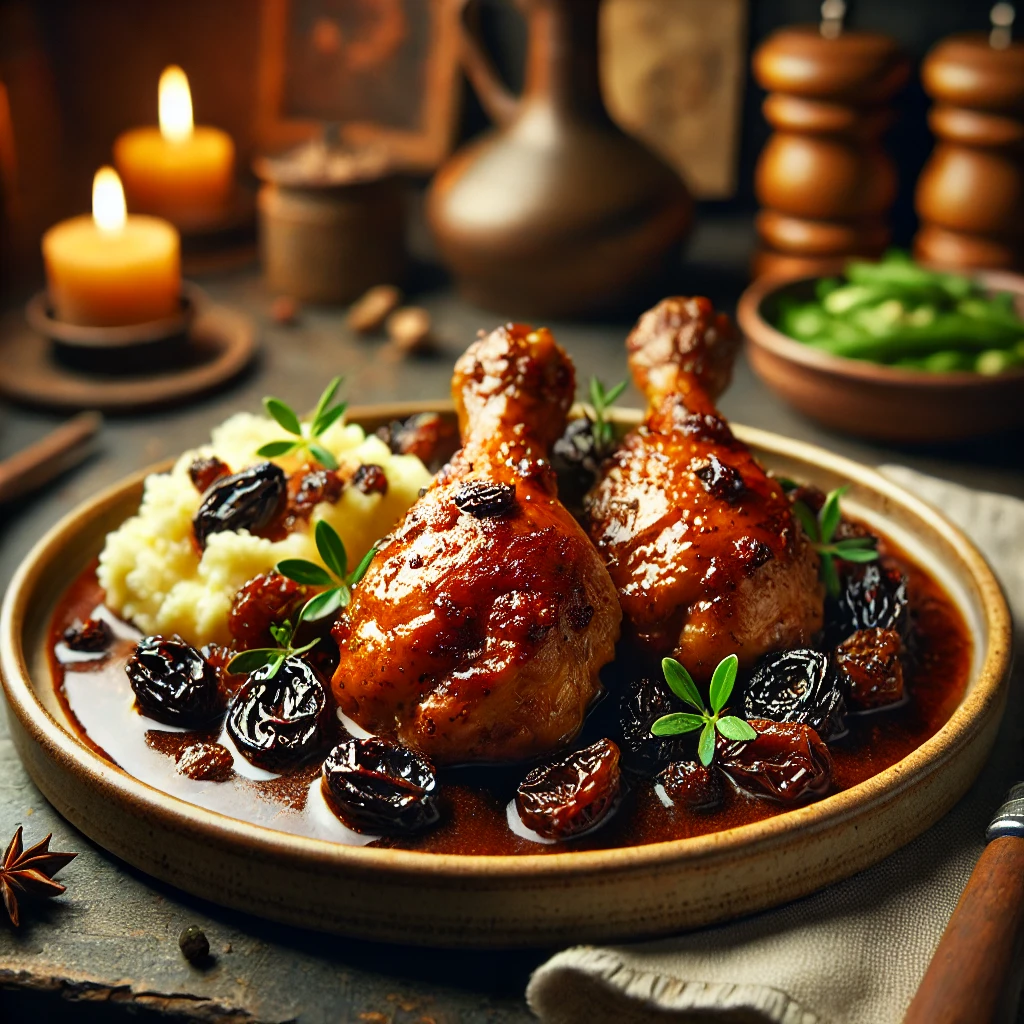
Chicken Drumsticks in Black Beer Sauce with Raisins

Chicken drumsticks in black beer sauce with raisins are a delicious and easy-to-prepare recipe, perfect for family dinners or special occasions. The dark beer adds a deep, caramelized note to the sauce, while the raisins offer a subtle sweetness that balances the flavors and perfectly complements the tender chicken. Cooked slowly, the drumsticks become juicy and absorb all the sauce’s aromas, turning every bite into a rich and flavorful culinary experience.

Ingredients:

  • 8 chicken drumsticks (or chicken thighs)
  • 300 ml black beer
  • 2 large onions, finely chopped
  • 3 garlic cloves, minced
  • 100 g raisins
  • 1 tablespoon honey
  • 2 tablespoons olive oil
  • Salt and pepper, to taste
  • 1 teaspoon dried thyme
  • 1 teaspoon sweet paprika (optional)
  • 1 tablespoon balsamic vinegar
  • Fresh parsley, chopped, for garnish

Method of Preparation:

  1. Preparing the Drumsticks:
    Rinse and pat the chicken drumsticks dry. Season with salt, pepper, and thyme.
  2. Browning the Drumsticks:
    In a deep skillet or pot, heat the olive oil over medium heat. Add the drumsticks and brown them on all sides until golden. Remove and set aside.
  3. Sautéing Onions and Garlic:
    In the same pan, add the onions and garlic. Cook until the onions become translucent.
  4. Adding Beer and Raisins:
    Pour in the black beer, then add honey and raisins. Stir well, add paprika (if using) and balsamic vinegar, and bring the sauce to a simmer.
  5. Finishing Cooking:
    Return the drumsticks to the pan, cover with a lid, and simmer on low heat for 25–30 minutes, or until the chicken is cooked through and the sauce has thickened.
  6. Serving:
    Sprinkle with fresh parsley and serve the drumsticks with the beer-raisin sauce alongside sides such as mashed potatoes, rice, or steamed vegetables.

Suggestion:
For extra flavor, you can add mushrooms or a bit of fresh ginger to the sauce according to your taste.

Enjoy your meal!


What is the role of black beer in this recipe?
Black beer adds a caramelized, deep flavor to the sauce thanks to its malt and coffee notes. As it simmers, the alcohol evaporates, leaving behind a complex base of aromas that blend perfectly with the sweetness of the raisins and honey. This transforms the sauce into a refined complement for the chicken’s tender texture.

How do raisins affect the final taste?
Raisins contribute a subtle sweetness that balances the beer’s bitterness and the balsamic vinegar’s acidity. They become soft and juicy during cooking, integrating harmoniously into the sauce and providing a pleasant contrast in both texture and taste.

Why sauté onions and garlic before adding the beer?
Sautéing onions and garlic releases their natural sweetness and intensifies the sauce’s base aromas. This process creates a flavorful foundation that enhances the final taste, making the sauce richer and better balanced.

Which side dishes pair best with chicken drumsticks in black beer sauce with raisins?
Ideal sides include creamy mashed potatoes, which absorb the sauce; plain or basmati rice, offering a neutral contrast; and steamed vegetables like broccoli or carrots, adding freshness and balance. These options complement the dish without overpowering it.

How can you adjust the recipe for a spicier taste?
For more heat, add a pinch of hot paprika or a few chili flakes to the sauce. These intensify the flavors and introduce a warm kick that pairs well with the raisins’ sweetness and the black beer’s depth.

Why use balsamic vinegar in this recipe?
Balsamic vinegar provides acidity that balances the sweetness of the raisins and honey, adding complexity to the sauce. It also helps naturally caramelize the ingredients, amplifying the overall savoriness.

What other ingredients can customize the recipe?
The recipe can be personalized with mushrooms for an earthy taste or ginger for a fresh, slightly spicy note. Other options include stirring in a spoonful of cream at the end for a creamier sauce or adding bay leaves for extra aroma.

What are the critical steps for tender, juicy drumsticks?
It’s essential to brown the drumsticks first to seal in juices and create a golden crust. Then, slow-simmering in the beer-raisin sauce allows the chicken to tenderize and absorb the sauce’s flavors, resulting in a succulent, flavorful dish.

How can you adapt the recipe for an alcohol-free diet?
Substitute black beer with unsweetened apple juice or a mix of chicken broth and a splash of soy sauce. These alternatives maintain flavor complexity, giving a similar taste experience to black beer.

What can you do with any leftover sauce?
Leftover sauce makes an excellent base for other dishes, such as pasta, rice, or roasted vegetables. You can also keep it refrigerated for a few days and use it to accompany other meats like pork chops or turkey breast.

Christmas Menu in Romania: From Appetizers to Evening Feast

Christmas is a special holiday in Romania, and the festive meal is one of the most eagerly anticipated moments of the season, when families gather to savor traditional dishes prepared with care and love. The Christmas menu is rich and varied, offering a true feast—from enticing appetizers to savory main courses and aromatic desserts. In this article, we’ll walk through a complete Romanian Christmas menu that reflects culinary traditions and the joy of the winter holidays.

Traditional Appetizers

The Christmas table usually begins with a variety of delicious appetizers designed to whet the appetite and set a festive mood.

  • Salată de Boeuf – A classic holiday starter, this salad is made from boiled vegetables (carrots, potatoes, peas) mixed with beef or chicken and dressed in a layer of mayonnaise. It’s often decorated with winter motifs and is indispensable at holiday tables.
  • Assorted Homemade Cold Cuts – Platters typically include cârnați, tobă, caltaboș, smoked bacon, and pork rind, served alongside red onions, radishes, pickles, and homemade bread for an authentic taste.
  • Piftie (Aspic) – A traditional dish of slowly boiled pork that yields natural gelatin, served cold with garlic and a hint of hot pepper for a flavorful bite.

Christmas Soup

A warming, nourishing soup is served at Christmas lunch to prepare and energize guests for the rest of the meal.

  • Ciorbă de burtă – One of Romania’s most beloved soups, this tripe soup is sour and rich, flavored with vinegar, garlic, and sour cream. It’s often served with hot peppers to add extra intensity.
  • Ciorbă de perișoare – Alternatively, some homes prepare meatball soup with minced meat balls and vegetables in a slightly sour borscht broth, served with sour cream and fresh herbs for a delicate, balanced flavor.

Main Courses

The main dishes at Christmas are the highlight, bringing intense aromas and culinary richness.

  • Sarmale – Perhaps the most beloved Romanian Christmas dish, these cabbage rolls are made with a mixture of pork, rice, onion, and spices, wrapped in pickled cabbage leaves and slow-cooked until tender and aromatic. Served with mămăliguță, sour cream, and hot peppers.
  • Roast Pork – Oven-roasted pork marinated with garlic, thyme, and white wine, served with baked potatoes or mashed potatoes, and often accompanied by sautéed cabbage or red beet salad for a fresh contrast.
  • Jumări and Smoked Bacon – Crispy pork cracklings and smoked bacon are enjoyed throughout the meal, adding a wintertime treat to many Romanian households.

Desserts

Christmas desserts are particularly cherished and are often prepared a few days in advance, each homemaker having her own special recipes.

Cozonac – Cozonac is the star dessert of Romanian holidays. This fluffy sweet, filled with walnuts, cocoa, Turkish delight, or raisins, is baked carefully to achieve a golden crust and a tender texture. The aroma of freshly baked cozonac fills the home and is a true delight for all loved ones.

Homemade pastries – In addition to cozonac, homemakers prepare a variety of homemade cookies, such as crescent rolls filled with jam, biscuits, and pound cakes, cheese and raisin pies, and baked apples with cinnamon and walnuts. These pastries are scented with vanilla and cinnamon, adding a sweet and aromatic note to the Christmas feast.


Traditional Drinks

No Christmas meal would be complete without traditional drinks to accompany the dishes.

Red wine – Red wine, preferably a local one, is served to accompany the cabbage rolls and pork roast. Red wine adds a festive note and contributes to the warm holiday atmosphere.

Țuică or palincă – In some regions, the Christmas meal begins with a glass of țuică or palincă, traditional plum or apple brandies that aid digestion and bring cheer among guests.

Mulled wine – Mulled wine with cinnamon, cloves, and slices of orange is often served after the meal, offering a warm and fragrant drink that perfectly complements the Christmas ambiance.


Evening Spread

In the evening, the Christmas table is rounded out with cold appetizers and desserts, and the family gathers to savor the final moments of the day in a relaxed manner.

Cold cuts and cheese platter – For the evening spread, cold appetizers such as homemade sausages, smoked bacon, and local cheeses are prepared. These are served with fresh bread, red onion, and pickles.

Cozonac and pastries – In the evening, the remaining cozonac and pastries are enjoyed again alongside tea or coffee, providing a sweet and tranquil conclusion to the Christmas meal.


Conclusion

The Christmas menu in Romania is a true culinary celebration, reflecting traditions and the joy of sharing special moments with family. Each dish has its own story and flavor, and their combination brings an unforgettable taste, full of warmth and joy, making this holiday truly magical.

What traditional dishes are served as appetizers at the Christmas meal?
Appetizers include Salată de boeuf, various homemade cold cuts (sausages, head cheese, blood sausage, pork rind) and piftie. Salată de boeuf, festively decorated, is indispensable, while the cold cuts are accompanied by pickled cucumbers and red onion. Piftie, made from pork meat and natural gelatin, is served cold and is a delicacy specific to the holidays.

What is the role of soup in the Christmas menu?
The Christmas soup, whether it is tripe soup or meatball soup, serves to open the appetite and provide energy for the rest of the feast. Tripe soup is preferred for its rich, tangy taste, while meatball soup is appreciated for its delicate texture and balanced flavors.

Why are sarmale considered the “king of the Christmas table”?
Sarmale symbolize the winter holidays in Romania. Made with pork, rice, and spices, they are slowly cooked in pickled cabbage leaves, resulting in an unmistakable aroma. Served with polenta, sour cream, and hot peppers, sarmale are the most eagerly awaited main course of the meal.

How is the pork roast prepared for the festive meal?
The pork roast is marinated with garlic, thyme, and white wine, then roasted until tender and juicy. It is accompanied by side dishes such as baked potatoes or mashed potatoes and a beetroot salad, achieving a perfect balance of flavors.

What are the traditional Christmas desserts in Romania?
Cozonac is the star of the desserts, prepared with walnuts, cocoa, Turkish delight, or raisins. In addition, homemakers make crescent cookies with jam, biscuits, pound cakes, and pies. The desserts are scented with vanilla and cinnamon, completing the festive atmosphere.

What drinks accompany the Christmas dishes?
Red wine, preferably local, accompanies the sarmale and pork roast, adding a festive note. Țuică or palincă, served at the beginning of the meal, aids digestion, while mulled wine, spiced with cinnamon and cloves, is preferred after the meal, providing warmth and holiday fragrance.

What role does “Pomana Porcului” play in the context of the winter holidays?
Pomana Porcului is a traditional custom practiced after the pig sacrifice on Ignat (December 20). The household prepares a meal with the first cuts of meat, offering gratitude for the year’s abundance. This moment is one of family communion and celebration.

How is the evening meal organized on Christmas Day?
The evening meal includes cold appetizers such as platters of cold cuts and cheeses, accompanied by homemade bread and pickles. Desserts, like cozonac and pastries, are savored with tea or coffee, offering a sweet and relaxed conclusion to the festive day.

How does the Christmas menu reflect Romanian local traditions?
The Christmas menu is an expression of local culinary traditions, combining dishes passed down through generations. From sarmale and roast pork to cozonac and mulled wine, each preparation brings elements of Romania’s gastronomic culture and history to the table.

Why is the Christmas meal considered a special moment of reconnection?
The Christmas meal is more than an opportunity to taste delicious dishes; it is a moment of reconnection with family and traditions. The festive atmosphere, rich dishes, and time spent together create unforgettable memories and strengthen bonds across generations.