The Hidden Tax on Your Concentration
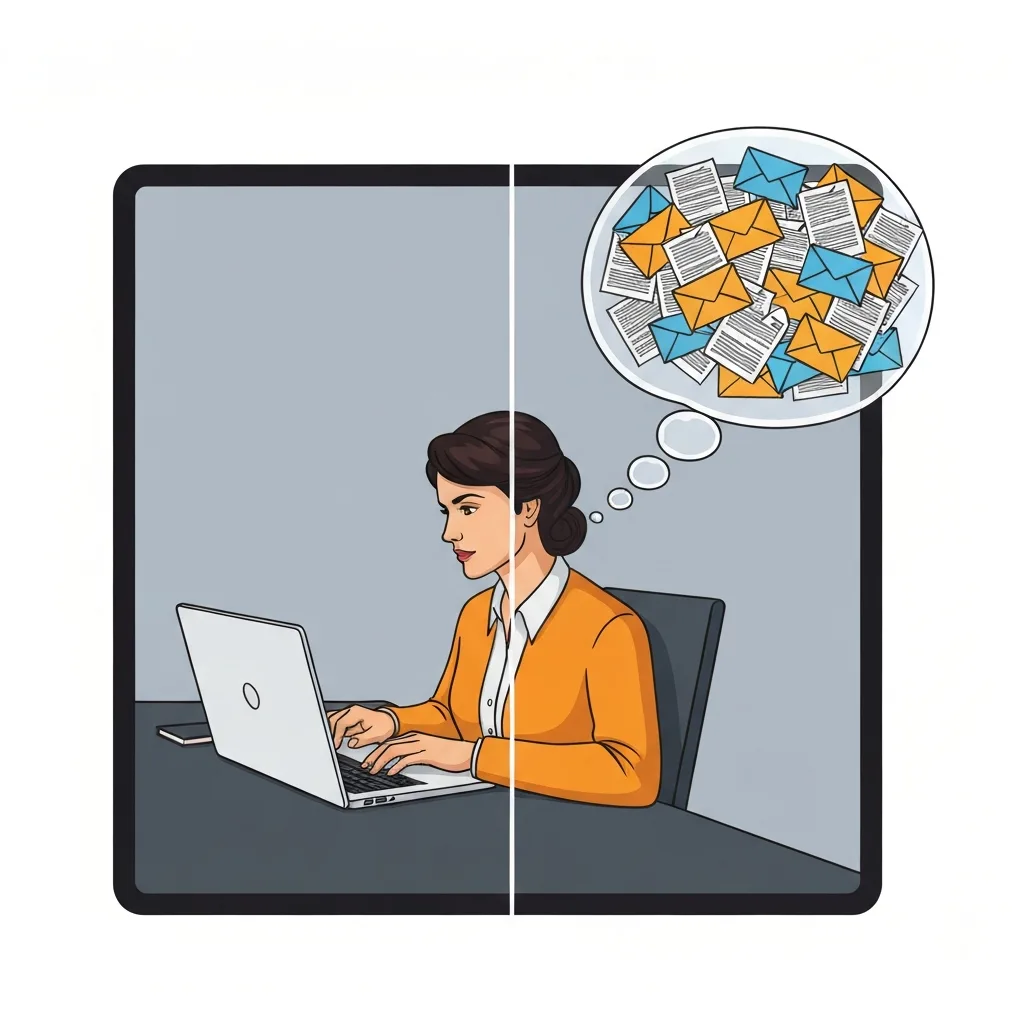
You sit down at your desk, coffee in hand, ready to tackle a major project. You have blocked out two hours of uninterrupted time. But right before you dive in, you decide to quickly check your email. You spot a message from a client asking for a minor update. You do not reply immediately—you tell yourself you will handle it later—and return to your main project.
Yet, for the next twenty minutes, half your brain is secretly drafting that email response. You read the same paragraph of your project three times. Your focus feels fractured. This phenomenon is not a lack of discipline, nor is it a sign that you need more caffeine. It is a well-documented cognitive bottleneck known as attention residue.
In a modern work environment that praises responsiveness and rapid-fire communication, we have conditioned ourselves to constantly shift our gaze. We jump from Slack threads to spreadsheets, from Zoom meetings to project management software. But our brains do not transition as quickly as our screens do. Understanding and managing attention residue is the missing link for anyone trying to do meaningful, focused work in an age of constant distraction.
What Exactly is Attention Residue?
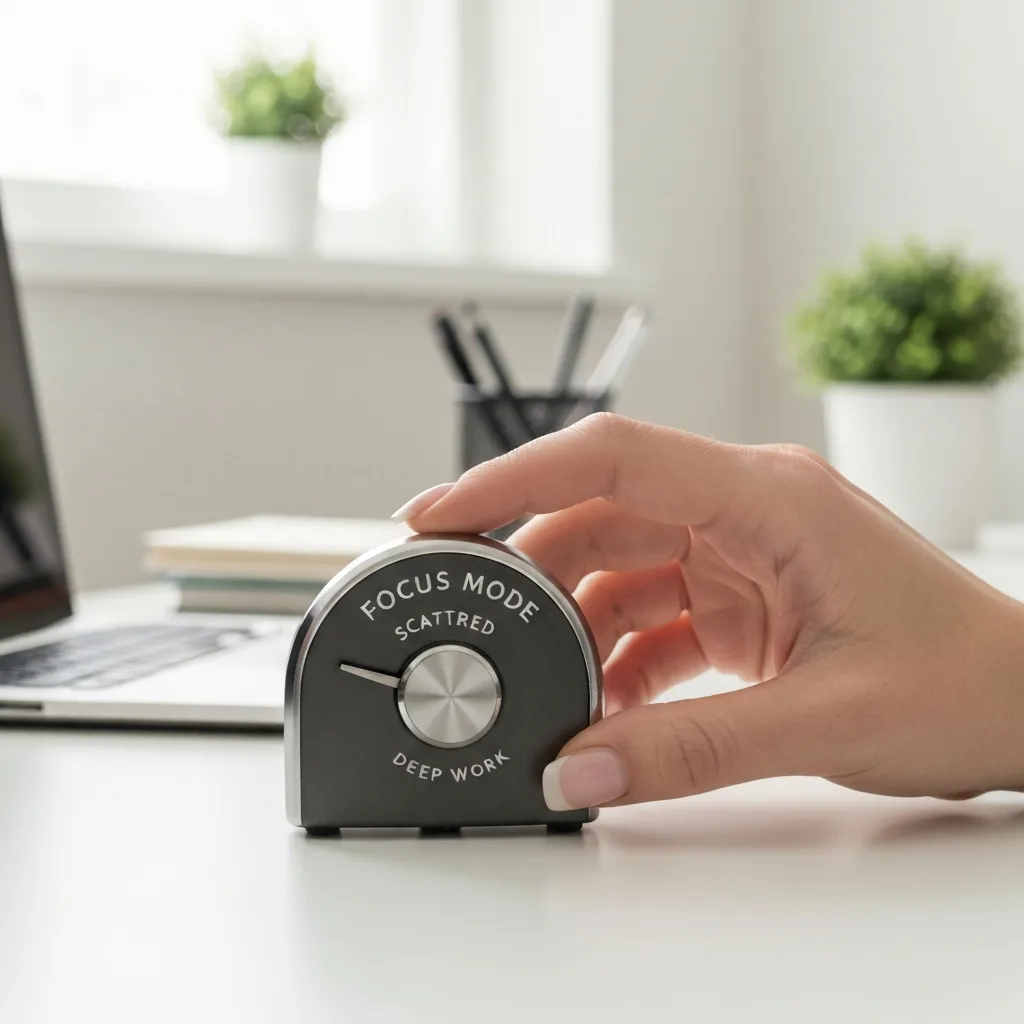
The term ‘attention residue’ was introduced by business professor Sophie Leroy in 2009. Through her research, Leroy discovered that when you switch from Task A to Task B, your attention does not seamlessly follow you. A significant portion of your cognitive capacity remains stuck thinking about the original task. This is especially true if Task A was left unfinished or unresolved.
Think of your brain’s processing power like a computer’s Random Access Memory (RAM). When you open a heavy application, it consumes a large chunk of your available memory. If you minimize that application without closing it properly, it continues to run in the background, slowing down everything else you try to do. Attention residue is the human equivalent of background processing.
When you attempt to write a report while your brain is still processing a tense conversation from your morning meeting, you are operating with diminished cognitive resources. You make more mistakes, your creative problem-solving abilities drop, and the work takes significantly longer to complete.
The Illusion of the ‘Quick Check’
The most common culprit behind attention residue is the habit of the ‘quick check.’ We convince ourselves that glancing at our inbox, checking a text message, or reading a quick Slack notification only takes a few seconds and therefore has no impact on our productivity.
Science suggests otherwise. Research from Gloria Mark at the University of California, Irvine, shows that it takes an average of 23 minutes and 15 seconds to return to a state of deep focus after an interruption. But the interruption does not have to be a coworker tapping on your shoulder. Self-interruption—choosing to look at a notification—triggers the exact same cognitive penalty.
When you glance at an email, you are forcing your brain to load the context of that email. Who is it from? What do they want? How urgent is it? Even if you decide to ignore it for now, you have already initiated a context switch. When you return to your primary task, you bring the residue of that email with you. Over the course of an eight-hour workday, these micro-interruptions compound, leaving you feeling exhausted and accomplished in absolutely nothing.
How to Eliminate Attention Residue and Reclaim Your Focus
Eradicating attention residue requires a fundamental shift in how you structure your workday. You must move away from a reactive posture and intentionally design an environment that supports sequential, single-tasking work. Here are the most effective strategies to clear your mental cache.
1. Implement Hard Boundaries and Micro-Transitions
Because the brain needs time to offload the context of one task before loading the next, you need to build intentional buffer zones into your schedule. If you end a demanding Zoom call at 10:59 AM and immediately open a complex spreadsheet at 11:00 AM, you are guaranteeing a high level of attention residue.
Instead, create micro-transitions. When you finish a task, take two to five minutes to actively step away. Close the relevant tabs on your browser. Stand up, stretch, look out a window, or get a glass of water. This physical break signals to your brain that the previous activity has concluded. When you sit back down, take a deep breath and consciously state your next objective before opening the necessary applications.
2. Theme Your Days to Minimize Context Shifting
Context switching is expensive. Jumping between radically different types of work—such as creative writing, financial analysis, and team management—forces your brain to constantly load entirely new skill sets and mental models.
To reduce this friction, try theming your days or half-days. Group similar tasks together so your brain can stay in the same general ‘mode.’ For example, you might reserve Monday mornings exclusively for deep creative work, Tuesday afternoons for administrative tasks and email processing, and Wednesdays for meetings and collaborative projects. By keeping your tasks within the same thematic family, the residue from one task is less likely to interfere with the next, as they share a similar cognitive landscape.
3. Standardize Your Stopping Points
As Leroy’s research highlighted, attention residue is most severe when a task is left incomplete. However, in the real world, you cannot always finish a massive project in a single sitting. You will inevitably have to pause a task to attend to something else.
To prevent your brain from obsessing over the unfinished work, you need to create a clear stopping point. Before you transition away from a project, take one minute to write down a ‘next steps’ note. Document exactly where you left off, what the immediate next action is, and any stray thoughts you want to remember. By externalizing this information onto paper or a digital note, you relieve your brain of the burden of holding onto it. You can safely let go of the task, knowing you have a map to guide you back when you return.
4. Tame Your Notification Ecosystem
You cannot achieve deep focus in an environment designed for constant interruption. Every ping, buzz, and pop-up is a demand for a context switch. To protect your attention, you must ruthlessly curate your digital environment.
Turn off all non-essential notifications. Close your email client entirely when you are doing focused work—do not just minimize it. If you use team chat apps like Slack or Microsoft Teams, utilize the ‘Do Not Disturb’ function and set clear expectations with your colleagues about your response times. Create a strict ‘single-tab rule’ for deep work sessions: only the specific application or browser tab required for the current task is allowed to be open. The less visual noise competing for your attention, the easier it is to stay anchored to the work at hand.
5. Embrace Asynchronous Communication
Much of the pressure to constantly check in stems from a workplace culture that prioritizes synchronous, immediate communication. Pushing back against this requires adopting an asynchronous mindset.
Batch your communication. Instead of leaving your inbox open all day, schedule specific blocks of time to process messages—perhaps once at 9:00 AM, once at 1:00 PM, and once at 4:30 PM. During these blocks, give your emails and messages your full, undivided attention. Process them efficiently, and then close the applications until the next scheduled block. By treating communication as a distinct, standalone task rather than a continuous background activity, you eliminate the constant drip of attention residue.
The Path to Sequential Processing
We are not wired to process information the way a smartphone does. Our brains thrive on singular, unbroken concentration. When we force ourselves to juggle multiple streams of information, we sacrifice quality, speed, and our own mental well-being.
Combating attention residue is ultimately about respecting your cognitive limits. It is an acknowledgment that your focus is a finite, valuable resource that needs to be protected. By slowing down your transitions, closing your open loops, and rejecting the false urgency of the ‘quick check,’ you can redesign your workflow to support true sequential processing. The result is not just higher quality output, but a workday that feels less chaotic, less exhausting, and profoundly more rewarding.




Do you enjoy the content on Agenda Creativa?
Your contributions help me create new articles, share creative ideas, and keep this platform alive! If you like what I do and want to support my work, you can buy us a coffee.
Every cup of coffee means more than just a gesture – it's direct support for my passion to create inspiring and useful content. Thank you for being part of this journey!
☕ Buy me a coffee