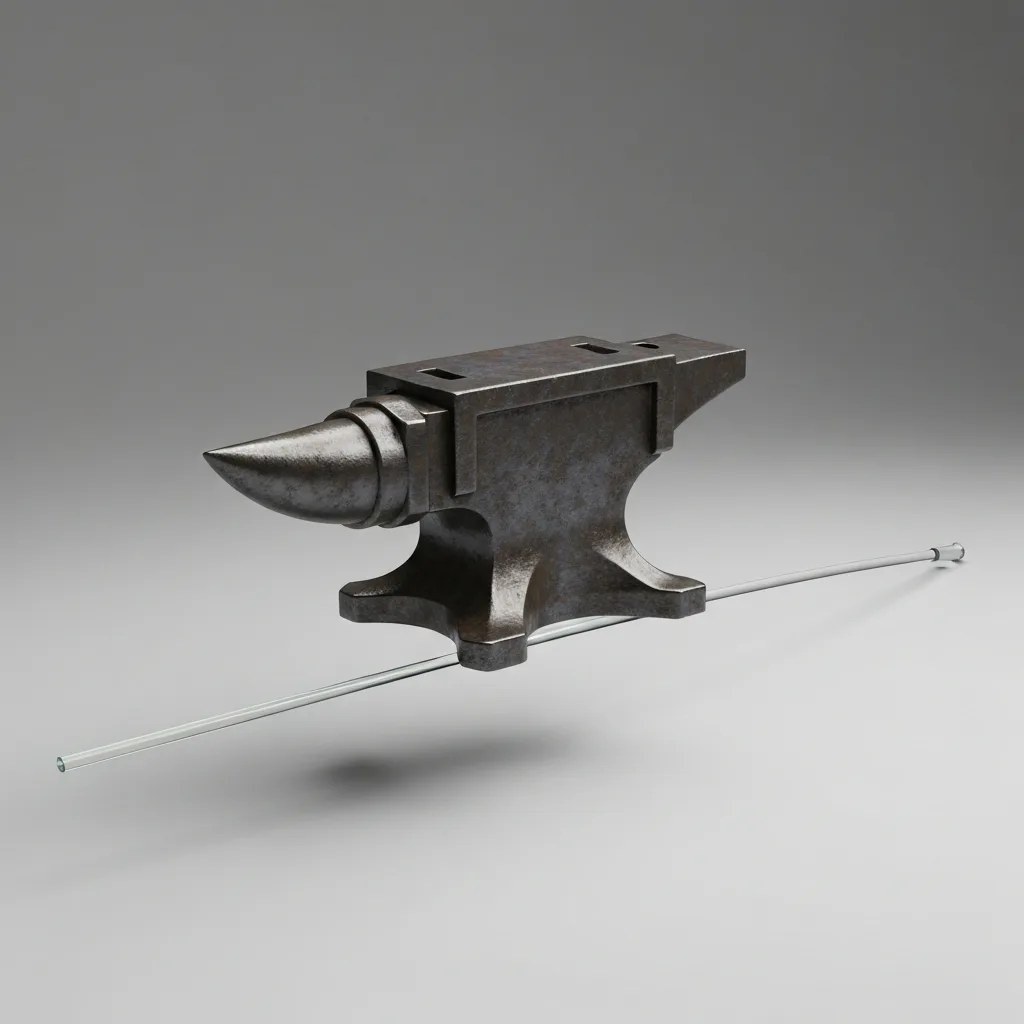
The Weight of Ambition
There is a pervasive assumption in high-performance culture that the magnitude of your goal must be matched by the seriousness of your approach. We are conditioned to believe that if a pursuit is genuinely important—whether it is launching a company, writing a book, or completely overhauling our physical health—we must treat it with a sense of profound gravity. We furrow our brows, we optimize our routines, and we speak about our objectives in hushed, reverent tones. We treat our ambitions like life-or-death missions.
This is a catastrophic miscalculation of human psychology.
When you artificially inflate the psychological stakes of a project, you do not increase your capacity to execute. Instead, you trigger a biological and cognitive freeze response. By deciding that a specific outcome is monumental, you transform every minor step toward that outcome into an act of high-wire risk. This phenomenon is known as the Gravitas Fallacy: the erroneous belief that treating your goals with extreme seriousness yields extreme results. In reality, it yields extreme paralysis.

The Anatomy of the Gravitas Fallacy
To understand why seriousness sabotages drive, we have to look at how the brain processes pressure. When you frame a goal as monumental, your amygdala—the brain’s threat-detection center—begins to interpret failure, or even minor friction, as a severe danger. You are no longer just writing a chapter or writing a line of code; you are determining your future self-worth and public identity. The stakes are simply too high.
Under this manufactured pressure, your prefrontal cortex, which is responsible for creative problem-solving and fluid execution, gets overridden by the primal need to avoid mistakes. You stop playing to win and start playing not to lose. This manifests in several insidious ways. You might find yourself endlessly researching best practices because you are terrified of making a suboptimal choice. You might spend weeks refining a logo or a workspace instead of doing the actual work, simply because the real work feels too heavy to touch.
The Gravitas Fallacy turns the natural friction of doing hard things into an impenetrable wall. When a project is sacred, you cannot simply mess around with it. You cannot experiment, you cannot break things, and you certainly cannot produce a terrible first draft. Every action must be deliberate and flawless. Consequently, the cost of starting becomes astronomically high, leading to chronic procrastination disguised as perfectionism.
The Paradox of Importance
The cruel irony of the Gravitas Fallacy is that the more you care about a specific outcome, the less likely you are to achieve it. This is not because caring is inherently bad, but because obsessive attachment to the gravity of the result strips you of the cognitive flexibility required to navigate the messy middle of any ambitious pursuit.
Think about the last time you learned a new game, perhaps a board game or a casual sport with friends. Because the stakes were zero, your learning curve was remarkably steep. You tried different strategies, you laughed off your failures, and you rapidly adapted. Now contrast that with a high-stakes presentation or a career-defining project. The stiffness sets in. The fear of a misstep narrows your vision. You rely on safe, predictable, and ultimately mediocre approaches.
When we elevate our goals to a sacred status, we lose the very traits that make elite execution possible: agility, curiosity, and the willingness to iterate rapidly through failure.
Enter Strategic Irreverence
The antidote to the Gravitas Fallacy is a concept called Strategic Irreverence. This is not to be confused with apathy or nihilism. You still care deeply about the ultimate trajectory of your life, but you actively refuse to take the daily mechanics of your goals seriously. You deliberately lower the psychological temperature.
Strategic Irreverence is the practice of treating your most ambitious projects like low-stakes experiments. It is the conscious decision to strip the weight and the ego out of the execution phase. When you operate with strategic irreverence, you view your work through the lens of play rather than the lens of performance.
Consider the attitude of a scientist in a laboratory. When an experiment fails to yield the expected result, the scientist does not view it as a moral failing or a career-ending disaster. It is simply data. The scientist is irreverent toward the individual experiment, knowing that the aggregate of all experiments will eventually lead to a breakthrough. Adopting this mindset allows you to move with a lightness that is entirely absent in the heavily burdened high-achiever.
Play as a Performance Enhancer
Neurobiologically, removing the heavy gravitas from your work shifts your brain state from a threat-response (dominated by cortisol) to a reward-seeking state (fueled by dopamine). When you treat your work as a sandbox rather than a battlefield, you naturally increase your tolerance for ambiguity and frustration. You stop waiting for the perfect moment to execute because the execution itself is no longer a precious, fragile thing.
This lightness allows for volume. And in almost every creative or entrepreneurial endeavor, volume is the precursor to quality. The writer who refuses to take their first draft seriously will easily out-produce the writer who treats every sentence as a monument to their intellect. The founder who views their first product iteration as a disposable toy will gather market feedback months before the founder who is trying to build a flawless masterpiece.
How to Engineer Strategic Irreverence
Shifting away from a lifetime of conditioned seriousness requires more than just a change in perspective; it requires structural changes to how you approach your daily tasks. Here are three practical frameworks to dismantle the Gravitas Fallacy and inject strategic irreverence into your workflow.
1. The Disposable Output Rule
The heaviest burden in any project is the expectation that what you produce today must be good. To break this, you must mandate that your initial output is entirely disposable. If you are writing, title the document ‘Garbage Draft—Do Not Keep.’ If you are coding, label it a ‘throwaway script.’ By explicitly defining the work as temporary and worthless, you bypass the amygdala’s fear response. The goal is no longer to create something good; the goal is simply to create something that exists. Once the blank page is conquered, the momentum takes over, and the heavy gravitas is neutralized.
2. Artificial Time Compression
Seriousness expands to fill the time allotted to it. If you give yourself three weeks to write a proposal, you will spend two and a half weeks agonizing over the stakes. The solution is to apply unreasonable time constraints that force you to abandon perfectionism. Give yourself forty-five minutes to draft the entire framework. When the timeline is absurdly tight, your brain stops worrying about whether the work is profound or perfect, and shifts entirely into survival execution mode. The sheer panic of the ticking clock overrides the paralyzing weight of the goal. You are forced to act with blunt force rather than delicate precision.
3. The Rejection Quota
When we take our goals too seriously, we view rejection or failure as a catastrophic indictment of our abilities. To cultivate strategic irreverence, you must invert this dynamic by gamifying failure. Set a goal to collect a specific number of rejections, bad ideas, or failed micro-experiments each week. When your objective is to fail ten times, a failure ceases to be a threat and becomes a metric of success. This completely rewires your relationship with risk. You begin to execute with a reckless, playful energy, knowing that a misstep is actually contributing to your weekly quota.
Sustaining the Lightness
The path to extraordinary achievement is rarely paved with grim determination and heavy-hearted grinding. The individuals who sustain long-term drive and consistently out-execute their peers are those who have learned to carry their ambitions lightly. They understand that while their vision might be grand, the daily execution of that vision must remain small, gritty, and entirely devoid of ego.
If you find yourself paralyzed by the sheer magnitude of what you are trying to accomplish, it is not because you lack discipline or motivation. It is because you are carrying the weight of the destination on every single step of the journey. Drop the gravitas. Stop treating your work like a sacred artifact. Treat it like dirt, get your hands messy, and watch how quickly your natural drive returns.

Do you enjoy the content on Agenda Creativa?
Your contributions help me create new articles, share creative ideas, and keep this platform alive! If you like what I do and want to support my work, you can buy us a coffee.
Every cup of coffee means more than just a gesture – it's direct support for my passion to create inspiring and useful content. Thank you for being part of this journey!
☕ Buy me a coffee