
The Invisible Cost of Falling Behind
You miss a deadline. You skip a planned workout. You let a highly important email sit in your inbox for three weeks because you didn’t have the mental energy to draft a response. What follows isn’t just the logistical consequence of the delay; it is a heavy psychological burden. You berate yourself. You promise to work twice as hard tomorrow to make up for the lapse. You let the shame of inaction infect your remaining tasks.
This is the Guilt Tax. It is the hidden cognitive penalty you pay when your actual behavior fails to align with your planned behavior. In the realm of personal productivity, we often treat self-punishment as a management tool. We operate under the assumption that if we make ourselves feel bad enough about procrastinating today, we will somehow magically engineer the discipline to execute flawlessly tomorrow.
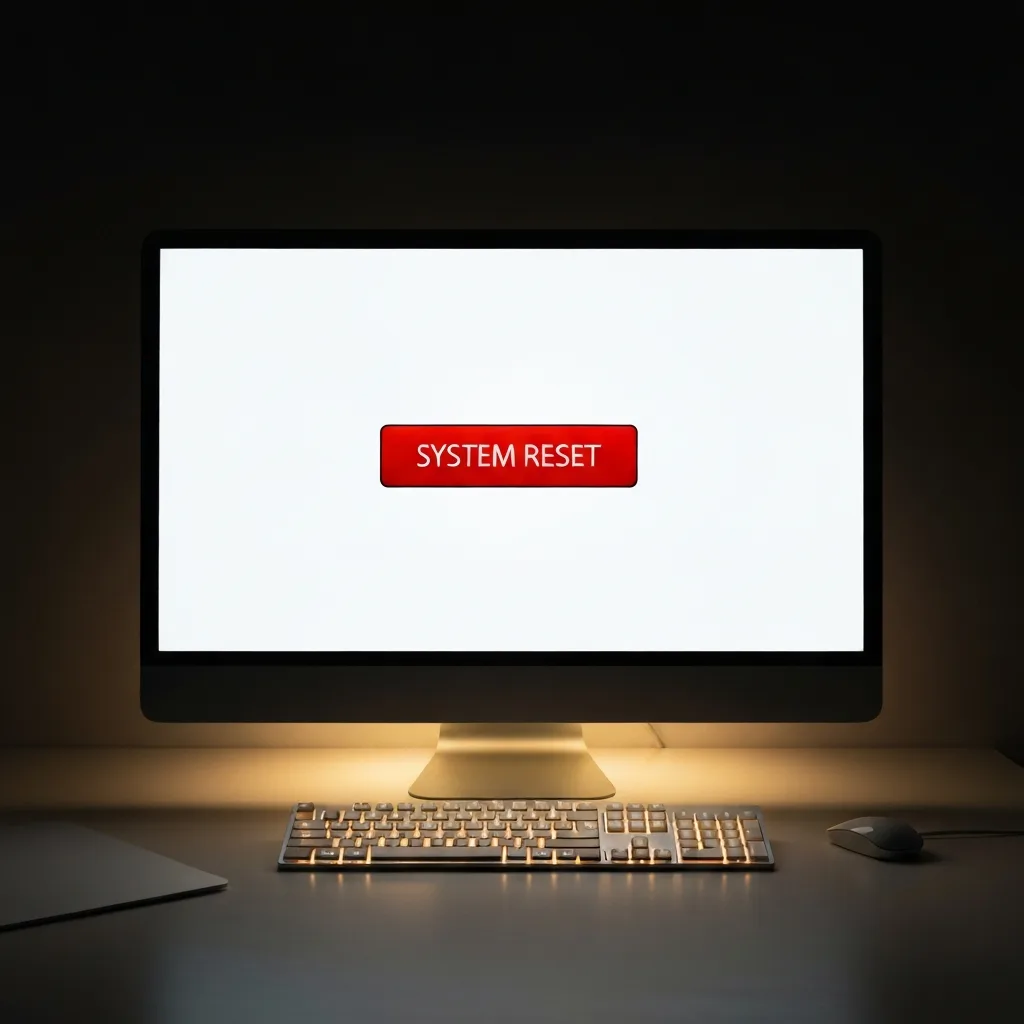
The reality is the exact opposite. Guilt is not a fuel source; it is a friction generator. When you spend your cognitive budget processing shame, regret, and anxiety over what you failed to do, you actively deplete the working memory and executive function required to do the work right now. To sustain high output over the long term, you have to stop paying the Guilt Tax. You must shift from a fragile system that expects perfection to a resilient system that expects failure, utilizing what we call a Clean-Slate Protocol.
The Mechanics of the Guilt Tax
To understand why guilt destroys productivity, you have to look at the mechanics of human emotion and task initiation. Every task requires a certain amount of activation energy to start. When a task is neutral, the activation energy is simply the effort required to do the work. But when you attach guilt to a task, you fundamentally alter its psychological weight.
The Radioactive Task Effect
Consider the overdue email. On day one, replying to that email requires five minutes of typing. The activation energy is low. By day seven, the email requires a five-minute reply plus a brief apology for the delay. The activation energy increases. By day twenty-one, the email has become radioactive. Opening the thread triggers a spike of cortisol. You aren’t just answering a question anymore; you are confronting your own perceived inadequacy and unreliability.
Because the human brain is hardwired to avoid pain, you will subconsciously invent any excuse to avoid interacting with the radioactive task. You will reorganize your desk. You will clear out your spam folder. You will do low-impact, trivial work simply to avoid the emotional discomfort of the task you have tied to your guilt. The longer you wait, the heavier the Guilt Tax becomes, creating a self-reinforcing avoidance spiral.
The Myth of Catching Up
The second destructive mechanism of the Guilt Tax is the delusion of “catching up.” When high performers miss a day of their routine, their immediate instinct is to double the workload for the following day. If you missed your two hours of deep work on Tuesday, you plan for four hours on Wednesday.
This approach mathematically guarantees failure. If you lacked the capacity, energy, or time to complete your baseline workload on Tuesday, assuming you will miraculously possess double the capacity on Wednesday is irrational. When Wednesday arrives and you inevitably fail to hit the doubled target, you generate a second layer of guilt. You are now failing at your baseline and failing at your recovery plan. This cascading failure is how minor slips turn into multi-week slumps.
Why Traditional Productivity Fails Here
Most popular productivity systems are inherently fragile. They are built on the assumption of 100 percent compliance. Habit trackers demand unbroken streaks. Time-blocking methods assume you will never get sick, never face a sudden family emergency, and never simply wake up exhausted.
When a system requires perfection, any deviation breaks the system entirely. If your identity is tied to a 50-day habit streak, breaking the streak on day 51 destroys your motivation. The system offers no way back in. It only offers a glaring red ‘X’ on your calendar, reminding you of your failure. To escape the Guilt Tax, you need an architecture that treats failure as data, not as a character flaw.
How to Engineer a Clean-Slate Protocol
A Clean-Slate Protocol is a predefined set of actions you take the moment you realize you have fallen off track. It removes emotion from the recovery process. You do not need to feel motivated to recover; you just need to execute the protocol. Here is how to build yours.
1. Decouple Identity from Output
The first step in the protocol is a cognitive shift. When a project derails, you must analyze the failure objectively, as an engineer would analyze a broken machine. Stop saying, “I am lazy and undisciplined.” Start saying, “The system failed to prompt me effectively,” or “I miscalculated the energy required for this phase of the project.” By externalizing the failure, you remove the emotional sting. You cannot fix a character flaw in an afternoon, but you can easily adjust a timeline or break down a task into smaller components.
2. Implement the 24-Hour Amnesty Rule
When a task has become radioactive due to delays, you must artificially remove the pressure. The 24-Hour Amnesty Rule allows you to officially forgive the debt. You look at the overdue task and explicitly give yourself permission to drop the guilt. You draft the email or start the project without the heavy apologies. You accept that the delay happened, you acknowledge that the ideal window has passed, and you focus entirely on the present execution. Forgiveness in this context isn’t soft; it is highly strategic. It lowers the activation energy back to baseline.
3. Declare Strategic Bankruptcy
Sometimes, the backlog is simply too large. If you return from an unexpected absence to find 800 unread emails or 40 overdue tasks in your project manager, trying to process them sequentially will paralyze you. In these moments, you must declare Strategic Bankruptcy.
Archive the entire inbox. Move all overdue tasks to a “Someday/Maybe” folder. Wipe the slate completely clean. If an email was truly critical, the sender will follow up. If a task is genuinely essential to your long-term goals, it will naturally resurface. By declaring bankruptcy, you instantly eliminate the Guilt Tax and reclaim your cognitive bandwidth. You start today at zero, focusing only on the work that matters right now.
4. The “Next Logical Action” Reset
Abandon the concept of catching up. You cannot manufacture time, and you cannot fit 16 hours of output into an 8-hour day. When you trigger your Clean-Slate Protocol, you do not look at the backlog. You ask yourself one singular question: “What is the next logical action required to move my most important project forward today?”
You isolate that single action. You ignore everything that happened yesterday, and you ignore everything scheduled for tomorrow. You rebuild your momentum one micro-action at a time. Consistency is not about never breaking the chain; it is about how quickly you can start a new chain after the previous one breaks.
Shifting to Resilient Execution
High output is not the result of flawless execution. It is the result of rapid recovery. The professionals who produce the most significant work over a decade are not the ones who never procrastinate. They are the ones who refuse to pay the Guilt Tax. When they slip, they do not spiral. They trigger their Clean-Slate Protocol, forgive the lapse, and immediately return to the baseline.
Stop treating your productivity system like a moral test. It is simply a tool. When the tool slips, you don’t punish yourself. You reset your grip, adjust your angle, and get back to the work. By engineering a Clean-Slate Protocol into your life, you ensure that yesterday’s failures can never sabotage today’s execution.
Do you enjoy the content on Agenda Creativa?
Your contributions help me create new articles, share creative ideas, and keep this platform alive! If you like what I do and want to support my work, you can buy us a coffee.
Every cup of coffee means more than just a gesture – it's direct support for my passion to create inspiring and useful content. Thank you for being part of this journey!
☕ Buy me a coffee