The Physics of Motivation and the Cost of Standing Still
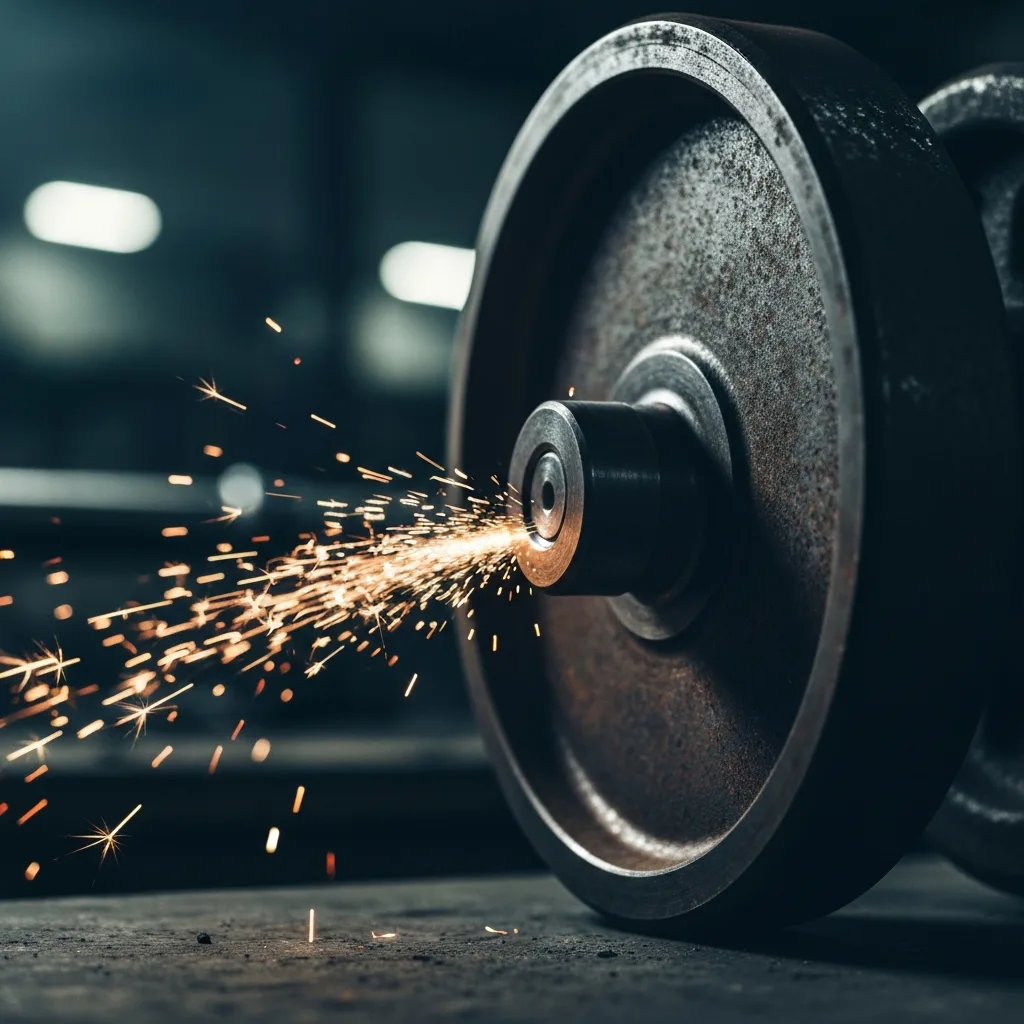
In the physical world, friction comes in two forms: static and kinetic. Static friction is the force that keeps an object at rest, actively resisting any attempt to move it. Kinetic friction is the force that opposes an object already in motion. If you have ever tried to push a stalled car, you intuitively understand the relationship between the two. Getting the car to move that very first inch requires a monumental, exhausting expenditure of energy. But once the tires are rolling, keeping the car moving requires only a fraction of that initial effort.
In physics, static friction is always greater than kinetic friction. In the psychology of motivation, the exact same law applies.
Yet, when we look at how most people approach their goals, their careers, or their creative pursuits, they operate in a way that forces them to constantly battle static friction. They engage in what can be called the ‘intermittent hustle.’ They sprint intensely toward a goal for a few weeks, burn out, come to a complete dead stop to recover, and then eventually try to summon the willpower to start all over again. Every time they stop, they lose their kinetic advantage. Every time they restart, they are forced to pay the Inertia Tax.

Understanding the Inertia Tax
The Inertia Tax is the hidden cognitive and emotional cost of going from zero to one. When you are at a complete standstill, your brain views the effort required to begin as a massive, intimidating mountain. To overcome this, you have to manufacture an immense amount of psychological activation energy. You have to hype yourself up, wait for the perfect wave of inspiration, or rely on the anxiety of a looming deadline just to get moving.
Paying the Inertia Tax is exhausting. It drains your executive function and depletes your dopamine reserves before you have even accomplished any meaningful work. If you write consistently every day, sitting down to write the next page feels natural. You are already in motion. But if you take three weeks off from a writing project, opening that document feels like staring into an abyss. You have forgotten the rhythm of the prose, the cadence of your thoughts, and the mechanical habit of putting fingers to the keyboard.
This is why the start-stop cycle is the enemy of enduring drive. It is not the work itself that leads to burnout; it is the constant, agonizing process of starting over. By allowing yourself to come to a complete halt, you are making the work infinitely harder than it needs to be.
The Trap of the Sprint-and-Crash Culture
Modern productivity culture actively encourages intermittent hustle. We are sold on the idea of bootcamps, 30-day extreme challenges, and weekend hackathons. These frameworks are designed around the concept of maximum exertion over a short period. While they can produce rapid short-term results, they are fundamentally flawed for long-term achievement because they inherently assume a hard stop at the finish line.
When you cross the finish line of a 30-day challenge, the natural psychological response is to collapse. You earned a break. So, you stop. The engine cools down. The momentum dissipates. And when day 45 or day 60 rolls around, and you realize you need to get back to work, you are met with the crushing weight of static friction. The very thought of starting again triggers a sense of dread, leading to procrastination, guilt, and a prolonged period of stagnation.
To build unbreakable, lifelong drive, you must abandon the sprint-and-crash model. You must transition from a system that relies on peak performance to a system that prioritizes continuous motion. You need to learn how to idle.
The Concept of ‘Idle Speed’
In maritime navigation, there is a concept called ‘steerage way.’ It is the minimum speed a vessel must maintain to be steered effectively. If a boat is moving too slowly or is completely stopped, the rudder has no effect, and the boat is at the mercy of the current. To maintain control, the boat must keep moving forward, even if only at a crawl.
Similarly, a car engine does not shut off when you stop at a red light. It drops into idle. The RPMs lower, fuel consumption decreases, and the engine runs quietly in the background, maintaining just enough combustion to keep the system alive. When the light turns green, you don’t have to turn the key and restart the engine; you simply press the gas pedal.
Psychological ‘idle speed’ is the exact same mechanism applied to your daily habits and ambitions. It is a non-negotiable, low-friction baseline of action that you maintain even on your worst, most exhausted days. It is the minimum viable effort required to keep your momentum alive so that you never have to pay the Inertia Tax.
How to Engineer Your Idle Speed
Implementing idle speed requires a fundamental shift in how you view progress. It demands that you stop measuring success solely by high-output days and start valuing the preservation of momentum. Here is how to build this mechanism into your life.
1. Define Your Floor, Not Your Ceiling
Most people only define their goals by their ceiling: ‘I will write 2,000 words today,’ or ‘I will spend two hours at the gym.’ When life gets chaotic or energy drops, hitting the ceiling becomes impossible, so they do nothing. They come to a dead stop.
To maintain idle speed, you must define your floor. Your floor is the absolute bare minimum action you can take that still keeps you engaged with your goal. It should be an action so small, so laughably easy, that you can do it when you are sick, tired, or entirely unmotivated. For a writer, the floor might be opening the manuscript and writing a single sentence. For an entrepreneur, it might be sending one follow-up email. For fitness, it might be doing ten pushups or simply putting on your gym shoes and walking to the end of the driveway.
The purpose of the floor is not to make meaningful progress. The purpose is strictly to keep the engine running. It prevents the onset of static friction.
2. Decouple Action from Emotion
Intermittent hustle relies heavily on emotional states. You work when you feel inspired, motivated, or pressured. Idle speed relies on mechanics. When you are operating at idle, you do not need to feel good about the work. You do not need to be in a flow state.
You must train yourself to execute your baseline actions mechanically, without waiting for the right emotional weather. By treating your ‘floor’ as an autonomic function—like brushing your teeth or making coffee—you sever the link between your mood and your momentum. You prove to your brain that action can occur in the absence of motivation, which ironically becomes the greatest source of long-term drive.
3. Utilize the 15-Minute Bridge
When you are operating at idle speed and want to transition back into deep work, do not try to jump straight into fifth gear. Use a 15-minute bridge. Commit to working on your primary task for just 15 minutes, with the explicit permission to stop when the timer goes off.
Because you have already been idling—because you haven’t let yourself come to a dead stop over the past few weeks—you will find that the kinetic friction is incredibly low. More often than not, once that 15-minute bridge is crossed, the engine is revved, and you will naturally want to keep going. The bridge effortlessly transitions you from idle to acceleration.
The Compounding Power of Never Stopping
There is a quiet, unshakeable confidence that develops when you realize you are no longer subject to the start-stop cycle. When you master idle speed, you stop fearing the inevitable dips in your motivation, because you know those dips will no longer result in a complete standstill. You know that you can downshift, conserve energy, and keep rolling forward at a crawl.
High achievement is rarely the result of a few heroic, exhausting sprints. It is almost always the byproduct of relentless, unbroken momentum. By refusing to come to a dead stop, you eliminate the massive energy drain of the Inertia Tax. You preserve your cognitive bandwidth, protect your psychological reserves, and ensure that when the time comes to accelerate, your engine is already running.
Do you enjoy the content on Agenda Creativa?
Your contributions help me create new articles, share creative ideas, and keep this platform alive! If you like what I do and want to support my work, you can buy us a coffee.
Every cup of coffee means more than just a gesture – it's direct support for my passion to create inspiring and useful content. Thank you for being part of this journey!
☕ Buy me a coffee