The Paradox of Panic in the Absence of Threat
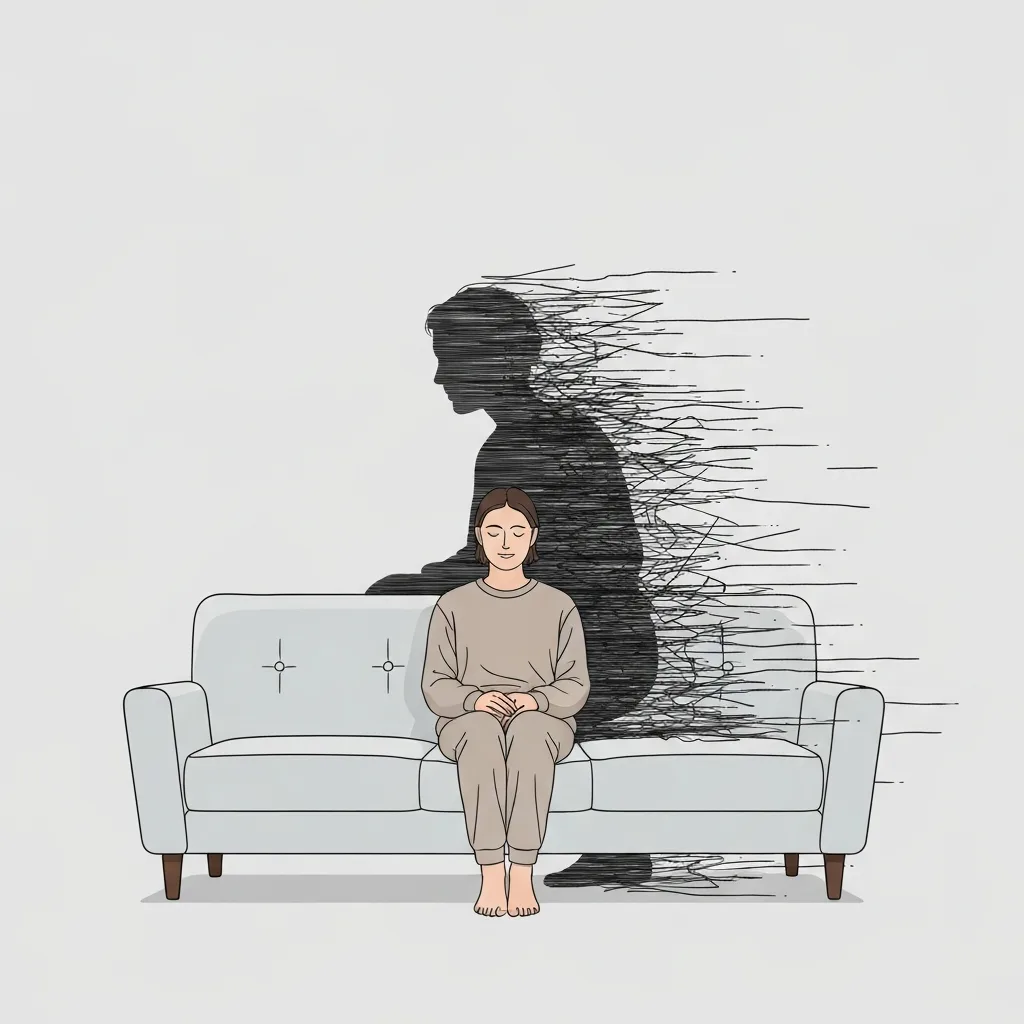
You finally clear your schedule. The deadlines are met, the obligations are fulfilled, the house is quiet, and you sit down on the couch to rest. But instead of the deep, restorative peace you anticipated, a familiar tightness grips your chest. Your mind begins frantically scanning the horizon for forgotten tasks. Your heart rate elevates, your breathing becomes shallow, and an inexplicable sense of dread washes over you. You are completely safe, yet you feel entirely under siege.
This is not a failure of your mindfulness practice, nor is it a sign that you are incapable of resting. It is a highly predictable, well-documented biological phenomenon known as relaxation-induced anxiety. For those who are accustomed to operating in a state of chronic stress, sudden stillness does not feel like relief. To the nervous system, it feels like a profound and imminent threat.
Understanding the mechanics behind this paradoxical reaction is the crucial first step toward reclaiming your capacity for genuine emotional balance. When we attempt to force a chronically dysregulated nervous system into immediate relaxation, we often trigger the exact psychological friction we are desperately trying to escape. To find peace, we must stop forcing calm and start learning how to decelerate.
The Neuroscience of the Drop-Off Effect
To understand why calm feels dangerous, we must look at how the autonomic nervous system adapts to prolonged periods of high demand. When you spend weeks, months, or even years operating in a state of sympathetic dominance—commonly known as the fight-or-flight response—your physiological baseline shifts. Your brain habituates to elevated levels of cortisol and adrenaline. It begins to interpret this high-velocity state not as an emergency response, but as your standard operating procedure.
When you abruptly remove the stressors and attempt to relax, your brain registers the sudden drop in stress hormones as a biological anomaly. In the framework of predictive processing, the brain is constantly anticipating what will happen next based on recent historical data. If the data has consistently pointed to high stress, high stakes, and constant motion, a sudden void of stimulation creates a massive prediction error.
The amygdala, the brain’s primary threat-detection center, interprets this sudden quiet as highly suspicious. It signals the nervous system with a warning: It is too quiet. We must have dropped our guard. Danger is inevitably approaching. Brace for impact. This is why sitting down to read a book after a grueling workweek can trigger intrusive thoughts and physical agitation. Your conscious, logical mind knows you are safe, but your nervous system believes you have just made yourself vulnerable in hostile territory.
The Subconscious Sabotage of Rest
Because relaxation-induced anxiety is so deeply uncomfortable, many people develop subconscious strategies to avoid it altogether. If stillness triggers panic, the logical, albeit maladaptive, solution is to remain in perpetual motion. This creates a vicious cycle where we actively, yet unknowingly, sabotage our own opportunities for recovery.
This sabotage often manifests as the manufacturing of micro-emergencies. You might find yourself picking an unnecessary argument with a partner, aggressively doomscrolling through distressing news, or suddenly deciding that the garage must be meticulously reorganized at nine o’clock on a Friday night. These actions are rarely driven by genuine necessity; they are driven by the nervous system’s demand for a familiar chemical state.
By generating a low-level stressor, you prompt a minor release of cortisol, which paradoxically makes you feel more settled because it aligns with your brain’s expected baseline. We also see this in the inability to disconnect from professional obligations. The compulsion to check emails on a Sunday afternoon is rarely about productivity. It is a self-soothing mechanism. The brief spike of work-related stress prevents the dreaded drop-off effect, keeping the nervous system humming at a recognizable, albeit exhausting, frequency.
The Danger of the “Cold Turkey” Approach to Calm
The modern wellness industry often promotes a “cold turkey” approach to relaxation. We are told to go on silent retreats, lock away our phones for the weekend, or sit in absolute stillness to meditate for an hour. While these practices are highly beneficial for a regulated nervous system, they can be deeply destabilizing for someone carrying a heavy allostatic load.
When you take a nervous system that is traveling at a hundred miles an hour and force it to immediately stop, the resulting psychological whiplash is severe. The gap between your internal state (high gear) and your external state (zero gear) causes immense cognitive friction. The brain, desperate to make sense of the physical arousal it is experiencing in a quiet room, will begin to invent reasons for the panic. It will pull up past regrets, fabricate future catastrophes, or fixate on minor physical sensations, creating a self-sustaining loop of anxiety.
To bypass this whiplash, we must abandon the idea that rest requires immediate immobility. Instead of slamming on the brakes, we must learn to downshift through the gears. This requires a strategic architectural approach to winding down, allowing the biology of the body to catch up with the intentions of the mind.
The Architecture of Psychological Deceleration
Decelerating safely requires stepping down the intensity of your mental and physical engagement gradually. By providing the nervous system with a transitional bridge, you can guide it out of fight-or-flight without triggering the alarm bells of sudden stillness.
Phase 1: Active Decoupling
The first step in deceleration is to move from high-stakes mental stress to low-stakes physical exertion. You cannot think your way out of a physiological stress response; you must move the residual adrenaline through your body. Active decoupling involves engaging in rhythmic, moderately engaging physical activity that signals to the body that the threat has passed.
This could be a brisk walk, sweeping the floor, kneading bread dough, or gentle stretching. The goal is not to exercise for fitness, but to burn off the biochemical residue of stress. By keeping the body in motion while lowering the cognitive demand, you allow the nervous system to gently step down from its peak arousal state.
Phase 2: Sensory Anchoring
Once the physical agitation has been slightly reduced, the next step is to give the hypervigilant brain a safe, low-stakes job to do. If you leave a stressed brain entirely unoccupied, it will default to rumination. Sensory anchoring provides a focal point that requires just enough attention to keep the mind occupied, but not enough to trigger stress.
This is where hobbies that require mild manual dexterity and focus become incredibly therapeutic. Knitting, doing a jigsaw puzzle, coloring, or playing a casual, non-competitive video game are excellent examples. These activities require presence and sensory engagement, which naturally overrides the brain’s default mode network—the area responsible for anxious time-traveling. You are resting, but you are not demanding absolute stillness from a brain that isn’t ready for it.
Phase 3: Titrating Stillness
Only after you have actively decoupled and anchored your senses should you attempt true stillness, and even then, it must be titrated. Titration is a concept borrowed from chemistry and trauma therapy, which involves introducing a potent substance in tiny, manageable drops rather than all at once.
Begin with micro-doses of absolute rest. Sit in a comfortable chair and do absolutely nothing for just two minutes. Notice the urge to get up, acknowledge the slight spike in anxiety, and breathe through it. Remind your nervous system: We are safe here. When the two minutes are up, allow yourself to get up and move. Over days and weeks, gradually extend these windows of stillness. You are slowly expanding your window of tolerance for peace.
Rewriting Your Nervous System’s Definition of Safety
Overcoming relaxation-induced anxiety is not a matter of trying harder to relax; it is a process of neurological rehabilitation. You are teaching a deeply conditioned part of your brain that calm does not equate to vulnerability, and that stillness is not a prelude to disaster.
This process requires immense self-compassion. When you feel the urge to spring up from the couch and scrub the baseboards, recognize it not as a personal failure, but as your nervous system clumsily trying to protect you. Acknowledge the physical sensation of the anxiety, validate the biological mechanism behind it, and gently guide yourself back to your deceleration practice.
True emotional balance is not found in the complete eradication of stress, nor is it found in the forced performance of serenity. It is found in the fluid, intentional movement between action and recovery. By respecting the momentum of your nervous system and learning the art of psychological deceleration, you can finally build an internal landscape where rest feels like the sanctuary it was always meant to be.
Do you enjoy the content on Agenda Creativa?
Your contributions help me create new articles, share creative ideas, and keep this platform alive! If you like what I do and want to support my work, you can buy us a coffee.
Every cup of coffee means more than just a gesture – it's direct support for my passion to create inspiring and useful content. Thank you for being part of this journey!
☕ Buy me a coffee