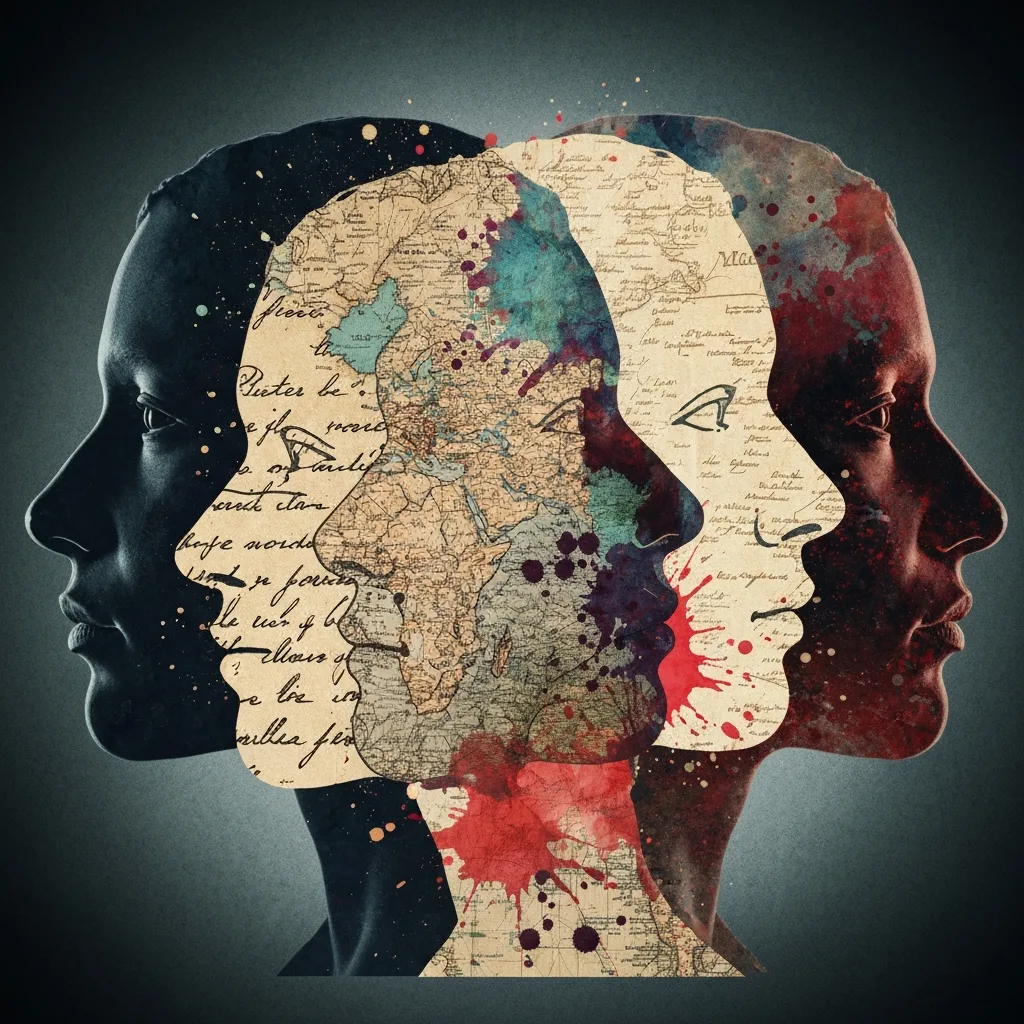
The Shift from Omniscience to Multiplicity
For centuries, the dominant force in literary fiction was the omniscient narrator. This god-like, all-knowing entity hovered above the plot, dipping into the minds of characters at will, guiding the reader with a steady, authoritative hand. The omniscient voice provided comfort and certainty. It told us who was good, who was wicked, and exactly how the events of the story unfolded. But as the modern world grew increasingly complex, this singular, absolute perspective began to feel inadequate. Human experience is rarely singular, and truth is almost never absolute. Enter the polyphonic novel: a narrative structure built on multiple, often conflicting, perspectives.
Polyphonic storytelling abandons the idea of a single source of truth. Instead, it hands the microphone to a chorus of characters, allowing each to narrate their own version of reality. This technique does more than just switch camera angles; it fundamentally alters the way a story is consumed and understood. By forcing readers to navigate the spaces between different accounts, modern authors create a highly participatory reading experience that mirrors the fragmented nature of real life.

The Roots of Polyphony: Mikhail Bakhtin and Dostoevsky
To understand the modern multi-POV novel, one must look back to Russian literary critic Mikhail Bakhtin. In his seminal 1929 work, Problems of Dostoevsky’s Poetics, Bakhtin introduced the concept of “polyphony” (a term borrowed from music, meaning many voices) to describe the structural brilliance of Fyodor Dostoevsky’s work. Bakhtin argued that Dostoevsky did not write novels where the author’s voice dominated the characters. Instead, Dostoevsky created a plurality of independent and unmerged voices and consciousnesses.
In a true polyphonic novel, the author steps back. The characters are not mere mouthpieces for the writer’s ideology; they are fully realized entities with their own distinct worldviews. They argue, they contradict each other, and they possess equal narrative authority. Bakhtin saw this as a deeply democratic form of literature. It was a rejection of the monologue in favor of the dialogue. Today, contemporary authors have taken Bakhtin’s observations and amplified them, using the polyphonic structure to tackle massive social, political, and historical themes that a single perspective simply could not hold.
Why modern authors embrace the Chorus
The rise of the polyphonic novel in contemporary literature is not merely a stylistic trend; it is a philosophical choice. Modern authors gravitate toward multiple perspectives because the format perfectly aligns with contemporary skepticism toward absolute authority.
Democratizing the Narrative
One of the most powerful applications of the multi-POV structure is its ability to give voice to the marginalized. Historically, literature has often centered on the perspective of the victor, the wealthy, or the socially dominant. By employing a polyphonic structure, authors can decentralize the narrative. A maid, a monarch, a child, and a thief can all occupy the same narrative space, their voices carrying equal weight. This democratization of the narrative allows writers to explore the deep inequalities of society from the inside out.
The Rashomon Effect in Literature
Another compelling reason authors utilize multiple perspectives is to exploit the “Rashomon effect”—a phenomenon where the same event is described in significantly different ways by different people. In literature, this creates a profound sense of psychological realism. When two characters recount the same argument or the same tragedy, their differing memories expose their biases, traumas, and desires. The friction between these accounts generates immense narrative tension. The reader is left to sift through the contradictions, piecing together a reality that exists somewhere in the middle.
The Mechanics of the Multi-POV Novel
Writing a successful polyphonic novel is a high-wire act. The author must juggle distinct voices, timelines, and narrative arcs without confusing the reader or losing the story’s forward momentum. The mechanics of this structure require rigorous discipline and a deep understanding of character psychology.
Character Distinctiveness and Voice
The most common pitfall of the multi-POV novel is the blending of voices. If character A sounds exactly like character B, the structural purpose of the perspective shift is defeated. Masterful authors differentiate their narrators not just through what they say, but how they say it. Vocabulary, sentence length, syntax, and rhythm must all be customized to fit the specific background and emotional state of the character.
William Faulkner’s As I Lay Dying remains one of the most extreme and successful examples of this technique. With 15 different narrators and 59 chapters, Faulkner relies entirely on internal monologue to differentiate his cast. The young boy Vardaman’s logic is fragmented and literal, famously culminating in the single-sentence chapter, “My mother is a fish.” Meanwhile, the intellectual Darl speaks in sweeping, poetic, and highly observant prose. The stark contrast in their linguistic capabilities tells the reader as much about the characters as the plot itself.
Pacing and Information Control
Beyond voice, authors must meticulously manage the flow of information. A multi-POV structure naturally creates dramatic irony. Character A might know a secret that Character B does not, but the reader knows both. The author must decide when to switch perspectives to maximize suspense. Ending a chapter on a cliffhanger, only to switch to a different character entirely, is a classic technique that keeps the pages turning while expanding the scope of the world.
Notable Masterpieces of Polyphonic Fiction
The evolution of the polyphonic novel has given us some of the most ambitious and celebrated works of the past few decades. These novels demonstrate the sheer versatility of the form.
The Poisonwood Bible by Barbara Kingsolver
Kingsolver’s masterpiece uses the polyphonic structure to explore the catastrophic impacts of Western imperialism and religious zealotry in the Congo. The novel is narrated entirely by the women of the Price family—the mother, Orleanna, and her four daughters. The patriarchal figure, Nathan Price, whose stubborn arrogance drives the tragedy, never gets a point of view. By silencing the patriarch and amplifying the voices of the women he drags into the jungle, Kingsolver creates a devastating critique of toxic male authority. Each daughter’s voice is distinct, ranging from Rachel’s malapropism-riddled vanity to Adah’s brilliant, cynical palindromes.
A Brief History of Seven Killings by Marlon James
Marlon James takes polyphony to its absolute limit in his Booker Prize-winning novel centered around the 1976 assassination attempt on Bob Marley. The book features a sprawling cast of over seventy characters, with narration handed off to gang members, CIA agents, journalists, and even ghosts. James uses this chaotic, overlapping chorus to capture the violent, fractured reality of Jamaican politics and the global drug trade. The sheer volume of voices creates a sense of historical overwhelm, proving that some events are too massive to be contained by a single narrator.
Girl, Woman, Other by Bernardine Evaristo
Evaristo’s novel is a triumph of interconnected storytelling, following the lives of twelve very different characters, mostly Black British women. Unlike traditional multi-POV novels that jump back and forth between the same few people, Evaristo dedicates a section to each character, allowing their lives to intersect and overlap in surprising ways. The polyphonic structure here is not used to dispute a central event, but to build a comprehensive portrait of modern British identity. The accumulation of these distinct voices creates a rich, multifaceted exploration of race, gender, sexuality, and class.
The Reader’s Role: Becoming the Detective of Truth
Perhaps the most significant impact of the polyphonic novel is how it transforms the reader. When reading a single-POV or omniscient narrative, the reader is largely passive, absorbing the reality presented to them. In a multi-POV novel, the reader becomes an active participant. They are forced into the role of a detective, cross-examining the witnesses, noting discrepancies, and actively constructing the “truth” of the narrative in their own mind.
If a husband claims a marriage was happy, and the wife’s subsequent chapter reveals quiet, suffocating despair, the reader must reconcile these two realities. This active engagement fosters a deeper level of empathy. By inhabiting the minds of deeply flawed, contradictory characters, readers practice the difficult art of holding multiple truths simultaneously—a skill that is desperately needed outside the pages of fiction.
The Enduring Power of the Chorus
The polyphonic novel continues to thrive because it accurately reflects the complexity of the human condition. We live in a world defined by competing narratives, where social media, global news, and personal histories clash on a daily basis. A singular, authoritative voice no longer feels authentic to the modern experience. By embracing the chorus, contemporary authors are pushing the boundaries of what literature can achieve. They remind us that history is never just one story; it is a thousand different stories, overlapping, contradicting, and echoing in the dark.
Do you enjoy the content on Agenda Creativa?
Your contributions help me create new articles, share creative ideas, and keep this platform alive! If you like what I do and want to support my work, you can buy us a coffee.
Every cup of coffee means more than just a gesture – it's direct support for my passion to create inspiring and useful content. Thank you for being part of this journey!
☕ Buy me a coffee