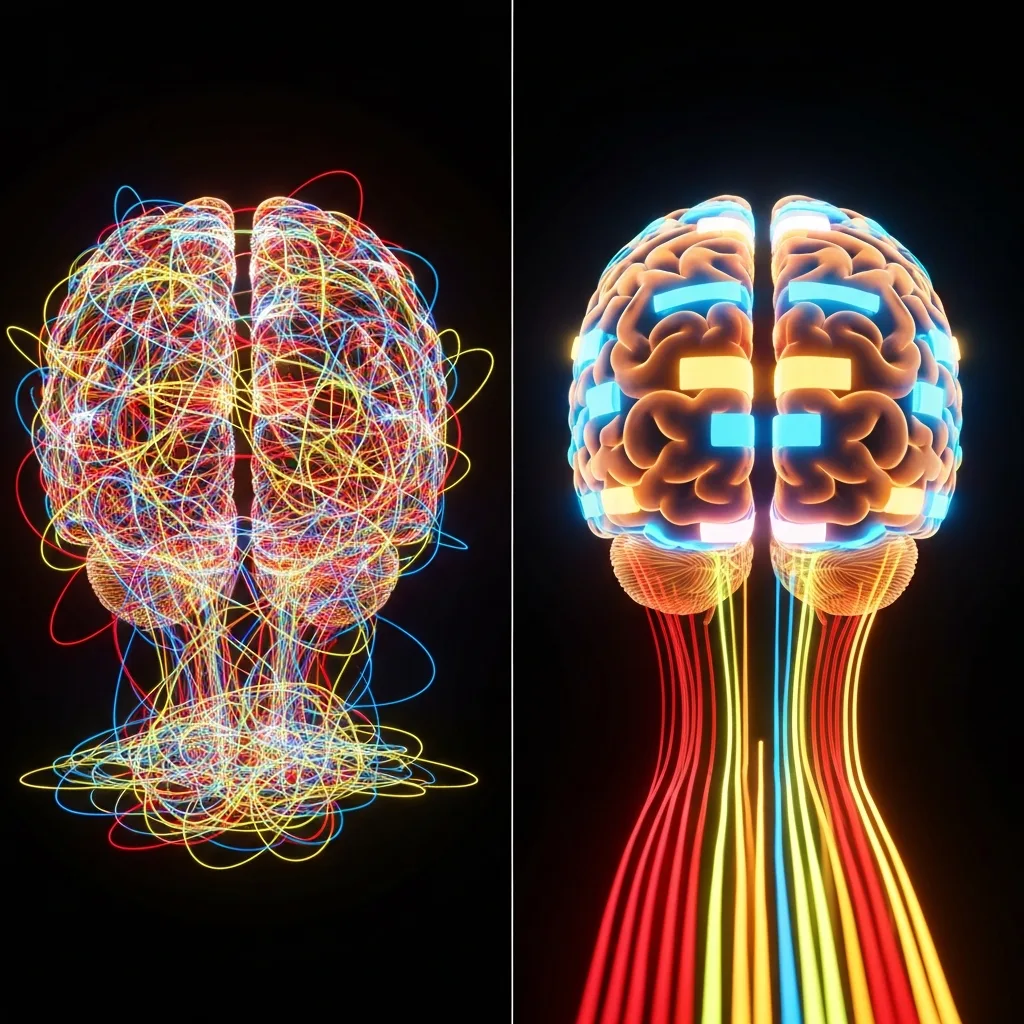
The Hidden Cost of Cognitive Whiplash
Imagine sitting down to execute a major project. You open a blank document and begin drafting a complex strategy. Ten minutes later, you realize you need a specific metric, so you open your email to find a report from a colleague. While searching, you spot an urgent message from a client and spend five minutes replying. You then find the report, open a spreadsheet to verify the data, adjust a few formulas, and finally return to your strategy document.
On paper, you spent forty-five minutes working on a single project. In reality, you forced your brain to execute a series of violent gear shifts. You moved from divergent, creative thinking (drafting) to reactive communication (email), to convergent, analytical thinking (spreadsheets), and back again.
This is the Modality Trap. We mistakenly believe that as long as we are focusing on one project at a time, we are single-tasking. But the brain does not organize its energy by project; it organizes its energy by cognitive state. Every time you switch between different types of mental processing, you incur a massive penalty in cognitive endurance. The result is a specific type of exhaustion that leaves you feeling drained by 2:00 PM, despite having accomplished very little of substance.
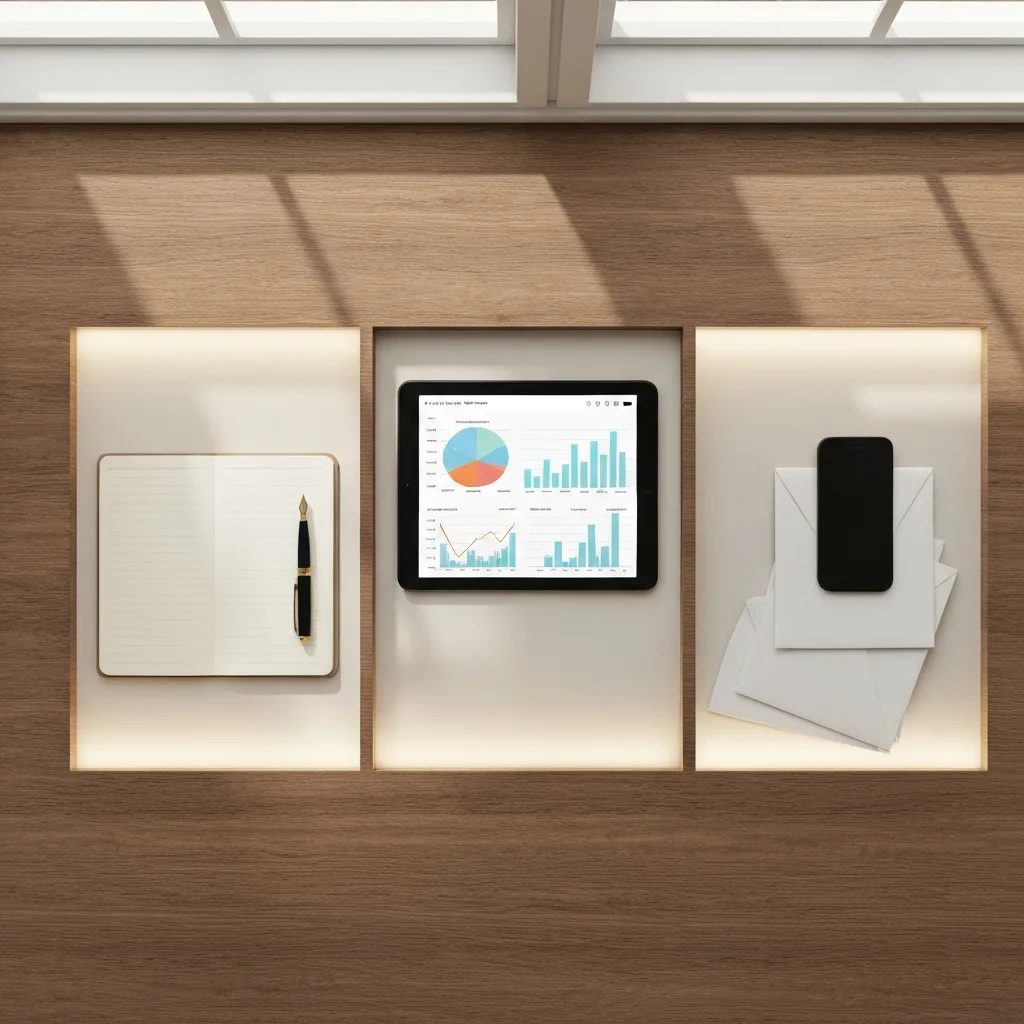
The Flaw in Project-Based Time Blocking
Time blocking is widely considered the gold standard of modern productivity advice. You look at your calendar and assign specific hours to specific outcomes: “Marketing Campaign” from 9:00 AM to 11:00 AM, “Q3 Budget” from 11:00 AM to 12:00 PM.
The fatal flaw in this approach is that it organizes your workflow by the desired outcome rather than the required input. A single project like a “Marketing Campaign” is not a monolithic task. It is a container that holds dozens of micro-tasks, each requiring a completely different brain state. Writing the ad copy requires deep, uninterrupted generative thought. Reviewing the ad spend requires sharp analytical logic. Emailing the designer for assets requires rapid-fire communication.
When you block time by project, you inadvertently schedule a session of cognitive whiplash. You force your prefrontal cortex to rapidly load and unload entirely different operating systems. This constant context switching depletes your executive function, which is the exact cognitive resource you rely on to maintain focus, resist distractions, and produce high-quality work.
The Three Core Cognitive Modalities
To stop fighting your own neurobiology, you must begin categorizing your work not by what it produces, but by how it feels to execute. Almost all knowledge work can be distilled into three distinct cognitive modalities.
1. Generative Mode (The Architect)
Generative work requires divergent thinking. This is the act of creating something from nothing. Writing an article, designing a user interface, brainstorming a new product architecture, or drafting a difficult proposal all fall into this category. Generative mode requires the highest level of cognitive energy and has virtually zero tolerance for interruptions. A single notification can shatter a generative thought process, requiring up to twenty minutes to fully rebuild the mental model you were holding in your working memory.
2. Analytical Mode (The Editor)
Analytical work requires convergent thinking. The raw material already exists; your job is to refine, organize, evaluate, or optimize it. This includes editing a draft, reviewing financial models, QA testing software, or reading research reports. Analytical mode requires moderate-to-high cognitive energy. While it demands sharp focus, the mental models are usually externalized (on a screen or paper), making it slightly more resilient to brief interruptions than generative work.
3. Administrative Mode (The Janitor)
Administrative work is reactive and procedural. It involves tasks that keep the machinery of your life and business running but do not directly create new value. Replying to standard emails, paying invoices, scheduling meetings, organizing files, and filling out expense reports belong here. Administrative mode requires very low cognitive energy. It relies on established patterns and can easily survive high levels of interruption and fragmentation.
The Transition Tax: Why Shifting Gears Drains Your Battery
The core issue with the Modality Trap is a phenomenon known as the “Transition Tax.” When you finish a task, your brain does not instantly wipe its working memory clean. A concept called “attention residue” ensures that fragments of the previous task linger in your mind, occupying valuable cognitive bandwidth.
However, the Transition Tax is not a flat rate. The cost of switching depends heavily on the distance between the modalities. Moving from one administrative task (email) to another administrative task (Slack) incurs a very low tax. Your brain is already in a reactive, rapid-fire state.
But moving from an administrative task (Slack) to a generative task (writing complex code) incurs an exorbitant tax. Your brain must forcefully suppress the reactive dopamine loop of instant messaging, clear out the short-term memory buffers, and slowly boot up the deep-focus architecture required for coding. If you do this five or six times an hour, your cognitive battery will be entirely depleted before lunch, leading to the familiar sensation of staring blankly at a screen, unable to muster the willpower to type a single sentence.
How to Engineer Thematic Work Blocks
To eliminate cognitive whiplash, you must restructure your days around “State-Based Batching.” The goal is to group tasks by their required cognitive modality, allowing you to ride the momentum of a single brain state for hours at a time. Here is how to engineer this system.
Step 1: The Modality Audit
Begin by looking at your current master task list. Ignore the projects they belong to. Instead, tag every single task with a “G” (Generative), “A” (Analytical), or “M” (Administrative). You will quickly notice that your most important projects are actually fragmented collections of different modalities.
For example, if you are launching a podcast, “Record episode” is Generative. “Edit audio” is Analytical. “Email guest the release date” is Administrative. Deconstruct your projects into their modality components before you schedule them.
Step 2: State-Based Batching
Instead of scheduling a two-hour block for “Podcast Launch,” schedule a two-hour Generative Block. During this time, you will record the podcast episode, write the draft for an upcoming newsletter, and outline a new presentation. You are working across three entirely different projects, but you are utilizing the exact same cognitive state.
Later in the day, when your energy naturally dips, schedule a one-hour Administrative Block. During this single session, you will email the podcast guest, pay your graphic designer, reply to all outstanding Slack messages, and process your inbox to zero. Because you are staying strictly within the reactive, procedural modality, you will fly through these tasks with remarkable speed and zero resistance.
Step 3: Environmental Anchoring
Your brain relies heavily on environmental cues to determine which cognitive state to activate. You can accelerate your entry into the correct modality by associating specific physical and digital environments with specific work states.
For your Generative Blocks, you might close all browser tabs, put your computer in “Do Not Disturb” mode, put on noise-canceling headphones with instrumental music, and maximize a single, minimalist writing application. For Administrative Blocks, you might work from a busy coffee shop or a different desk, keep your email and Slack open side-by-side, and listen to upbeat music. By physically separating your modalities, you train your brain to instantly adopt the correct posture the moment you enter that specific environment.
The Leverage of Cognitive Endurance
Productivity is rarely a matter of raw time; it is almost entirely a matter of energy management. The Modality Trap convinces us that output is tied to project focus, blinding us to the immense friction generated by constant cognitive context switching.
When you stop forcing your brain to rapidly alternate between architect, editor, and janitor, something remarkable happens. The friction disappears. You discover that you don’t actually hate writing that report or building that model; you just hated trying to do it while your brain was stuck in administrative mode. By engineering thematic work blocks, you respect your neurobiology. You reduce the activation energy required to execute hard tasks, eliminate the fatigue of the Transition Tax, and unlock a level of cognitive endurance that makes high-level output feel entirely effortless.




Do you enjoy the content on Agenda Creativa?
Your contributions help me create new articles, share creative ideas, and keep this platform alive! If you like what I do and want to support my work, you can buy us a coffee.
Every cup of coffee means more than just a gesture – it's direct support for my passion to create inspiring and useful content. Thank you for being part of this journey!
☕ Buy me a coffee