The Myth of the Motivational Sugar Rush
We have all experienced the fleeting rush of a motivational video, a powerful quote, or an inspiring keynote speech. For a brief window, you feel invincible. You draft ambitious plans, swear off bad habits, and promise yourself that tomorrow will be the beginning of a new era. Yet, within forty-eight hours, the fire inevitably burns out. You return to your baseline, staring at the same goals with the same sense of inertia.
This cycle of peaks and valleys is the result of treating motivation as an emotion rather than a mechanism. Relying on external inspiration is akin to trying to power a transatlantic flight with a series of bottle rockets. It provides immediate, spectacular thrust, but it lacks the sustained, engineered combustion required for the long haul. To build enduring drive, we must discard the superficial advice of the self-help industry and examine the underlying biological and psychological architecture of human motivation.
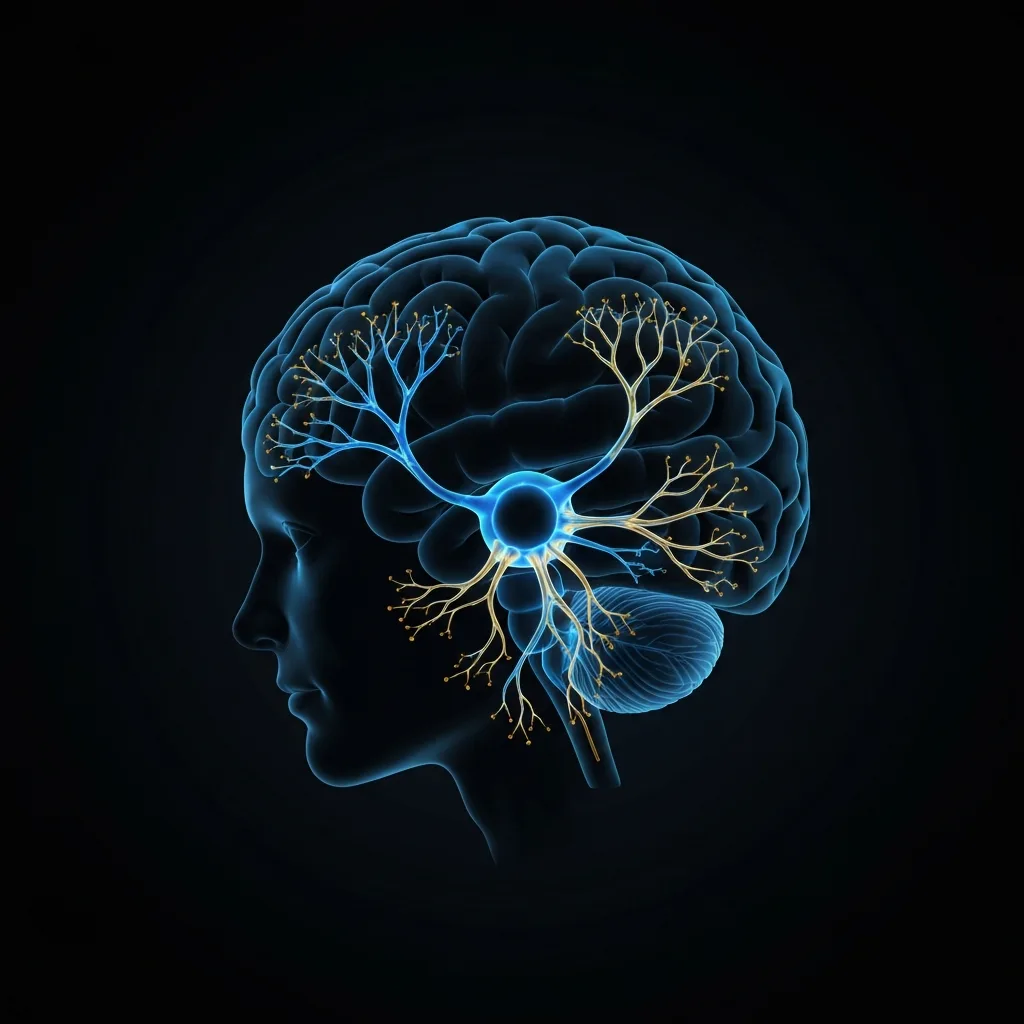
The Neurobiology of Drive: The Dopamine Misconception
Any serious conversation about motivation must begin with dopamine. In popular culture, dopamine is frequently mischaracterized as the brain’s “pleasure” or “reward” chemical. We are told that we get a hit of dopamine when we eat sugar, win a game, or receive a notification on our phones. While dopamine is involved in these experiences, framing it purely as a reward chemical fundamentally misunderstands its primary evolutionary function.
Neuroscientists, including Dr. Andrew Huberman and Dr. Robert Sapolsky, have demonstrated that dopamine is actually the chemical of anticipation, craving, and motivation. It is not about the reward itself; it is about the pursuit of the reward.
The Prediction Error and the Power of Anticipation
In classic experiments involving monkeys trained to press a lever for a food reward upon seeing a light signal, researchers observed something fascinating. The massive spike in dopamine did not occur when the monkey received the food. It occurred when the light came on. The signal indicating that a reward was possible triggered the chemical drive required to execute the work (pressing the lever).
Furthermore, if the reward is only delivered fifty percent of the time, dopamine levels upon seeing the signal actually skyrocket. The uncertainty—the gap between the present state and a potential future reward—is what maximizes neurological drive. This biological reality explains why manufactured inspiration fails. Watching someone else achieve greatness might trigger a minor, vicarious dopamine release, but it does not map onto your own neurological pathways of action and anticipation. To harness your biology, you must construct an environment where your own actions are directly linked to meaningful, slightly unpredictable progress.
The Psychology of Action: intrinsic vs. extrinsic motivation
If dopamine forms the biological hardware of drive, our psychological frameworks form the software. Psychologists broadly divide motivation into two categories: extrinsic and intrinsic.
The Limits of Extrinsic Carrots and Sticks
Extrinsic motivation relies on external variables: financial bonuses, social prestige, grades, or the avoidance of punishment. This framework is highly effective for algorithmic tasks—work that requires following a set path to a clear conclusion, such as assembling parts on a factory line or completing basic data entry.
However, extrinsic motivation is notoriously fragile. Once the reward is removed, the behavior ceases immediately. More alarmingly, introducing extrinsic rewards to a task that requires complex, creative thinking can actually degrade performance. This is known as the “Overjustification Effect.” If you take an activity someone enjoys doing for its own sake—like painting or writing—and begin paying them for it, their brain subtly shifts the locus of control. The activity is no longer play; it is work. When the payment stops, the original organic desire to perform the activity is often completely destroyed.
The Power of Intrinsic Drive
Intrinsic motivation is the desire to engage in an activity because it is inherently rewarding. The action itself is the prize. This type of drive is robust, self-sustaining, and highly correlated with long-term psychological well-being and elite performance.
You do not need to watch a motivational video to eat your favorite meal, engage in your favorite hobby, or converse with your closest friends. The drive is built into the architecture of the activity. The ultimate goal of the science of motivation is to reverse-engineer this intrinsic pull and apply it to our most important, challenging, and long-term goals.
The Three Pillars of Sustainable Drive
How do we cultivate this elusive intrinsic motivation? The most robust framework in modern psychology is Self-Determination Theory (SDT), developed by Edward Deci and Richard Ryan. SDT posits that human beings have three innate psychological needs. When these needs are met, intrinsic motivation flourishes. When they are thwarted, drive collapses.
1. Autonomy: The Need for Control
Autonomy is the desire to be the author of your own life. It is the feeling that your actions are self-endorsed rather than coerced by external forces. If you feel forced to complete a project, even one you might otherwise enjoy, your drive will plummet.
To build autonomy into your goals, focus on choice. Instead of telling yourself, “I have to go to the gym,” reframe the narrative to, “I choose to train today because I value my physical resilience.” In professional environments, managers can foster autonomy by dictating the desired outcome but granting employees the freedom to choose their methodology for achieving it.
2. Competence: The Pursuit of Mastery
Humans are inherently driven to master their environments. We want to feel capable, effective, and continuously improving. When a task is too easy, we experience boredom. When a task is overwhelmingly difficult, we experience anxiety. The sweet spot for motivation—often referred to as the “flow state”—exists right on the boundary of our current capabilities.
To engineer competence, you must break massive, intimidating goals into granular, manageable challenges. You need clear, immediate feedback loops. You must be able to see that the effort you expended today directly resulted in an incremental increase in your skill or progress. Without visible evidence of growing competence, motivation starves.
3. Relatedness: The Broader Context
While often overlooked in individualistic productivity culture, relatedness—the desire to connect with and contribute to others—is a potent driver. We are highly social creatures. When our work is connected to a purpose larger than our own ego, we unlock a reservoir of psychological endurance that isolated ambition cannot access.
This is why individuals will often work harder for their team, their family, or their community than they will for themselves. Tying your daily, mundane tasks to a broader narrative of service or connection provides a deeply resilient form of psychological fuel.
Engineering Sustainable Motivation: Practical Applications
Understanding the science is only the first step. The true test is operationalizing these biological and psychological realities into daily life. Here is how to move from theory to execution.
1. Manage Your Dopamine Baseline
If you spend your day flooding your brain with cheap, effortless dopamine through social media algorithms, highly processed foods, and constant digital novelty, your baseline dopamine levels will drop. Consequently, the “friction” required to engage in difficult, long-term tasks will feel insurmountable. Protect your neurochemistry. By intentionally restricting access to unearned dopamine, you recalibrate your brain to crave the dopamine released through hard work and focused effort.
2. Lower the Friction for Initiation
Because dopamine is about anticipation, the hardest part of any task is crossing the threshold from inaction to action. Once you begin, the brain often realizes the task is not as painful as anticipated, and momentum takes over. Design your environment to make starting frictionless. If you want to run in the morning, place your shoes next to your bed. If you want to write, leave your document open on your desk the night before. Do not rely on willpower to overcome environmental friction; remove the friction entirely.
3. Focus on Systems, Not Sentiments
Motivation is a feeling, and feelings are inherently volatile. They are influenced by your sleep quality, blood sugar levels, and minor interpersonal conflicts. You cannot build a legacy on something so unstable.
Instead of trying to manipulate your feelings, build systems. A system is a standardized set of behaviors that you execute regardless of your emotional state. It is the commitment to writing two hundred words every morning, or going to the gym for thirty minutes, whether you feel “inspired” or not. Over time, consistent action alters your identity. You stop being someone who “wants to write” and become a “writer.” Once a behavior becomes part of your identity, the need for conscious motivation evaporates entirely.
Conclusion: Becoming the Architect of Your Drive
The pursuit of motivation through external inspiration is a trap. It outsources your agency to motivational speakers, dramatic soundtracks, and fleeting emotional highs. Real drive—the kind that builds companies, writes novels, and transforms physiques—is cold, calculated, and deeply scientific.
By understanding the neurobiology of dopamine, you can stop chasing cheap rewards and start optimizing for the pursuit itself. By applying the principles of intrinsic motivation—autonomy, competence, and relatedness—you can design goals that pull you forward organically. Stop waiting for the lightning strike of inspiration. Become the architect of your own drive, build your systems, and let the science of human behavior do the heavy lifting.
Do you enjoy the content on Agenda Creativa?
Your contributions help me create new articles, share creative ideas, and keep this platform alive! If you like what I do and want to support my work, you can buy us a coffee.
Every cup of coffee means more than just a gesture – it's direct support for my passion to create inspiring and useful content. Thank you for being part of this journey!
☕ Buy me a coffee