The Evolution of Narrative in Contemporary Literature
The fundamental human need for narrative remains a constant force, but the architecture of the story is undergoing a radical shift. In contemporary literature, the boundaries of form and genre are increasingly porous. Modern fiction is no longer confined to the linear, omnisciently narrated arcs of the past. Instead, it embraces fragmentation, visual integration, and hyper-personal intimacy. By examining the rise of autofiction, the maturation of the graphic novel, and the digital reinvention of the epistolary form, we can observe how modern authors are actively redefining what a ‘story’ can be. These evolving formats do more than just entertain; they mirror the complexities of modern culture, demanding new levels of engagement from readers who live in an increasingly mediated world.
Autofiction: The Illusion of Absolute Truth
One of the most significant shifts in modern storytelling is the meteoric rise of autofiction. A portmanteau of autobiography and fiction, this genre deliberately blurs the boundary between the author and the protagonist. Writers like Karl Ove Knausgård, Rachel Cusk, and Ben Lerner have championed this form, presenting narratives that read like raw, unfiltered memoirs while maintaining the structural liberties of a novel. In autofiction, the protagonist often shares the author’s name, profession, and personal history, yet the events are subtly manipulated to serve a thematic purpose.
This narrative technique resonates deeply with contemporary culture. We live in an era defined by the curated self—a time when social media encourages everyone to construct and broadcast their own personal narratives. Autofiction leans into this cultural obsession with authenticity while simultaneously questioning it. By presenting a story that is both deeply personal and structurally artificial, authors of autofiction force readers to confront the unreliability of memory and the performative nature of identity.
Furthermore, autofiction often discards traditional plot mechanics. Instead of a clear inciting incident, climax, and resolution, these novels favor a hyper-realistic documentation of daily life, internal monologues, and philosophical digressions. This approach engages readers not through suspense, but through a profound sense of recognition and psychological intimacy. The ‘story’ is no longer about what happens next, but rather about how the narrator processes the sheer weight of existence.
Graphic Novels: The Maturation of Sequential Art
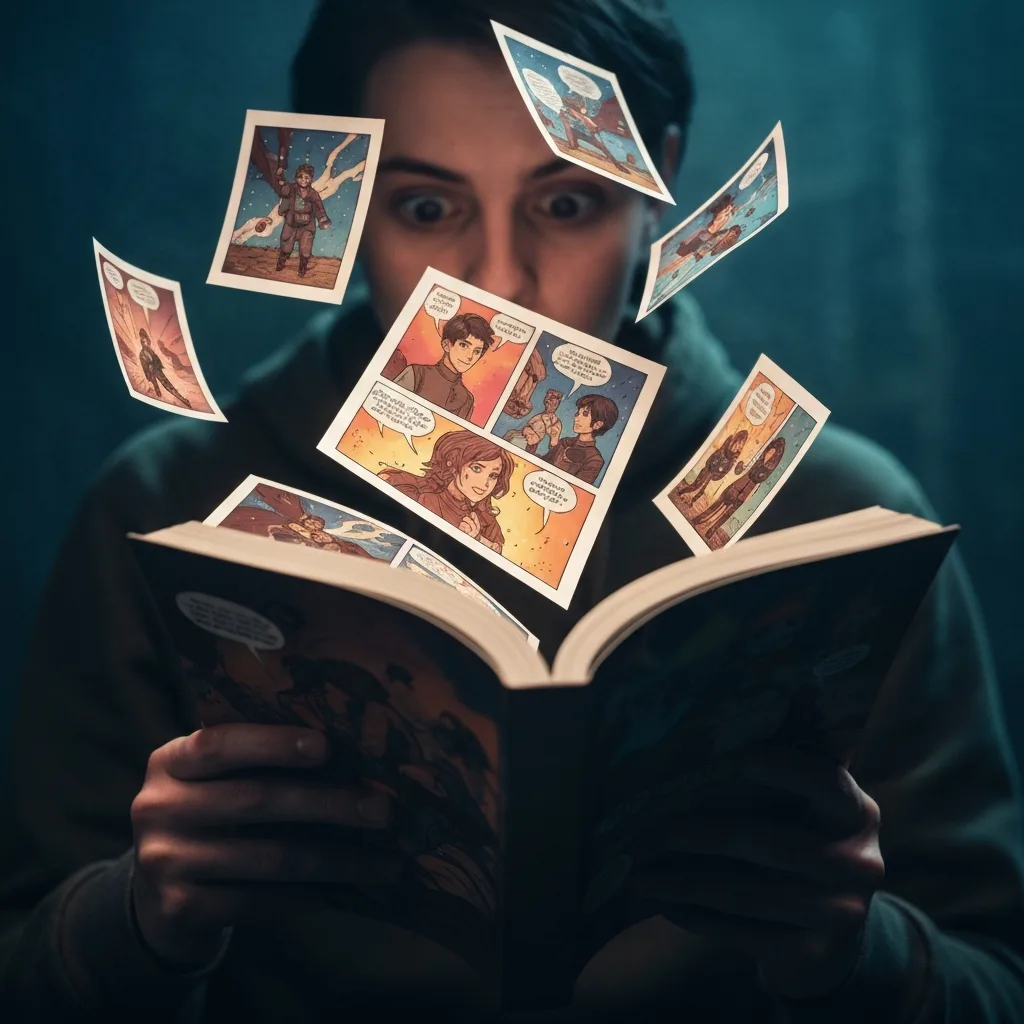
While autofiction redefines textual storytelling, the graphic novel has revolutionized the visual dimensions of literature. Long dismissed as mere entertainment for children, sequential art has firmly claimed its place in the literary canon. Works like Art Spiegelman’s Maus, Marjane Satrapi’s Persepolis, and Alison Bechdel’s Fun Home demonstrated that the graphic novel could tackle trauma, history, and complex emotional landscapes with a nuance that rivals traditional prose.
The storytelling mechanics of a graphic novel require a unique form of reader engagement known as visual literacy. In prose, the author dictates the pacing and imagery. In a graphic novel, the reader must actively participate in constructing the narrative. The magic of this medium happens in the ‘gutter’—the blank space between the panels. The reader’s mind must bridge the gap between one image and the next, creating movement, time, and emotional resonance out of static drawings.
Modern graphic novels also reflect a highly visual contemporary culture. In a society accustomed to consuming information through screens, memes, and videos, the graphic novel offers a sophisticated synthesis of text and image. It allows authors to convey simultaneous layers of meaning. A character’s dialogue might say one thing, while the background art, color palette, or facial expression tells a completely different story. This juxtaposition creates a rich, multi-dimensional narrative experience that challenges the definition of traditional storytelling.
The Modern Epistolary: Intimacy in the Digital Age
The epistolary novel—a story told through a series of documents, traditionally letters or diary entries—is one of the oldest forms of the novel. Classic works like Bram Stoker’s Dracula or Mary Shelley’s Frankenstein used this technique to build suspense and offer multiple perspectives. However, modern fiction has brilliantly adapted the epistolary format to reflect the realities of contemporary communication.
Today’s epistolary novels are constructed from text messages, emails, Slack channels, Reddit threads, and transcribed podcast audio. Authors use these digital formats to create a highly voyeuristic reading experience. When we read a novel composed entirely of emails or chat logs, we feel as though we are snooping through someone’s personal device. This mimics the fragmented way we interact with others in real life, where relationships are often maintained through a disjointed stream of digital pings and notifications.
This modern approach to the epistolary form fundamentally changes the narrative structure. It relies heavily on subtext and omission. The reader must piece together the overarching plot by reading between the lines of brief, often informal exchanges. It perfectly encapsulates the modern condition: we are constantly communicating, yet frequently misunderstood. By turning everyday digital communication into a literary device, authors elevate the mundane artifacts of our digital lives into compelling vehicles for storytelling.
Reflecting Contemporary Culture Through Form
What unites autofiction, graphic novels, and modern epistolary fiction is their shared departure from the traditional, authoritative narrator. In classical fiction, the author acts as a god-like figure, guiding the reader through a carefully constructed world. Modern storytelling, by contrast, is inherently democratic and interactive. It asks the reader to do the heavy lifting—whether that means deciding what is true in an autofictional narrative, filling in the visual gaps of a comic panel, or decoding the emotional subtext of a fictional email chain.
This shift is a direct reflection of contemporary culture. Modern readers navigate a world characterized by information overload, subjective truths, and fragmented attention spans. A straightforward, linear narrative can sometimes feel ill-equipped to capture the chaotic reality of the 21st century. By adopting these innovative forms, literature remains fiercely relevant. It provides a space where the complexities of modern life are not just described, but structurally embodied.
Conclusion: The Enduring Power of the Evolving Story
The definition of a ‘story’ is expanding. It is no longer restricted to a sequence of events moving neatly from beginning to end. Through the introspective lens of autofiction, the striking visual language of graphic novels, and the fragmented intimacy of digital epistolary formats, modern fiction proves that the novel is a remarkably elastic medium. These forms challenge our preconceptions, demand our active participation, and offer profound reflections on how we live, communicate, and understand ourselves today. Ultimately, while the techniques and formats of storytelling will continue to evolve, the core purpose of literature remains unchanged: to forge a deep, empathetic connection between the creator and the reader, bridging the gap between isolated human experiences.

Do you enjoy the content on Agenda Creativa?
Your contributions help me create new articles, share creative ideas, and keep this platform alive! If you like what I do and want to support my work, you can buy us a coffee.
Every cup of coffee means more than just a gesture – it's direct support for my passion to create inspiring and useful content. Thank you for being part of this journey!
☕ Buy me a coffee