
History is rarely a fixed and objective narrative. While textbooks offer dates, treaties, and the names of victorious generals, they frequently omit the visceral reality of lived experiences. This gap is precisely where historical fiction thrives. Over the past two decades, the genre has undergone a significant transformation. It has shed its reputation as a dusty, overly romanticized category of literature to become one of the most dynamic, interrogative, and critically acclaimed arenas in modern publishing. Authors are no longer simply using the past as a theatrical backdrop for conventional dramas; they are actively challenging established records, giving voice to the silenced, and utilizing bygone eras to hold a mirror up to our modern anxieties.
The contemporary historical novel operates on a highly effective dual frequency. On one level, it transports the reader, offering the rich, sensory details of a world that no longer exists. On another, it translates the psychological and social complexities of the past into a language that resonates with today’s cultural climate. By stepping backward in time, authors and readers paradoxically find a clearer, less defensive vantage point from which to examine the present.
The Shift from Chronological Fact to Emotional Truth
For a long time, the benchmark of successful historical fiction was its rigid adherence to documented fact. Writers were expected to act as historians first and novelists second, resulting in books that sometimes felt more like academic lectures than engaging narratives. However, a profound paradigm shift occurred as writers began to prioritize emotional truth over strict antiquarianism. The late Hilary Mantel is widely regarded as the principal architect of this shift. With her Thomas Cromwell trilogy, beginning with the Booker Prize-winning Wolf Hall, Mantel dismantled the traditional, distant approach to the Tudor court. Instead of a pageant-like retelling, she locked the narrative perspective tightly behind Cromwell’s eyes, utilizing the present tense to render the 16th century with the immediacy of a real-time political thriller.
Mantel demonstrated a crucial rule for modern writers: historical figures do not view themselves as historical; they are simply living their present. This realization has liberated contemporary authors. The focus has entirely shifted toward psychological realism—understanding how the air felt, how the fear tasted, and how the moral compromises of the era weighed on the human conscience. This evolution still requires rigorous research, but that research serves the narrative rather than suffocating it. The ultimate goal is no longer to deliver a history lesson disguised as a story, but to create a living, breathing world where the stakes feel as urgent and chaotic to the reader as they do to the protagonist.
Centering the Marginalized: History from the Shadows
Traditional historical narratives have overwhelmingly favored the ‘Great Man’ theory of history, focusing almost exclusively on monarchs, presidents, and conquerors. Modern historical fiction has actively rebelled against this limitation, seeking out the silences and omissions in the archives. Today’s authors are doing the vital work of excavating the lives of those who were marginalized, ignored, or actively erased by official record-keepers, aligning closely with modern movements for social justice and intersectional representation.
Maggie O’Farrell’s novel Hamnet serves as a masterclass in this approach. William Shakespeare is entirely sidelined in his own family’s story, remaining an unnamed, peripheral figure throughout the book. Instead, the narrative centers on his wife, Agnes, and the devastating loss of their young son. By shifting the spotlight away from the famous playwright and onto the grieving mother, O’Farrell reclaims a narrative that history had reduced to a mere footnote. She transforms a distant, poorly documented tragedy into an intimate exploration of grief, motherhood, and the invisible domestic labor of women in the late 16th century.
Similarly, Colson Whitehead’s The Underground Railroad reimagines the network of abolitionist safe houses as an actual subterranean train system. While this introduces an element of speculative invention, the emotional horror and systemic brutality of American slavery are rendered with devastating, unflinching accuracy. By focusing intimately on the enslaved protagonist, Cora, Whitehead forces the reader to confront the foundational traumas of the nation from the perspective of those who suffered under it, rather than those who legislated it. This trend of centering marginalized voices—whether they belong to women, indigenous populations, the working class, or racial minorities—has fundamentally revitalized the genre, proving that the most compelling stories often lie in the margins of the official text.
Projecting Modern Anxieties into Past Eras
Historical fiction is rarely just about the past. It is almost always a commentary on the specific time in which it is written. Authors naturally gravitate toward eras that echo the political, social, or environmental tensions of their own moment. When readers open a book set during the fall of the Roman Empire, the French Revolution, or the height of the Cold War, they are often seeking a framework to understand contemporary polarization, economic inequality, or existential dread.
Consider the recent surge in novels set during the 1918 influenza pandemic or the bubonic plague. While these books are meticulously researched accounts of historical diseases, their resonance is deeply tied to our modern experiences of global pandemics, forced isolation, and institutional failure. By placing characters in historically distant but thematically identical crises, authors can explore the resilience of the human spirit without the immediate, paralyzing baggage of the current daily news cycle. It allows readers to process contemporary trauma through a historical proxy.
The Enduring Obsession with World War II
No discussion of historical fiction is complete without addressing the towering, inescapable presence of World War II. Books like Anthony Doerr’s All the Light We Cannot See and Kristin Hannah’s The Nightingale continue to dominate bestseller lists year after year. Critics sometimes question this relentless focus, but the era provides a unique narrative crucible. It offers clear existential stakes, profound moral ambiguity, and ordinary people thrust into the most extraordinary and terrifying circumstances.
Furthermore, the WWII narrative is currently transitioning from lived memory to historical memory. As the last generation of survivors and veterans passes away, novelists are stepping in to preserve the emotional weight of the era. They are also moving beyond the traditional European battlefields. Books like Min Jin Lee’s Pachinko explore the cascading effects of Japanese imperialism in Korea, broadening the scope of mid-century historical fiction. These stories ask readers a persistent, uncomfortable question: What would you have done? In an age of rising authoritarianism and political extremism across the globe, this question feels increasingly urgent.
The Intersection of Meticulous Research and Creative Liberty
Writing highly effective historical fiction is an act of high-wire balance. Lean too heavily on research, and the novel becomes a dry, impenetrable academic text. Lean too much on creative liberty, and the author risks breaking the reader’s trust and shattering the illusion of the era. The most successful authors treat historical facts as the structural scaffolding upon which they build their emotional architecture.
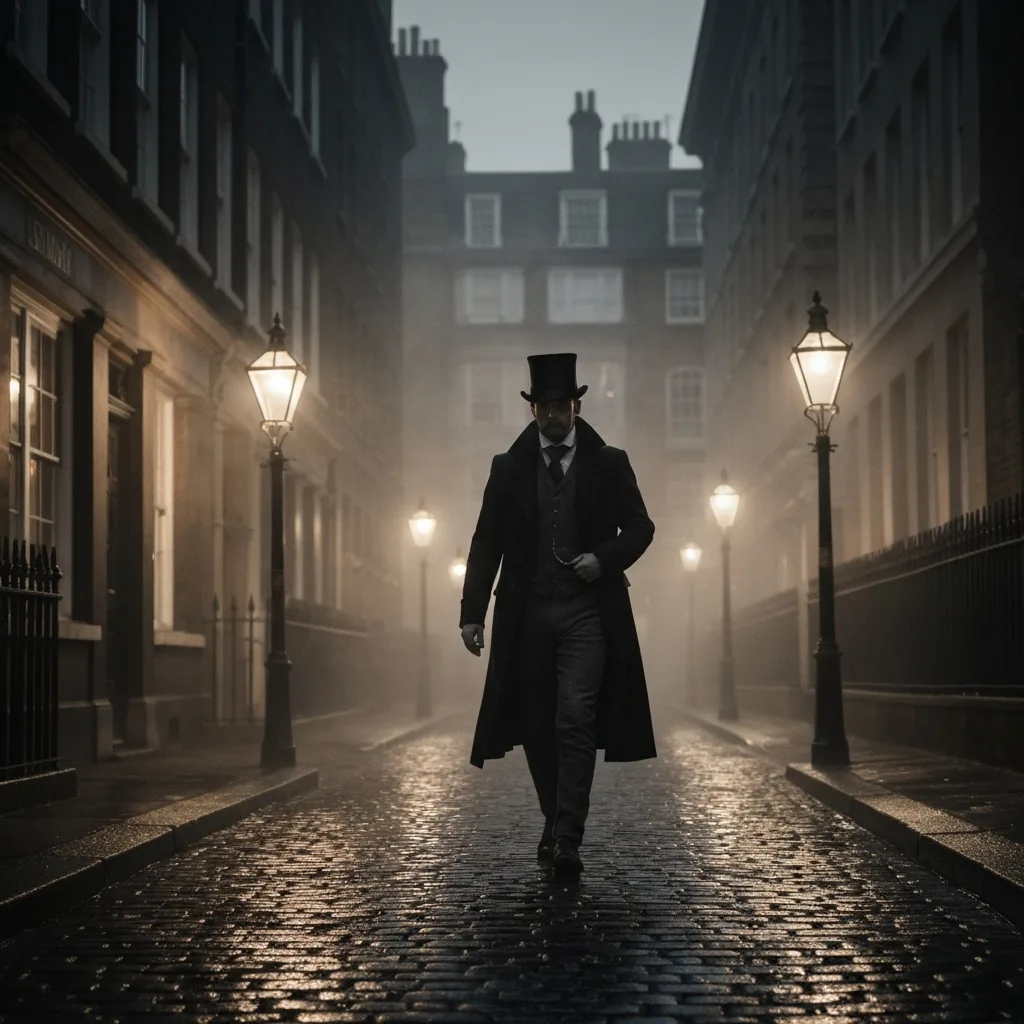
This demands a deep, granular understanding of the material culture of the period. An author must know how a corset laces, how a flintlock musket fires, or what a Victorian street smelled like after a rainstorm. However, these details must be woven seamlessly into the narrative. The modern reader is highly sophisticated and can easily spot a jarring anachronism, whether it is a modern psychological concept projected onto a medieval mind or a piece of dialogue that sounds too distinctly contemporary. The mastery lies in creating an illusion so complete that the reader forgets they are reading a modern construct and simply accepts the world as a living reality.
Why We Keep Looking Backward
In an era characterized by rapid technological advancement, constant digital connectivity, and an uncertain future, the appeal of historical fiction is stronger than ever. It offers a specific, highly sought-after type of narrative comfort: the comfort of a known outcome. While the fate of the individual characters hangs in the balance, the broader historical arc is already resolved. We know the war will eventually end, the plague will subside, and the empire will fall. This macro-level certainty provides a safe psychological space for readers to engage with micro-level tragedy, heartbreak, and triumph.
Furthermore, historical fiction acts as a necessary antidote to the ephemeral nature of modern life. It demands a slowing down, a deep immersion into a different rhythm of existence. It reconnects us with the vast continuum of human experience, reminding us that while technologies, fashions, and governments change, the core drivers of human behavior—love, ambition, greed, grief, and fear—remain entirely consistent across the centuries.
Ultimately, the renaissance of historical fiction proves that the past is never truly settled. It is a vast, shifting landscape waiting to be reinterpreted by each new generation of writers and readers. By giving voice to the forgotten, challenging accepted narratives, and holding up a mirror to our current struggles, historical novelists are doing much more than telling entertaining stories about yesterday. They are providing the essential context we need to understand exactly who we are today.
Do you enjoy the content on Agenda Creativa?
Your contributions help me create new articles, share creative ideas, and keep this platform alive! If you like what I do and want to support my work, you can buy us a coffee.
Every cup of coffee means more than just a gesture – it's direct support for my passion to create inspiring and useful content. Thank you for being part of this journey!
☕ Buy me a coffee