The Anatomy of a Literary Rebellion
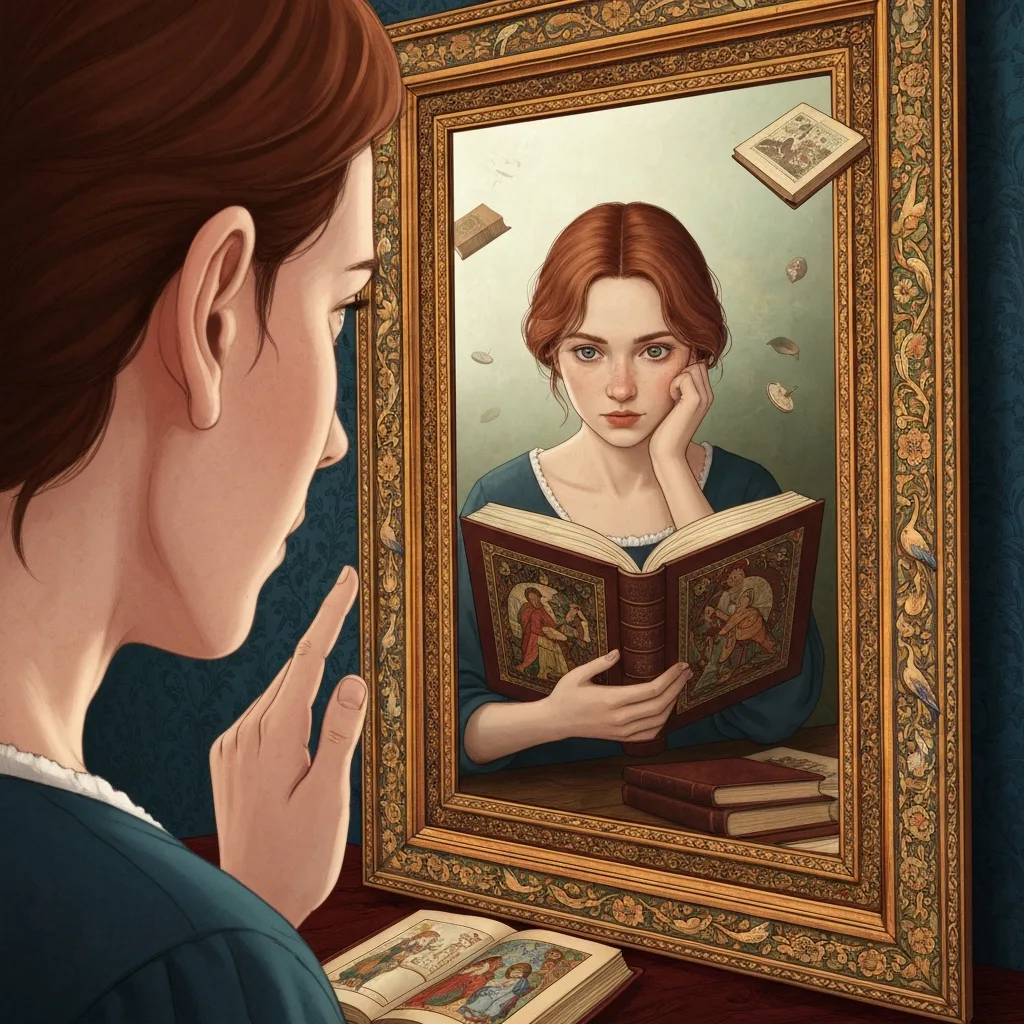
In the landscape of contemporary literature, a distinct shift has occurred in how writers approach the concept of truth. For centuries, the line between the novel and the autobiography was drawn with heavy, unmistakable ink. Fiction was the realm of invention, a place where authors could hide behind the masks of their protagonists. Memoir and autobiography were the domains of fact, bound by the constraints of memory and historical accuracy. Today, that boundary has not just blurred; it has been intentionally and systematically dismantled by a genre known as autofiction.
The term ‘autofiction’ was first coined in 1977 by the French writer and critic Serge Doubrovsky to describe his novel Fils. He defined it as ‘fiction of strictly real events or facts.’ In practice, autofiction occurs when an author uses their own name, or a barely disguised version of it, for their protagonist, while still classifying the work as a novel. This classification is crucial. By labeling the work as fiction, the author retains the right to invent, to composite characters, to alter timelines, and to shape narrative arcs, all while maintaining the intimate, confessional tone of a memoir.
This genre asks fundamental questions about the nature of storytelling. Can a fabricated conversation convey a deeper emotional truth than a transcribed one? If memory is inherently flawed and subjective, isn’t every autobiography already a work of fiction? Autofiction thrives in this ambiguous space, offering readers an experience that feels radically honest, even when the facts are manipulated for artistic effect.
Tracing the Roots: From Proust to Plath
While the term is relatively modern, the practice of mining one’s own life for fiction is not new. Literary historians often point to Marcel Proust’s monumental In Search of Lost Time as an early, sprawling example of the form. Proust’s narrator, Marcel, shares obvious biographical details with the author, yet Proust adamantly defended the work as an act of imagination rather than a mere recounting of his days. He understood that to capture the essence of memory, one had to mold it.
Mid-century writers pushed this concept further into the realm of the psychological. Sylvia Plath’s The Bell Jar, originally published under a pseudonym, closely mirrors Plath’s own descent into clinical depression and her time in a psychiatric hospital. The protagonist, Esther Greenwood, is a proxy for Plath, allowing the author to examine her own trauma with a clinical, almost detached precision. By framing her lived experience as a novel, Plath achieved a narrative distance that made the raw pain of the subject matter bearable for both the writer and the reader.
The Modern Masters of the Form
The 21st century has seen autofiction evolve from a stylistic choice into a dominant literary movement, championed by authors who have achieved massive critical and commercial success.
Karl Ove Knausgård and the Exhaustive Self
No discussion of modern autofiction is complete without Karl Ove Knausgård. His six-volume, 3,600-page opus, My Struggle (Min Kamp), became a global phenomenon. Knausgård’s approach to autofiction is one of exhaustive, almost punishing detail. He writes about making coffee, changing diapers, smoking cigarettes, and attending awkward dinner parties with the same gravity as he writes about the death of his father or his own existential despair.
Knausgård strips away the traditional mechanics of plot. There are no neat resolutions or artificial inciting incidents. Instead, the tension comes from the terrifying intimacy of being trapped inside another human being’s consciousness. His work suggests that the epic scale of human life is not found in grand adventures, but in the accumulation of mundane moments. By offering up his life with zero vanity, Knausgård created a mirror in which readers saw their own quiet struggles reflected.
Rachel Cusk and the Passive Observer
If Knausgård’s autofiction is about overwhelming the reader with the self, Rachel Cusk’s approach is about erasing it. In her acclaimed Outline trilogy, the narrator, Faye, is a writer who has recently gone through a divorce. However, Faye rarely speaks about herself. Instead, she acts as a void, a passive observer who listens to the lengthy, often self-indulgent monologues of the people she meets on airplanes, in cafes, and at literary festivals.
Cusk’s brilliance lies in how she constructs a portrait of Faye entirely through negative space. We learn about the narrator not through her actions, but through how others react to her, and through the specific details she chooses to observe in their stories. It is a radical subversion of the traditional, active protagonist, reflecting a distinctly modern sense of alienation and the fragmentation of identity following a personal crisis.
Annie Ernaux and the Collective Memory
The 2022 Nobel Laureate in Literature, Annie Ernaux, brings a sociological lens to autofiction. In masterpieces like The Years, Ernaux abandons the traditional first-person ‘I’ in favor of the third-person ‘she’ or the collective ‘we’ and ‘one.’ She chronicles her own life—from a working-class childhood in Normandy to an illegal abortion, marriage, and affairs—but anchors these personal events firmly within the shifting cultural and political landscape of post-war France.
Ernaux treats her own memories as historical documents. Her autofiction is less about individual psychology and more about how the individual is shaped by class, gender, and time. She proves that writing about the self does not have to be an act of narcissism; it can be a profound act of social documentation.
The Appeal of Radical Honesty in a Curated World
Why has autofiction captured the contemporary imagination so completely? The answer lies in the cultural context of the 21st century. We live in an era defined by curation. Social media platforms encourage us to present polished, idealized versions of our lives. In response to this relentless performance of perfection, readers have developed a deep hunger for authenticity.
Autofiction provides an antidote to the curated self. It offers ugliness, contradiction, pettiness, and failure. When an author uses their real name and confesses to profound moral failings or embarrassing thoughts, it shatters the illusion of the flawless public persona. Readers are drawn to this vulnerability. Furthermore, in a ‘post-truth’ political landscape where objective facts are frequently contested, the subjective, emotional truth offered by autofiction feels strangely reliable. We may not trust the news, but we trust the writer who is willing to dissect their own flaws on the page.
The Ethical Dilemmas of Writing the Self
The rise of autofiction is not without its controversies. The genre operates in an ethical gray area, frequently resulting in what critics call ‘collateral damage.’ When an author decides to turn their life into literature, they inevitably turn the lives of their family, friends, and lovers into literature as well. Unlike a memoirist, who might feel bound by journalistic ethics to protect the identities of others, the autofiction writer can claim the shield of ‘fiction.’
Knausgård’s My Struggle caused a massive rift in his family, with his uncle threatening a lawsuit over the depiction of Knausgård’s father. The French writer Emmanuel Carrère faced similar backlash from his ex-wife, who demanded she not be included in his work. This raises difficult questions: Who owns a shared memory? Does the artist’s right to free expression supersede an individual’s right to privacy? Autofiction forces us to confront the inherent vampirism of the writing process, acknowledging that to create art from life, the writer must often ruthlessly mine the people closest to them.
A Lasting Shift in Narrative Architecture
Autofiction is not a passing literary fad. It represents a fundamental evolution in how we understand narrative architecture. By discarding the artificiality of traditional plot structures and embracing the messy, unresolved nature of reality, writers of autofiction have expanded the boundaries of what the novel can do.
As long as human beings continue to grapple with the fractured nature of identity, memory, and truth, the space between the memoir and the novel will remain a fertile ground for literary exploration. The authors who brave this territory remind us that the most compelling stories are rarely the ones completely invented; they are the ones carved directly from the bone of lived experience, reshaped by art, and offered up to the world in all their imperfect, devastating honesty.
Do you enjoy the content on Agenda Creativa?
Your contributions help me create new articles, share creative ideas, and keep this platform alive! If you like what I do and want to support my work, you can buy us a coffee.
Every cup of coffee means more than just a gesture – it's direct support for my passion to create inspiring and useful content. Thank you for being part of this journey!
☕ Buy me a coffee