
The Fundamental Misunderstanding of Human Drive
We have fundamentally misunderstood the mechanics of human drive. For decades, popular culture and the self-help industry have peddled a dangerous myth: the idea that motivation is an emotional prerequisite for action. We are taught that to do hard things, we must first feel a surge of inspiration, a spark of energy, or a profound sense of purpose. This belief is not just incorrect; it is the primary psychological barrier keeping millions trapped in cycles of chronic procrastination and unfulfilled potential.
In reality, relying on a spontaneous feeling of motivation is a recipe for behavioral paralysis. Human emotions are inherently volatile, influenced by everything from our sleep quality and blood sugar levels to minor interpersonal conflicts. If your productivity relies on aligning these unpredictable variables, your output will be equally erratic. To build a sustainable engine for personal drive, we must discard the idea of motivation as a feeling and reconstruct it as a system. This requires synthesizing our understanding of productivity, emotional regulation, and behavioral psychology into a comprehensive framework that operates independently of our temporary moods.
Deconstructing Procrastination: An Emotional Regulation Problem
To master motivation, we must first understand its nemesis: procrastination. The most common misconception about procrastination is that it is a symptom of laziness, poor time management, or a lack of discipline. Psychological research tells a very different story. Procrastination is, at its core, a failure of emotional regulation.
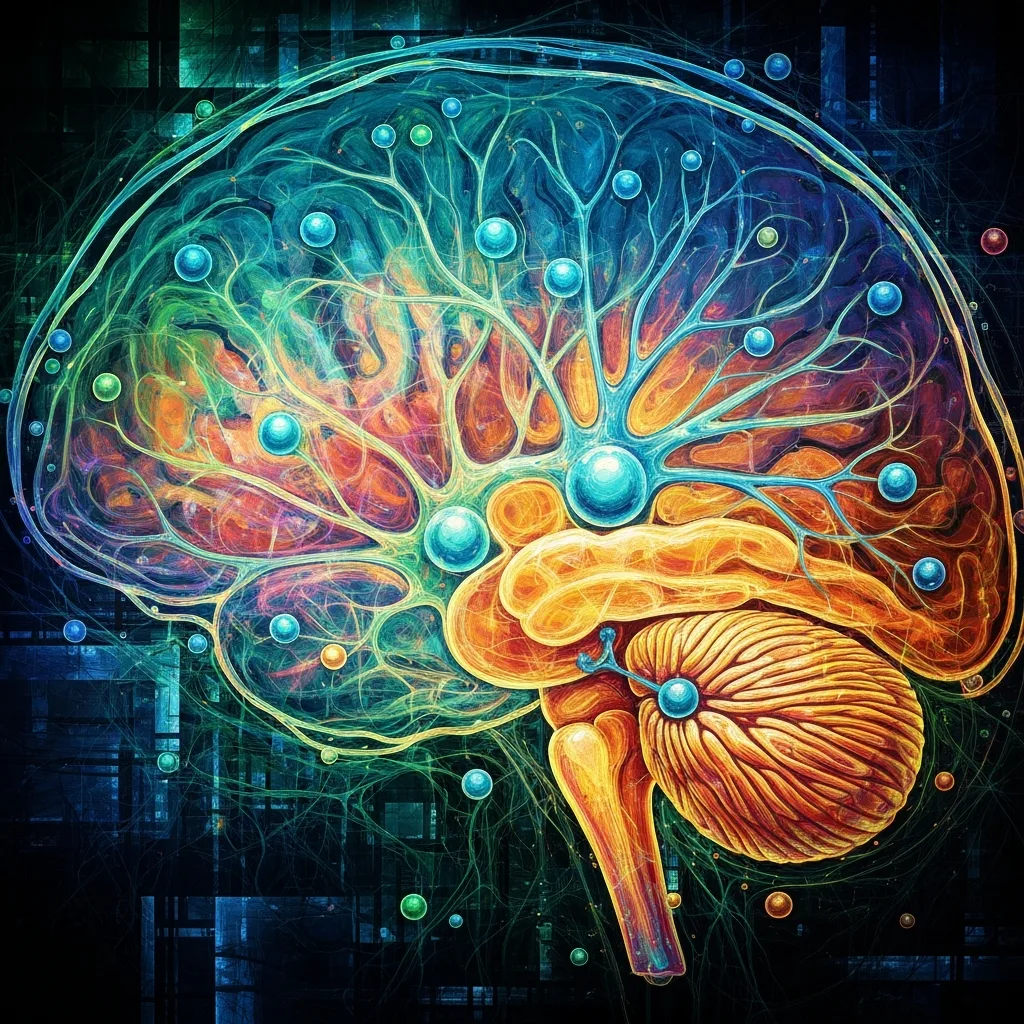
When you sit down to tackle a complex, ambiguous, or tedious task, your brain anticipates psychological discomfort. This discomfort might manifest as the fear of failure, the anxiety of incompetence, or simply the dread of profound boredom. The amygdala—the brain’s threat-detection center—interprets this negative emotion as a psychological threat. In response, it triggers an immediate desire for mood repair. You abandon the difficult task in favor of scrolling through social media, organizing your desk, or answering trivial emails because these activities offer an instant, low-effort dopamine hit. You are not avoiding the work; you are avoiding the negative emotion associated with the work.
The Perfectionism Paralysis and Cognitive Bandwidth
Two major catalysts exacerbate this emotional friction: perfectionism and depleted cognitive bandwidth. Perfectionism creates an asymptotic trap where the standard for success is set so impossibly high that any attempt to start feels like a guaranteed failure. The brain, calculating the immense emotional cost of falling short, simply refuses to initiate action. We tell ourselves we are waiting for the “perfect time” or the “perfect mood,” but we are actually just hiding from the vulnerability of producing something flawed.
Simultaneously, we often ignore the reality of our cognitive bandwidth. Every decision, context switch, and suppressed emotion drains our mental energy. When bandwidth is low, the brain defaults to the path of least resistance. Protecting your cognitive energy by eliminating trivial decisions and setting clear boundaries is not a luxury; it is a structural requirement for sustained focus.
A Comprehensive Framework for Sustained Drive
If motivation cannot be relied upon and willpower is a finite resource, how do we consistently execute difficult tasks? The answer lies in engineering a psychological framework that bypasses the need for raw discipline. This framework rests on three foundational pillars: the Micro-Meaning Shift, the Architecture of Inevitability, and the Competence Loop.
Pillar 1: The Micro-Meaning Shift
Grand visions and massive ten-year goals are excellent for setting direction, but they are terrible for generating daily momentum. The human brain struggles to connect the immediate discomfort of a present action with a distant, abstract reward. The chronological gap is simply too wide. To generate immediate drive, we must shrink the timeline.
The Micro-Meaning framework involves attaching profound, immediate significance to the smallest possible unit of action. Instead of focusing on writing a bestselling book, the focus shifts entirely to mastering the next paragraph. By shrinking the scope of our ambition to the immediate present, we reduce the emotional weight of the task. This eliminates the overwhelm that triggers procrastination and allows us to find intrinsic satisfaction in the craftsmanship of the moment.
Pillar 2: The Architecture of Inevitability
The most highly driven individuals do not possess superhuman willpower; they simply use their willpower strategically to design environments that make success the default outcome. This is the Architecture of Inevitability. If you want to build a habit, you must manipulate behavioral friction. You must make the desired action the easiest possible choice and the undesired action highly inconvenient.
If you want to stop procrastinating on your phone, relying on willpower to ignore it while it sits on your desk is a losing battle. Placing the phone in another room, turned off, introduces massive friction to the act of distraction. Conversely, if you want to write every morning, leaving your laptop open on your desk with your word processor already loaded reduces the friction of starting to near zero. You are no longer fighting yourself; you are simply following the path of least resistance that you pre-designed.
Pillar 3: The Competence Loop and Action-First Motivation
The most critical shift in the psychology of motivation is understanding the Competence Loop: action always precedes motivation. When you force yourself to take the first, tiny step of a task, you generate a small amount of momentum. This momentum leads to a micro-win, which releases a small dose of dopamine. This dopamine hit creates the feeling of motivation, which drives further action.
You do not wait to feel motivated to start; you start in order to generate the motivation. By committing to just five minutes of highly focused, low-expectation effort, you bypass the amygdala’s threat response. Once the task is initiated, the psychological friction drops precipitously, and the natural human desire for completion takes over.
Engineering Unbreakable Habits: From conscious effort to automaticity
Motivation is required to start, but habits are required to endure. Habit formation is the process of transferring a behavior from the prefrontal cortex—the area of the brain responsible for conscious, effortful decision-making—to the basal ganglia, the brain’s automatic pattern-recognition center. When a behavior becomes a habit, it no longer requires motivation or cognitive bandwidth to execute.
The Identity Continuum
The most robust habits are not built on outcome-based goals (e.g., “I want to lose 20 pounds”) but on identity-based shifts (e.g., “I am the type of person who never misses a workout”). True behavioral change requires befriending your future self. Neuroimaging studies show that when chronic procrastinators think about their future selves, their brain activity resembles how they think about a complete stranger. They feel no emotional connection to the person who will suffer the consequences of their procrastination.
Building habits requires closing this psychological distance. By aligning your daily actions with the identity of the person you are becoming, you stop relying on external rewards and start relying on internal alignment. Every time you execute the habit, you are casting a vote for your new identity. Over time, the pain of violating your identity becomes greater than the pain of doing the work.
Emotional Balance: The Hidden Pillar of Productivity
Finally, we must address the role of emotional balance. The modern hustle culture promotes a linear, relentless approach to productivity that inevitably ends in burnout. Burnout is not just physical exhaustion; it is a state of severe emotional and neurochemical depletion where the brain’s reward circuitry essentially shuts down. You cannot build habits or sustain motivation if your baseline emotional state is chronic stress.
Sustained drive requires mastering the Oscillation Principle. Human beings are biological organisms, not machines. We are designed to operate in rhythms of intense, focused exertion followed by deep, deliberate recovery. True productivity requires protecting your downtime as fiercely as you protect your work time. It requires learning to sit with boredom without immediately seeking digital stimulation, and it requires channeling the inevitable frustrations of the process into constructive discontent rather than paralyzing self-criticism.
Motivation is not a mystical force bestowed upon the lucky few. It is a predictable, manageable psychological state. By understanding the emotional roots of procrastination, redesigning our environments, leveraging the power of micro-actions, and protecting our cognitive and emotional bandwidth, we can build a resilient architecture of personal drive. You do not need to wait for the spark. You have the tools to build the engine.



Do you enjoy the content on Agenda Creativa?
Your contributions help me create new articles, share creative ideas, and keep this platform alive! If you like what I do and want to support my work, you can buy us a coffee.
Every cup of coffee means more than just a gesture – it's direct support for my passion to create inspiring and useful content. Thank you for being part of this journey!
☕ Buy me a coffee